


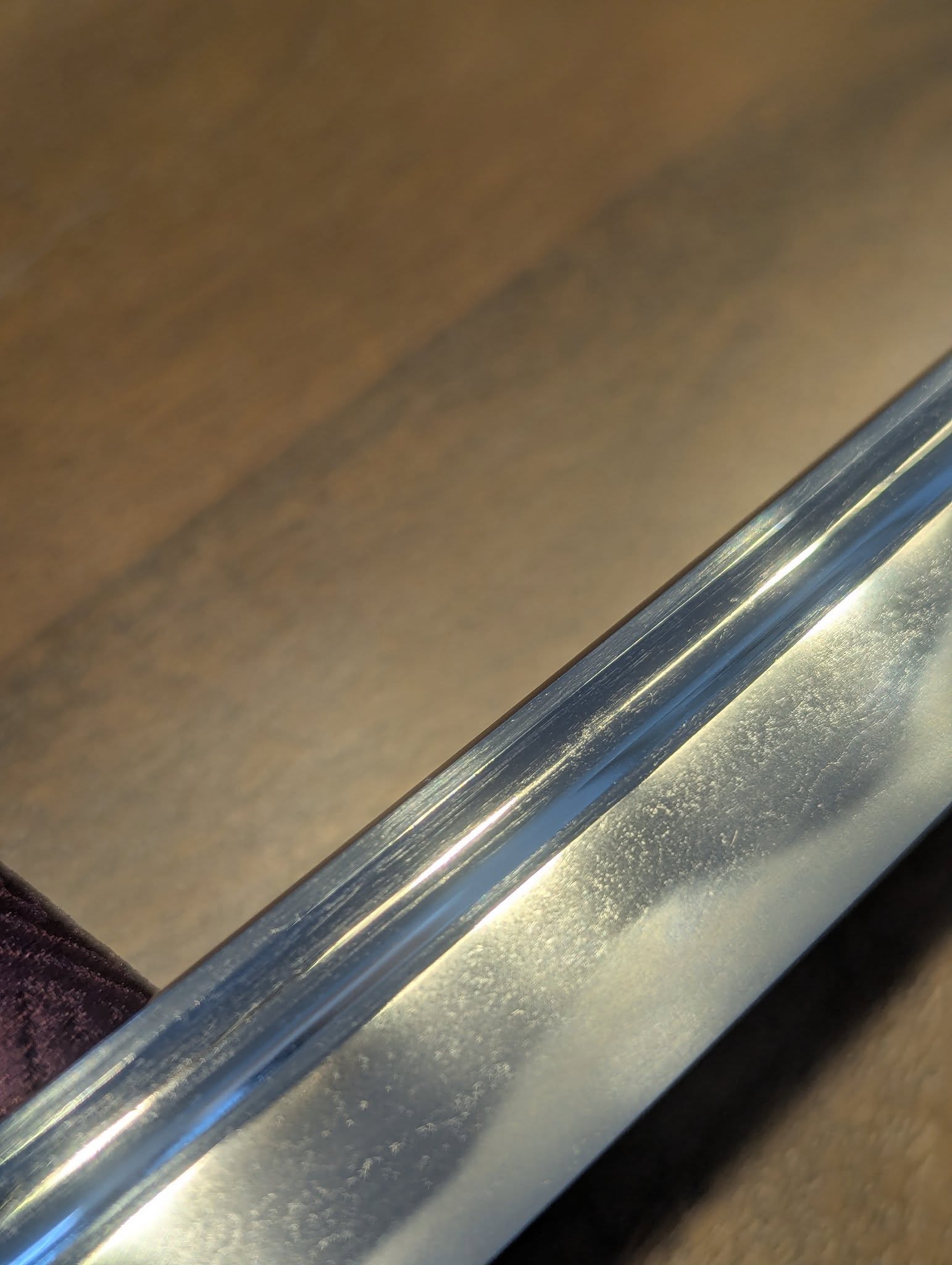
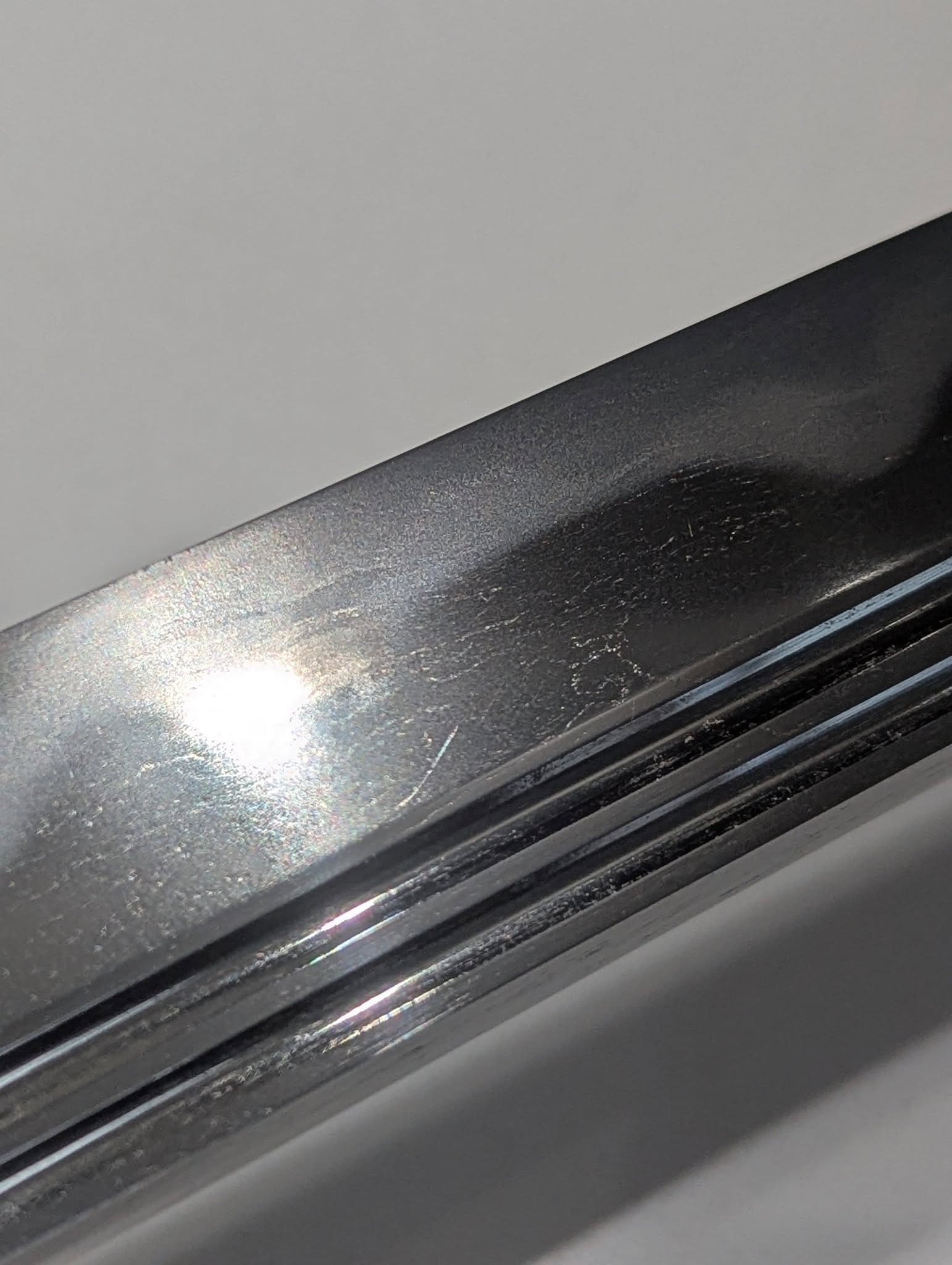
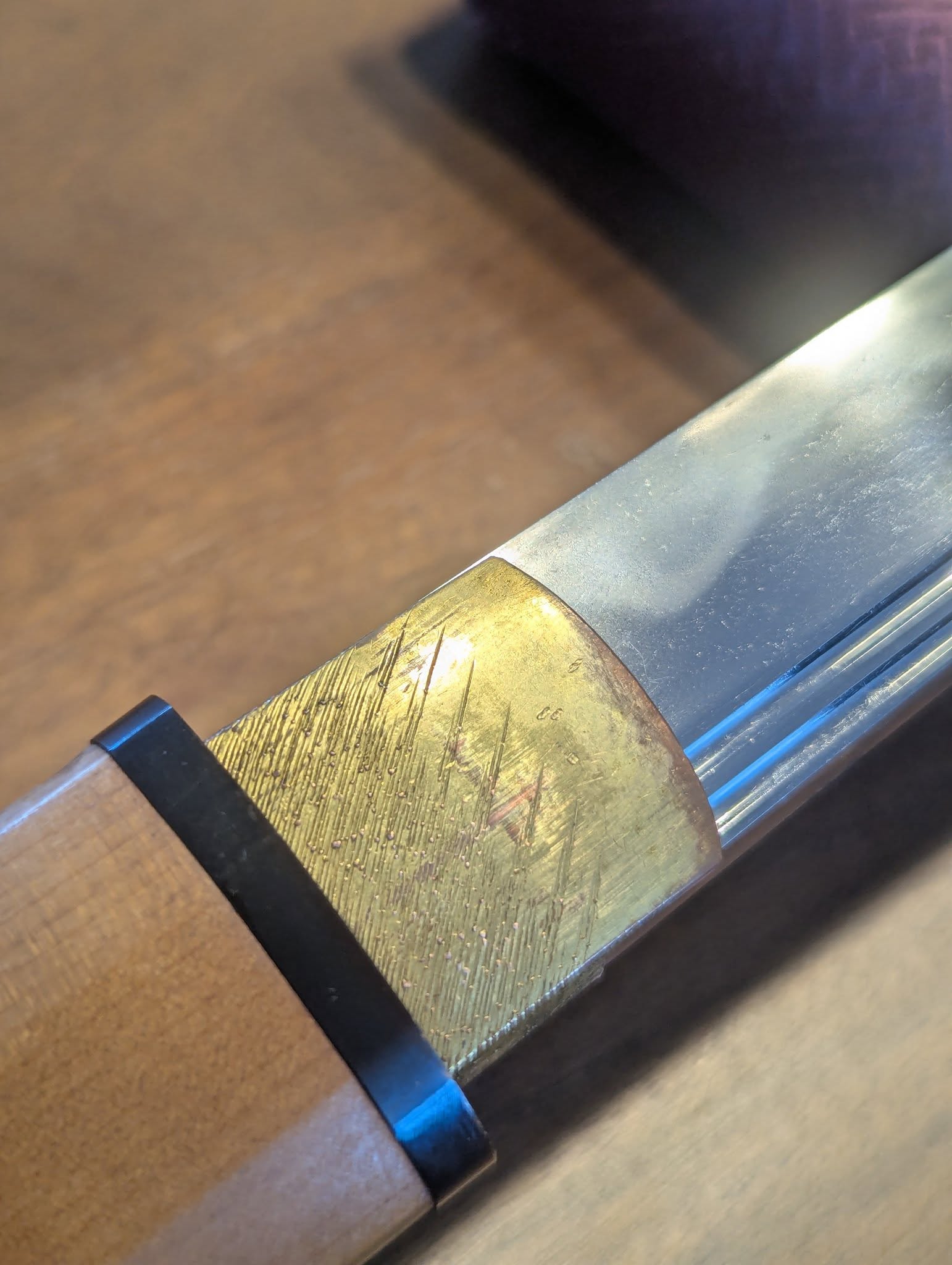
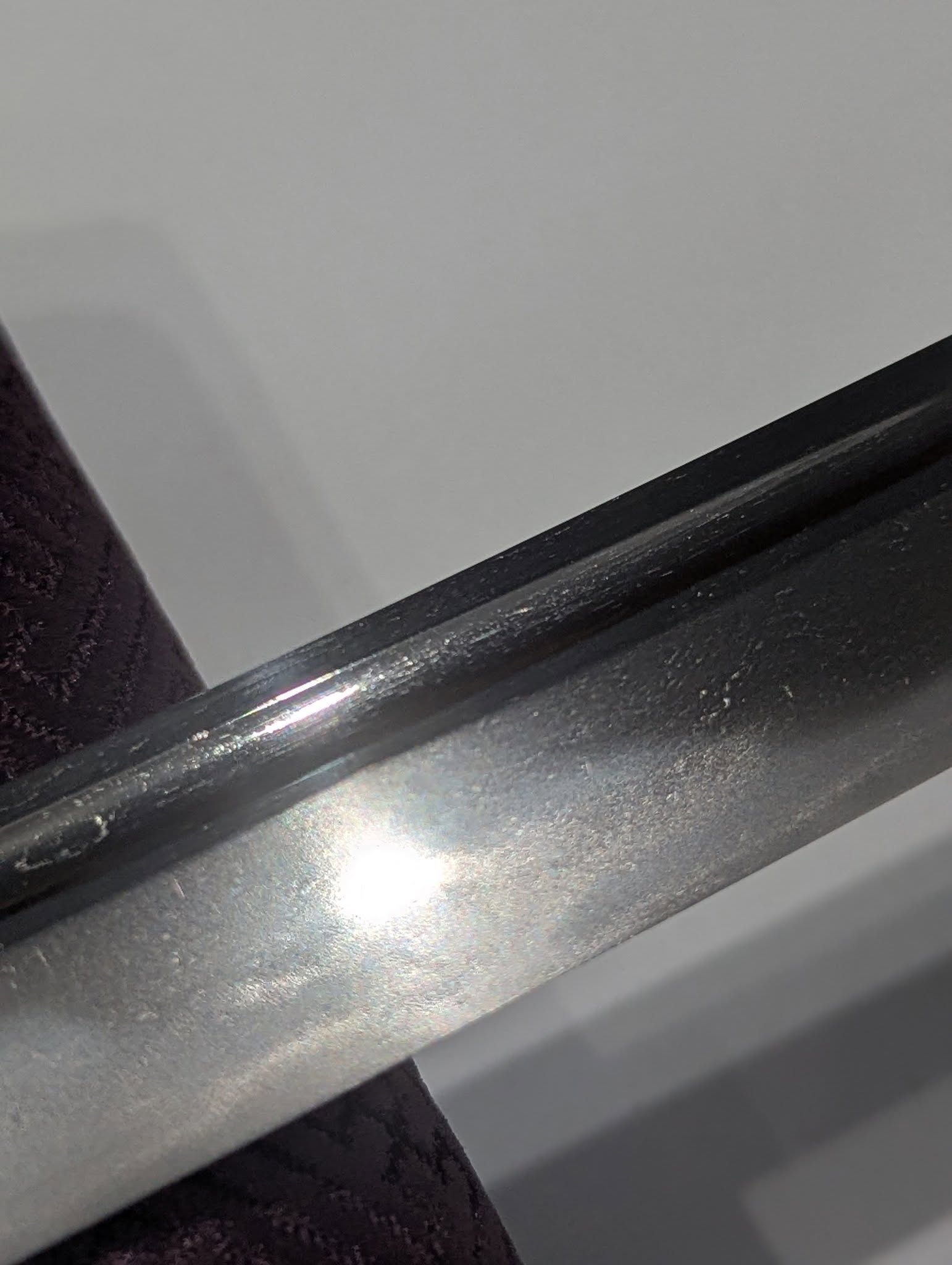
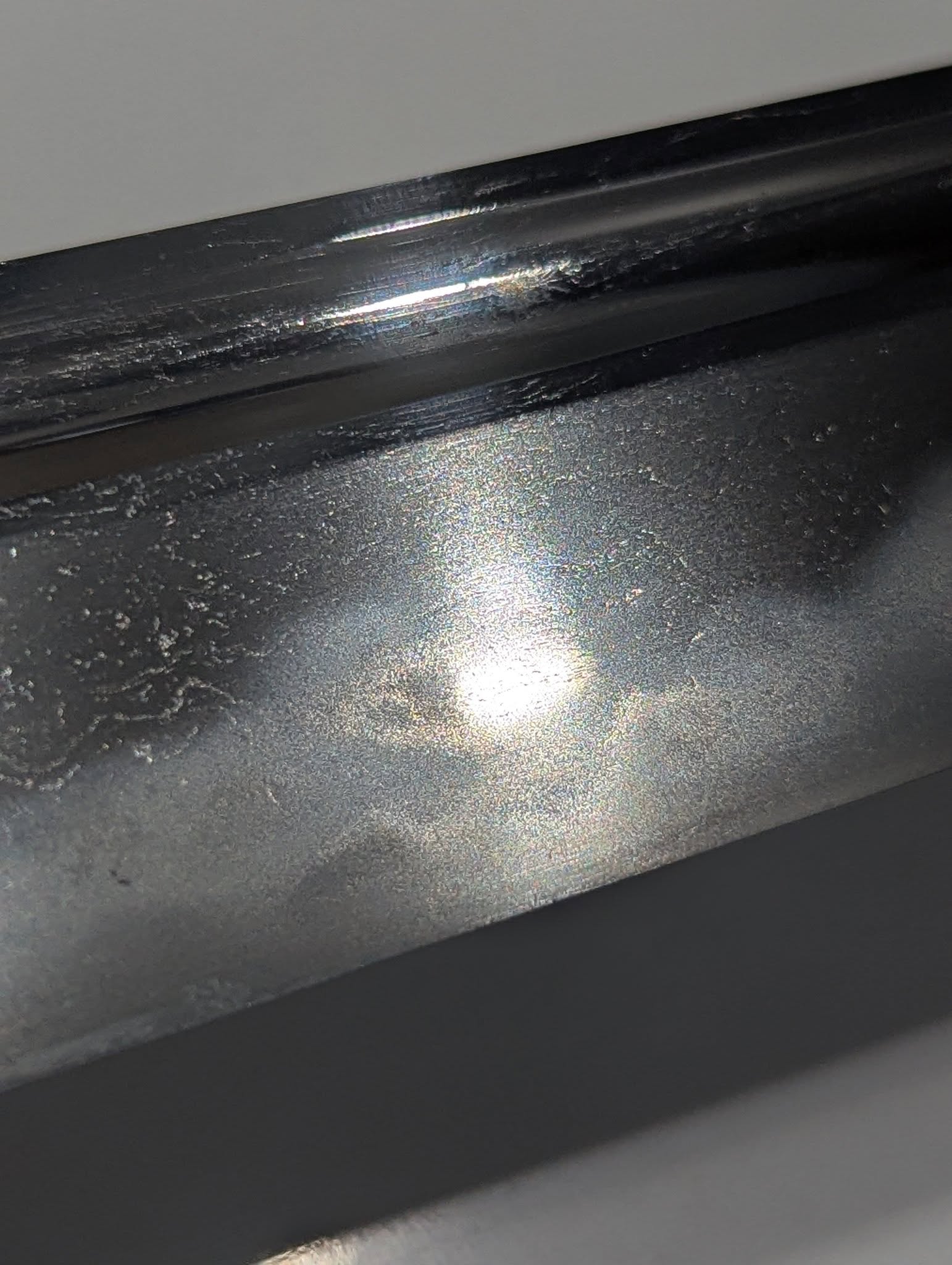
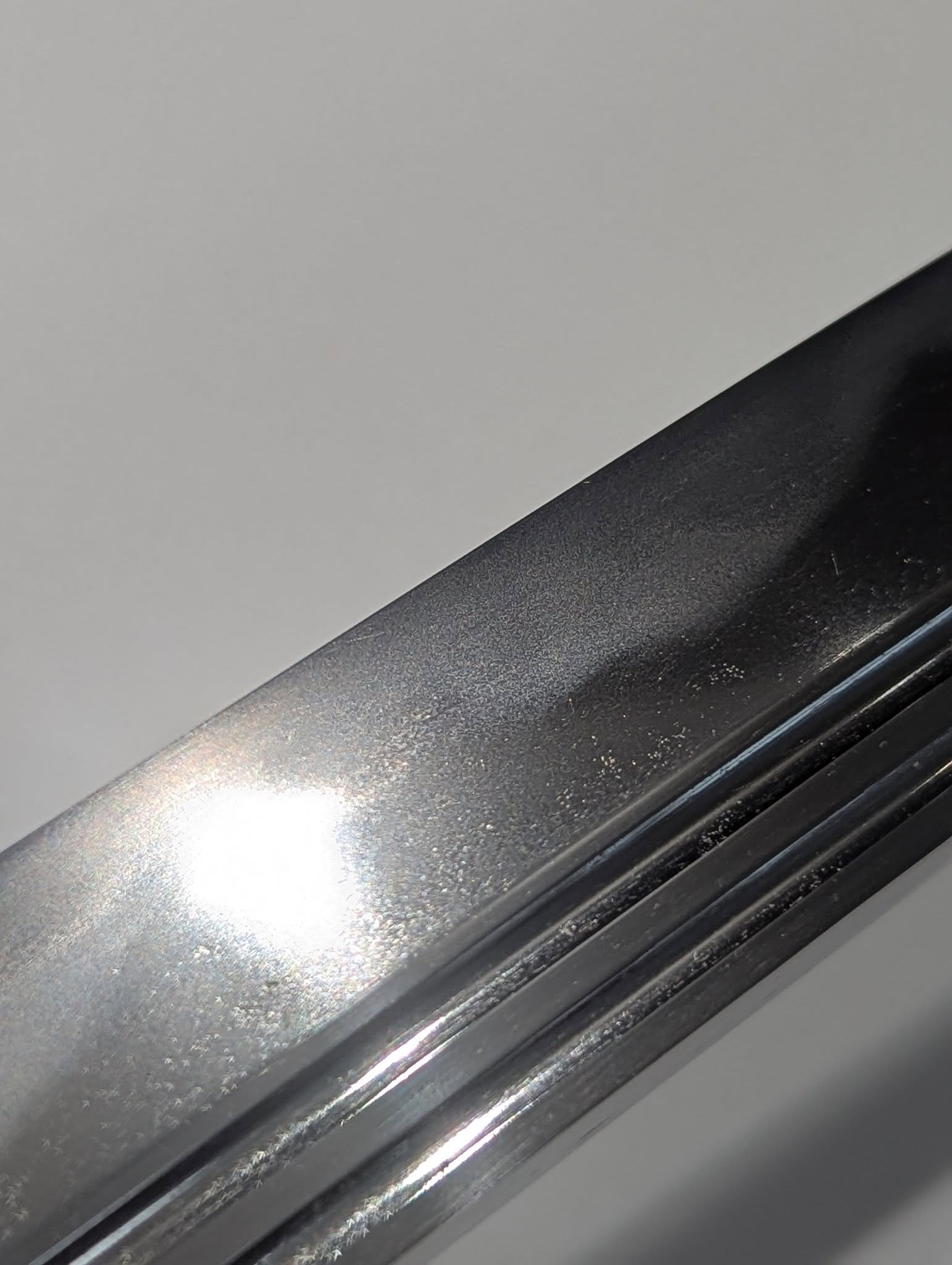
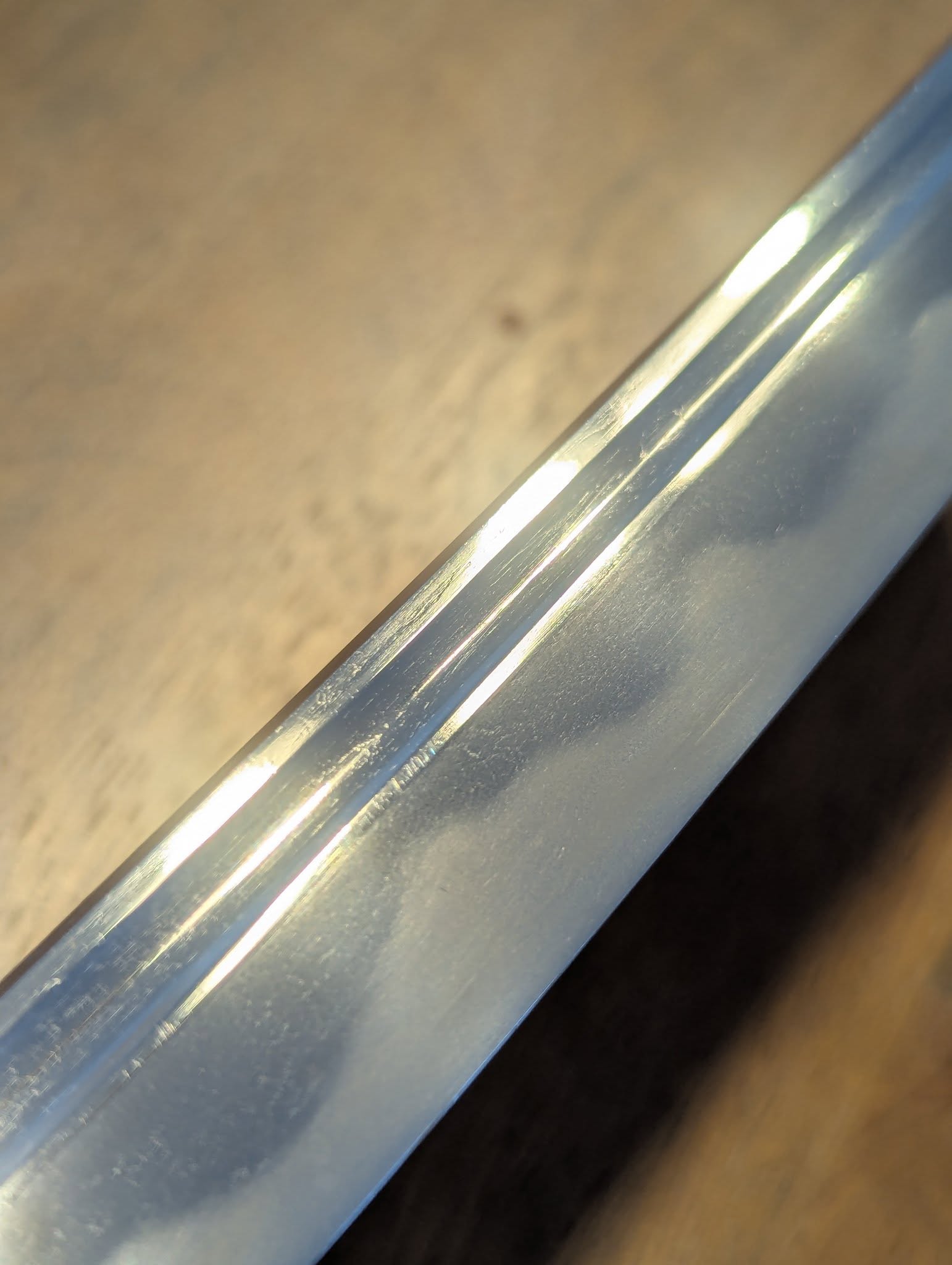
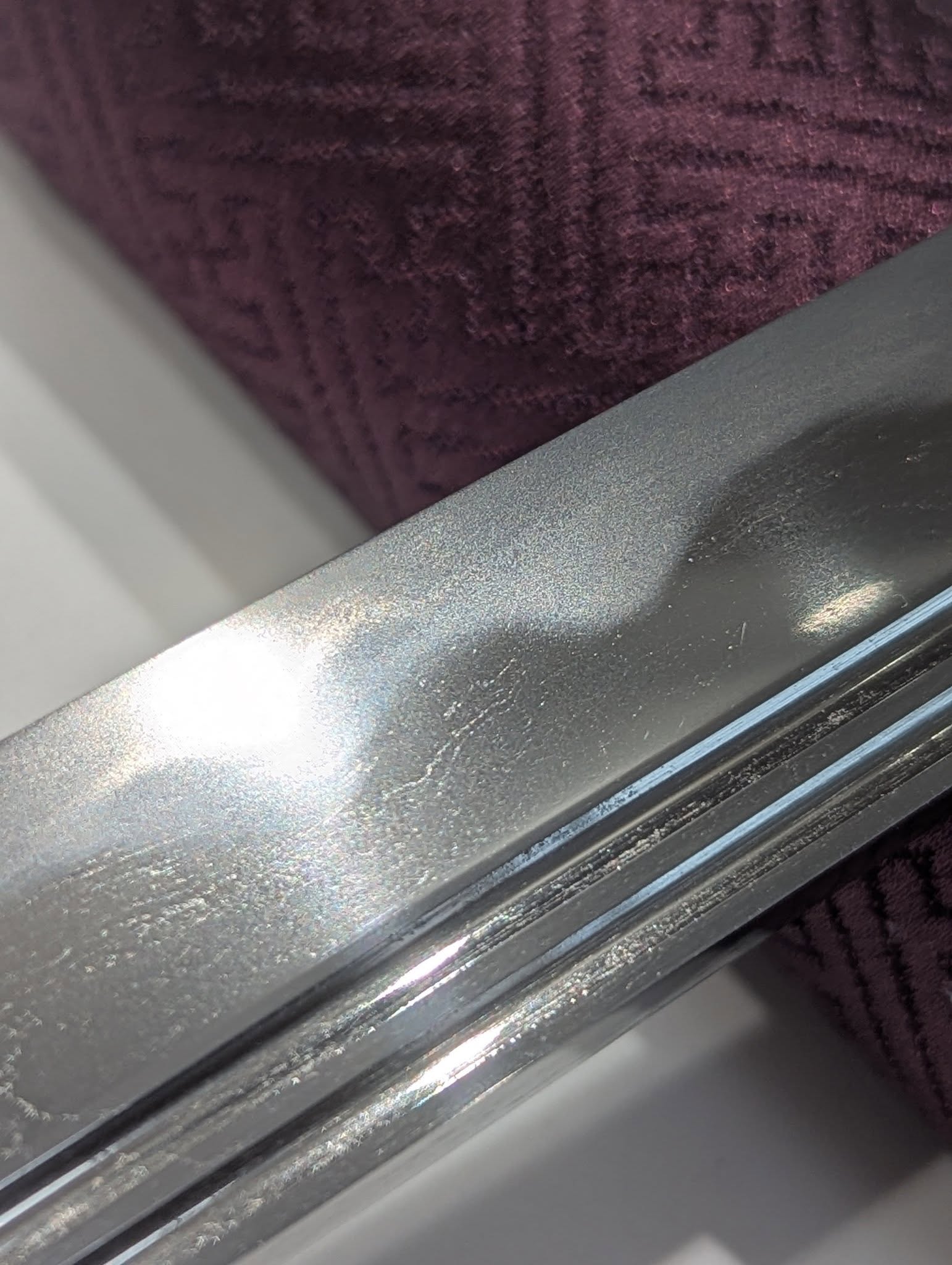
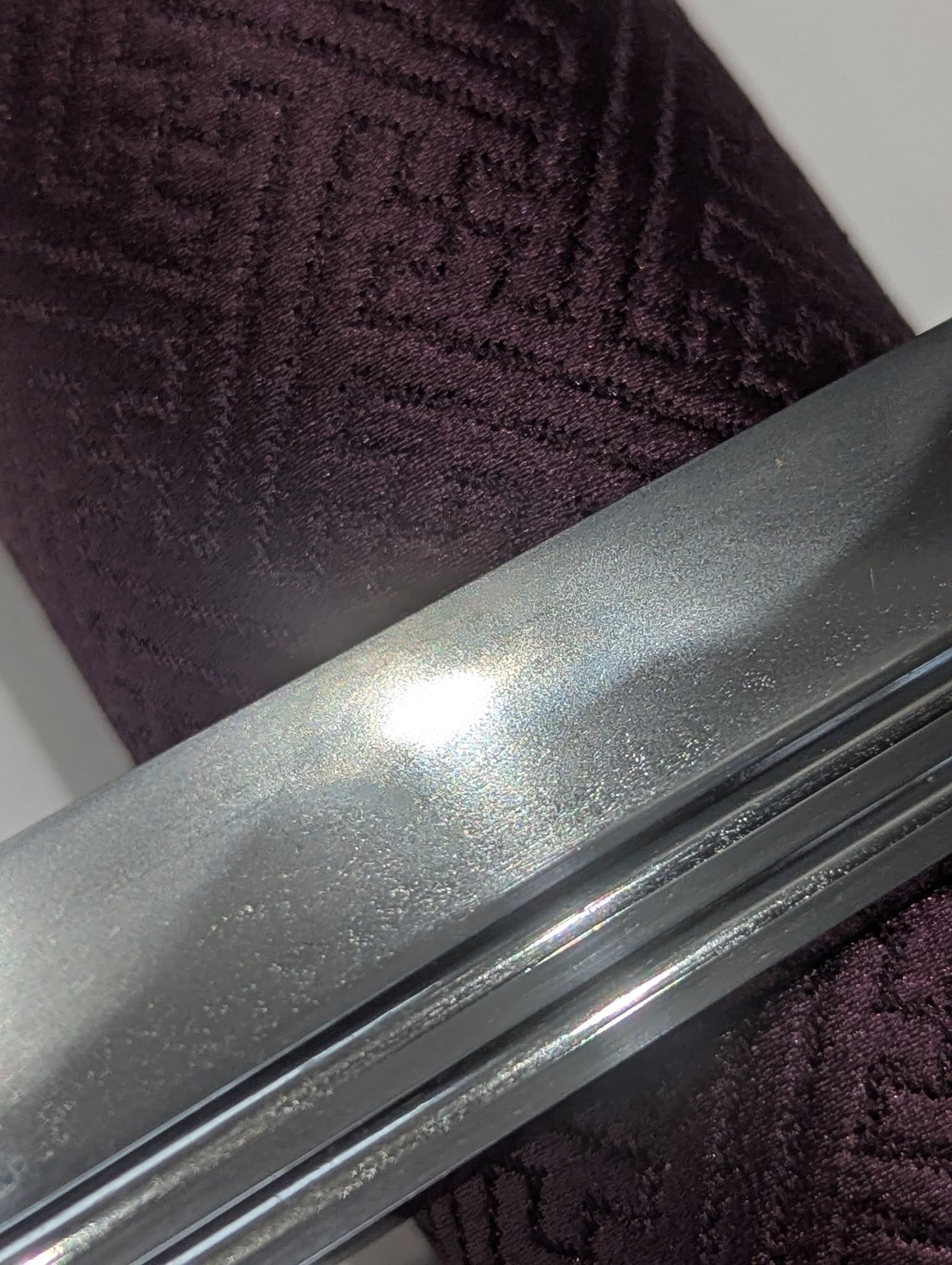
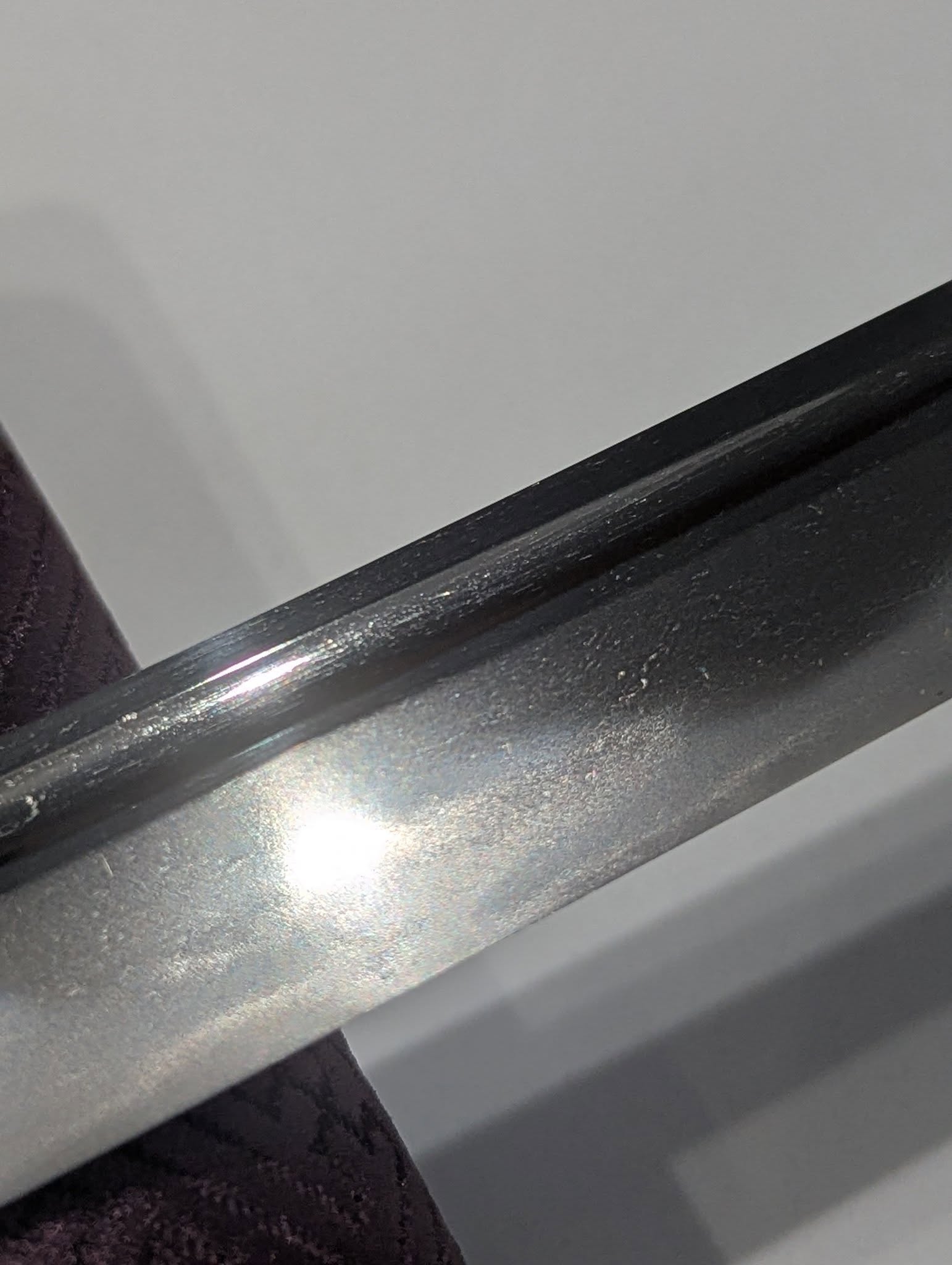
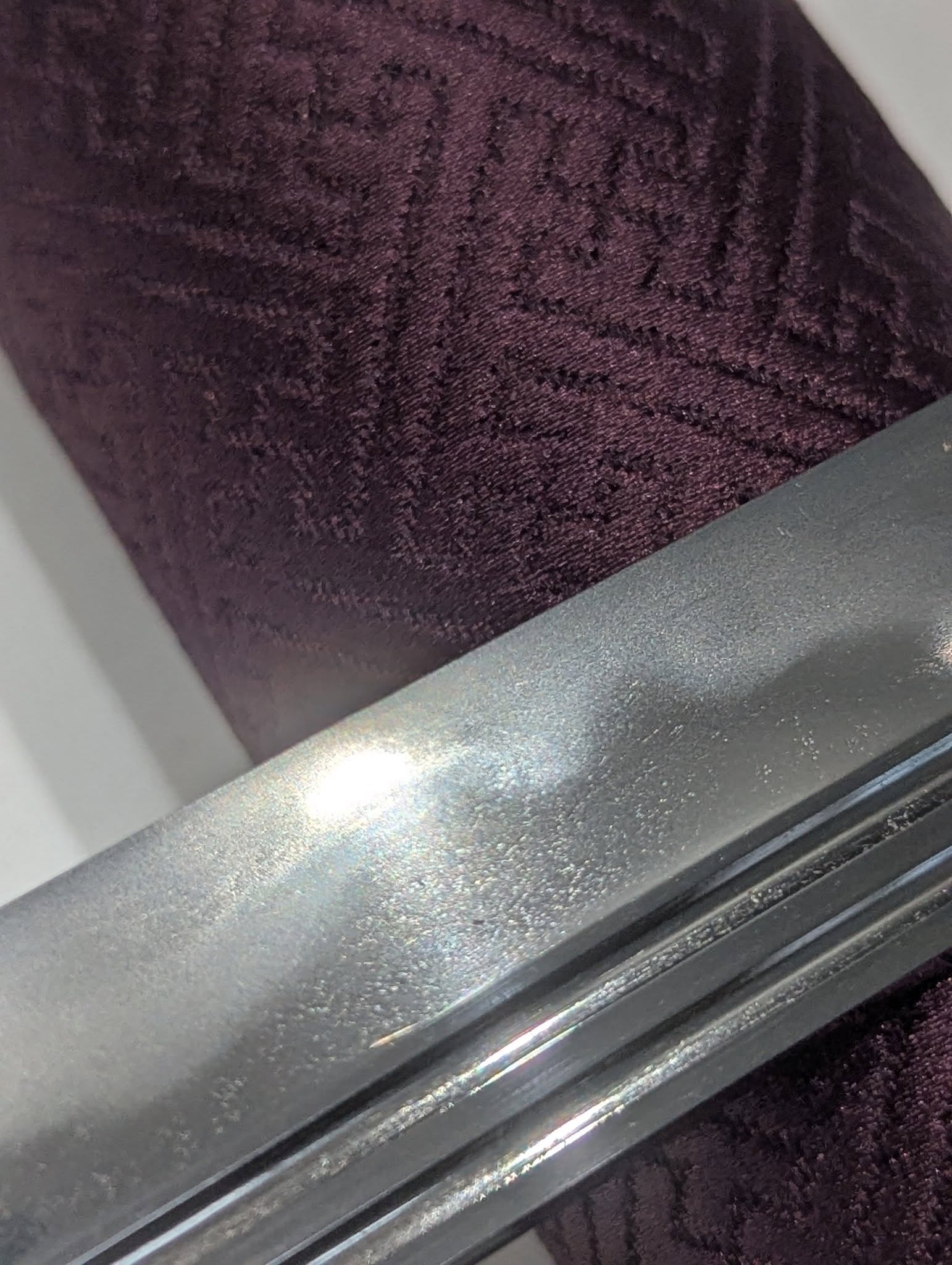
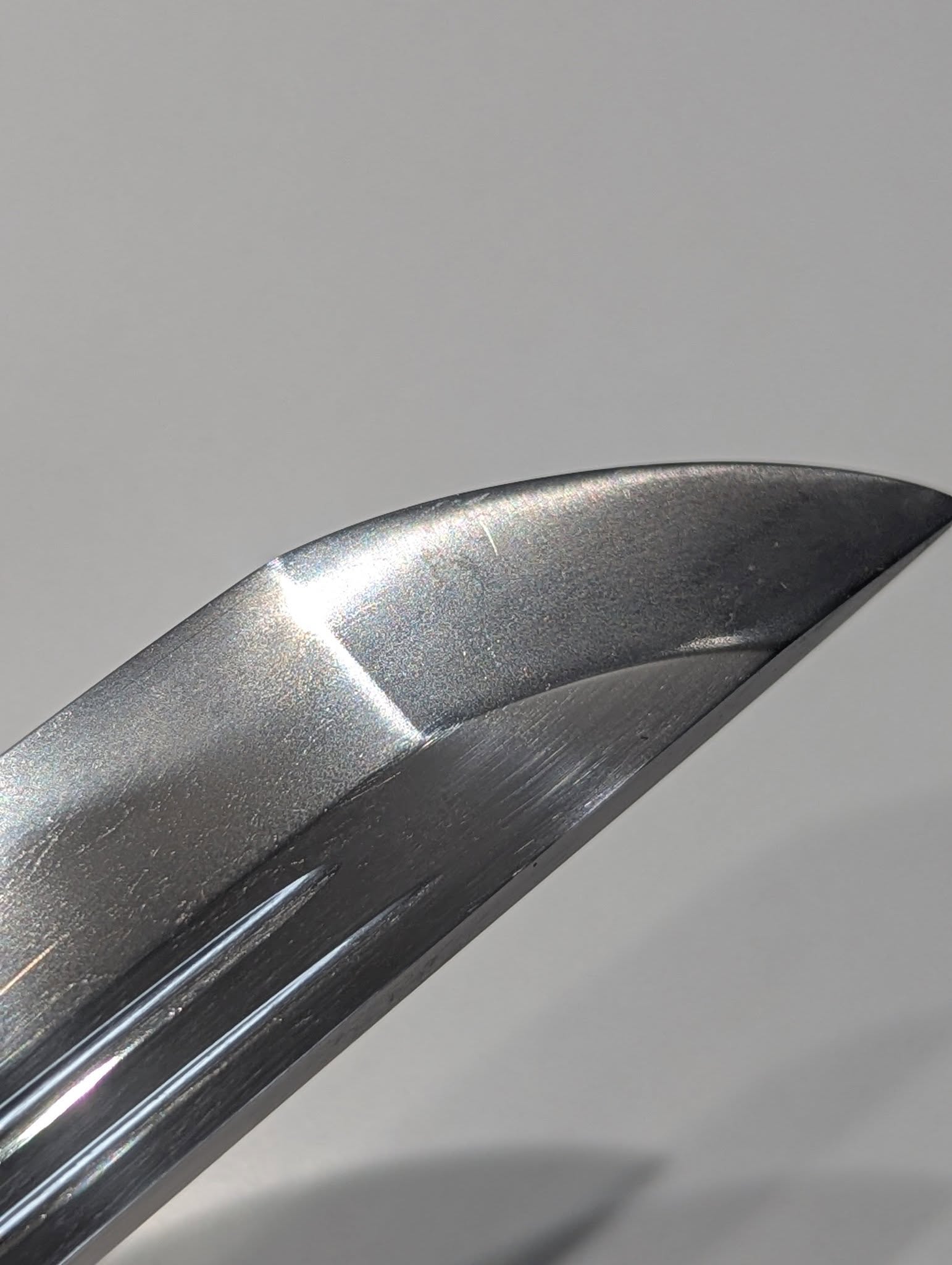
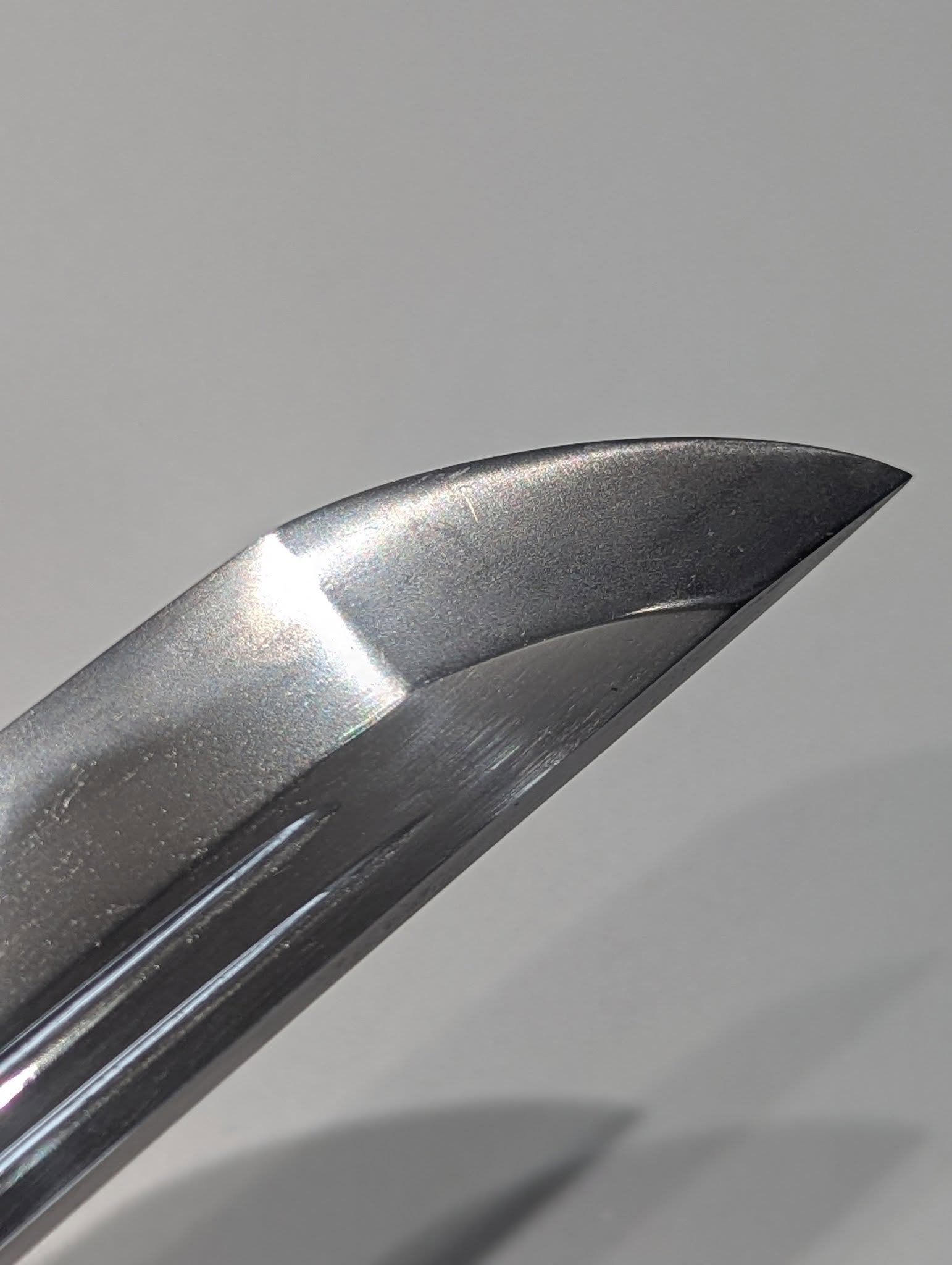
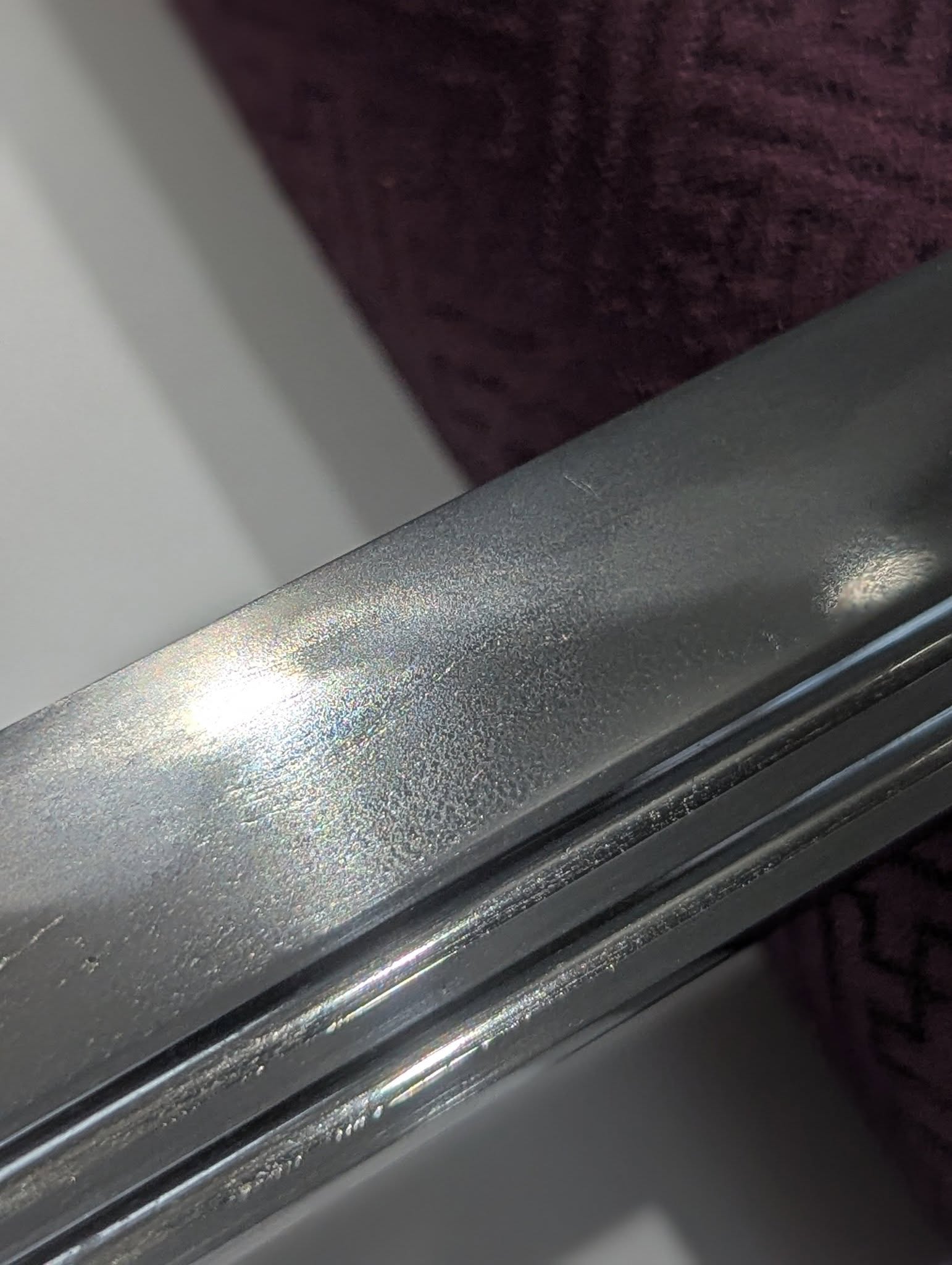
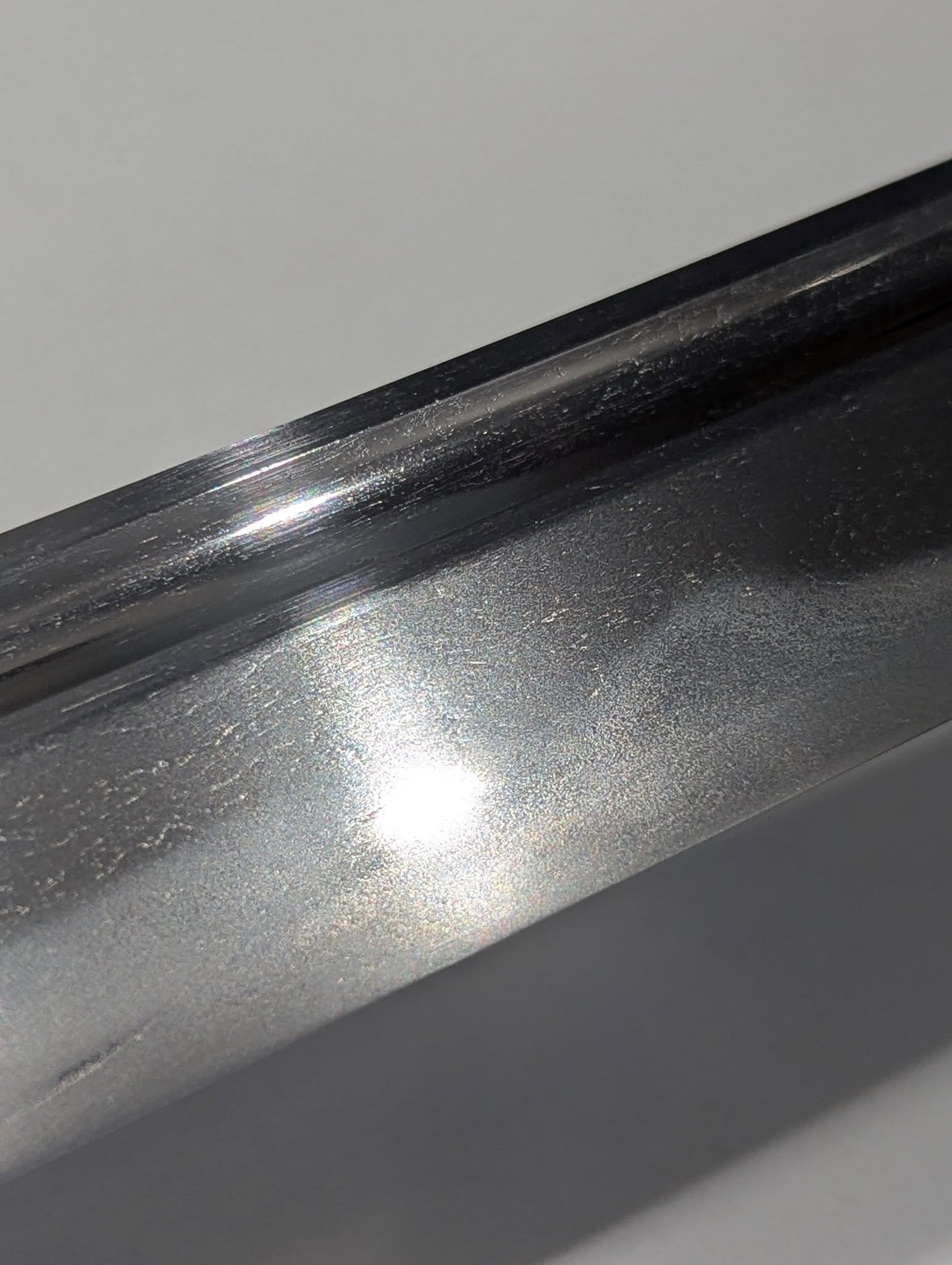
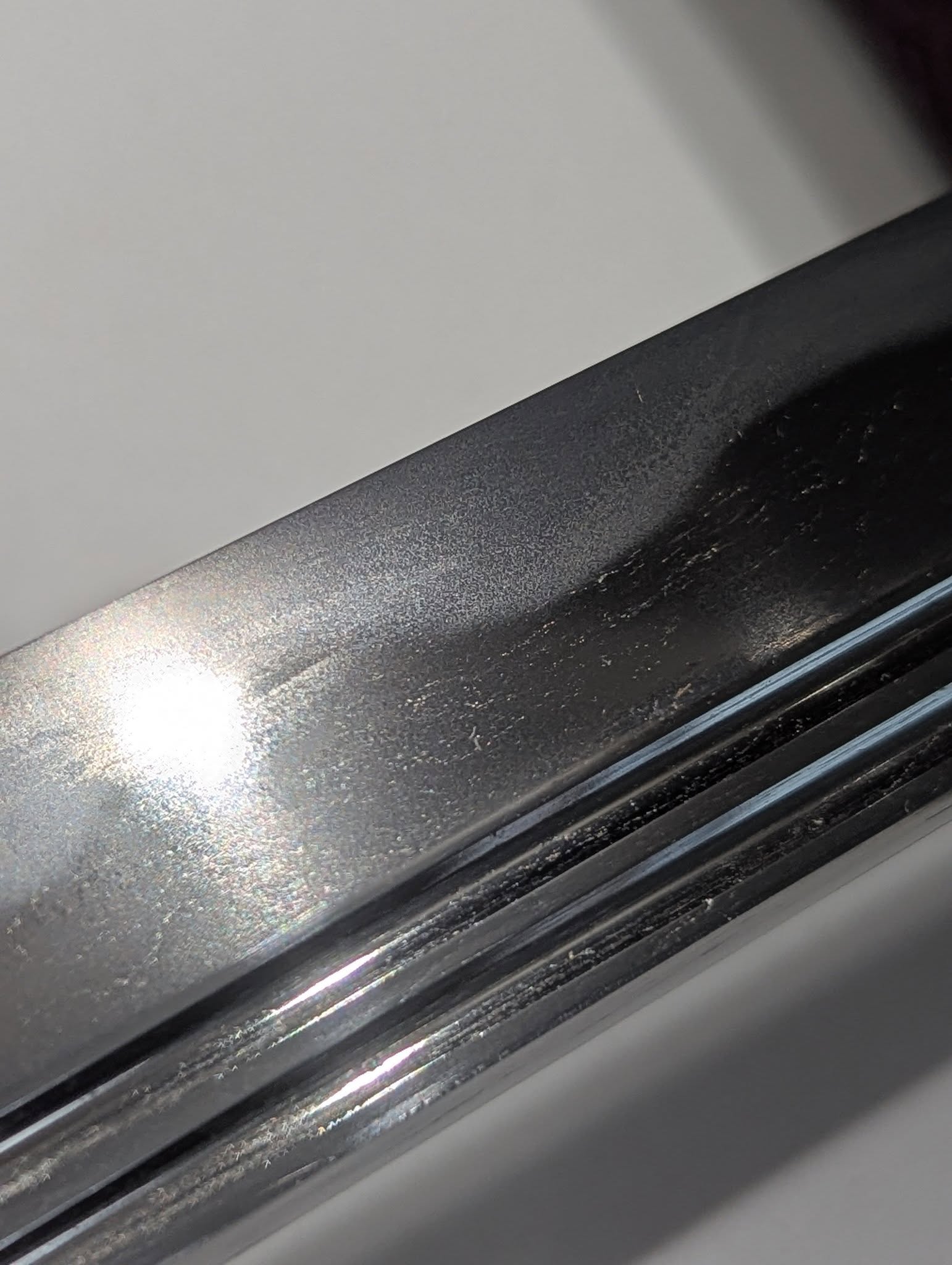
Kaga Kanewaka katana with NTHK kanteisho
KANEWAKA (兼若), 5th gen. or 1st Kaga gen., Keichō (慶長, 1596-1615), Mino/Kaga – “Kanewaka” (兼若), “Kashū-jū Kanewaka saku” (加州住兼若作), “Kashū-jū Kanewaka tsukuru” (加州住兼若造), “Kanewaka tsukuru” (兼若造), real name Tsujimura Jinroku (辻村甚六), son of Yomosuke Kanewaka, moved according to tradition around Keichō ten(1605) either from Owari´s Inuyama or from Mino to Kaga province, he signed in his early years with Kanenaka (兼中), he made katana, wakizashi and tantō, whereas blades from the Keichō era show the typical magnificent Keichō-shintō-sugata, in his early years he worked in the Seki style but was soon influenced by the upcoming shintō style, very densely forged itame with ji-nie, sometimes standing-out, rarely also a pure masame, angular gunome-midare which tends to hako-midare with sunagashi and kinsuji, also a notare mixed with gunome or an ō-gunome-midare, the bōshi is a slightly undulating notare-komi with a somewhat pointed ko-maru-kaeri with hakikake, blades with his later signature Takahira (高平) show skillfully cut horimono in the form of shōchikubai (松竹梅, pine, bamboo and plum) or kurikara, he was one of the most influental shintō smiths of Kaga province and was also called Kaga-Masamune, because of his fame, blades of this smith were quite expensive, as a result, that was the saying “those bushi who want a Kanewaka have to spend so much money that they have to sell their daughters,” jōjō-saku
——————————–
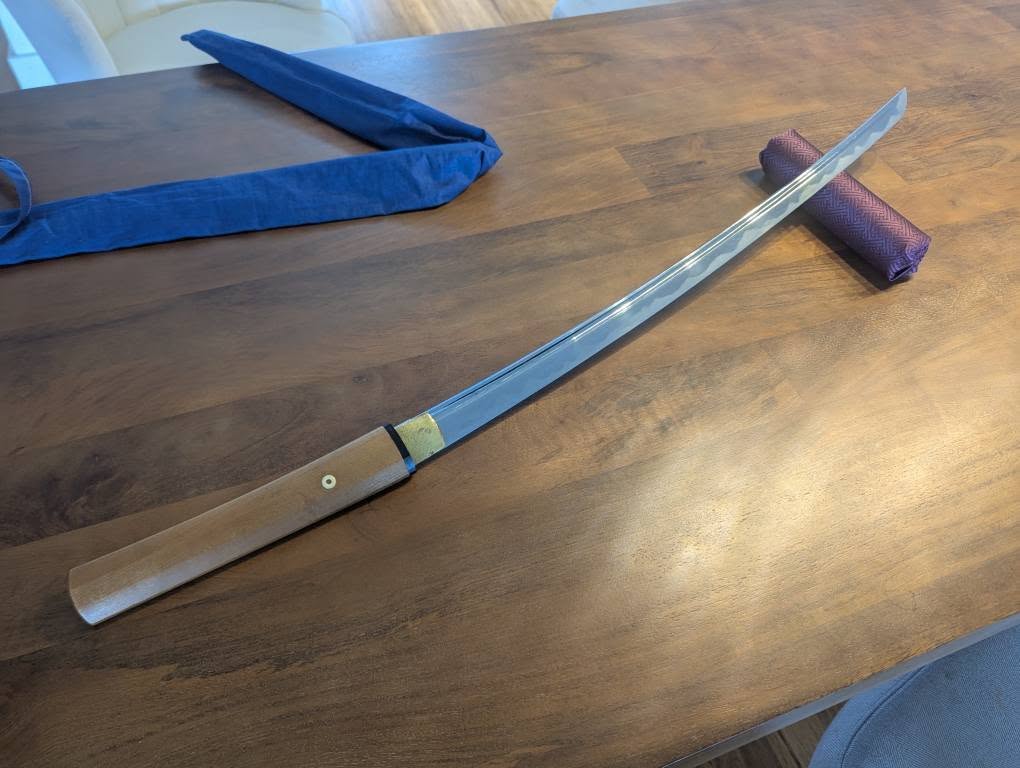
This katana is the work of Kanewaka (兼若), regarded as either the fifth generation Kanewaka of the Mino tradition or, more significantly, the first generation Kanewaka of Kaga Province, where he would establish one of the most influential Shintō lineages of the early Edo period.
Kanewaka’s real name was Tsujimura Jinroku (辻村甚六), the son of Yomosuke Kanewaka. According to tradition, he relocated around Keichō 10 (1605) from either Inuyama in Owari Province or directly from Mino Province to Kaga, then under the powerful Maeda clan. In his earliest work he signed Kanenaka (兼中), reflecting his roots in the Seki-Mino tradition, before adopting the name Kanewaka, under which his finest works were produced.
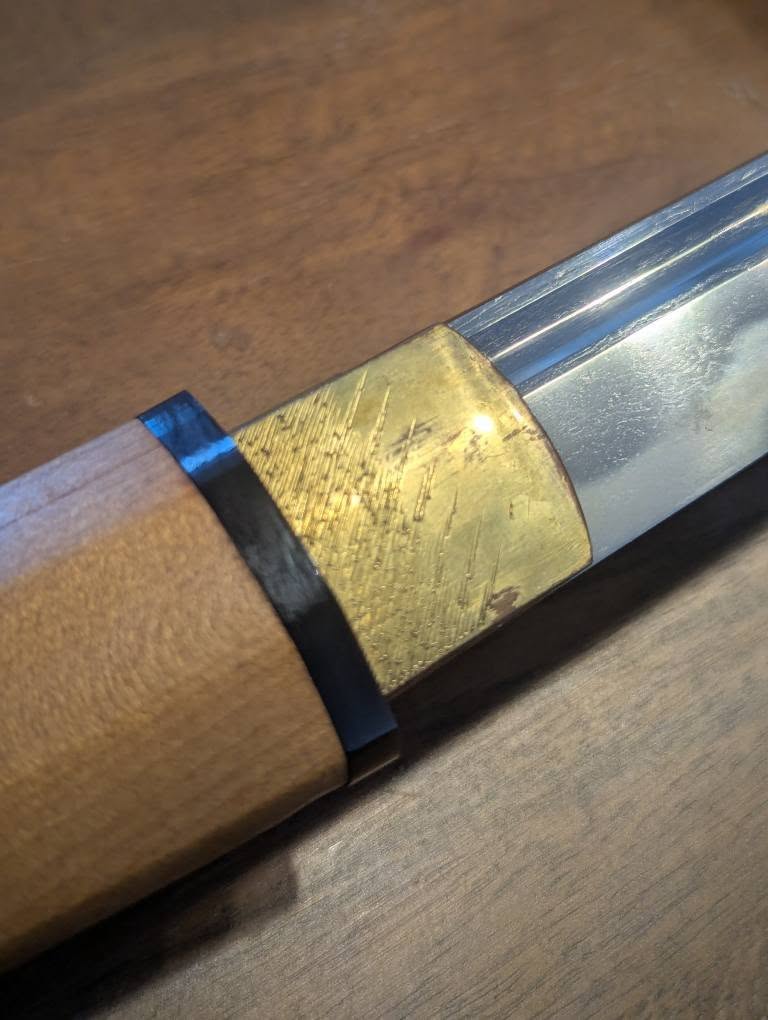
Blades from the Keichō era represent the apex of early Shintō aesthetics, and Kanewaka’s swords are exemplary of this period. His katana display the magnificent Keichō-shintō sugata: a commanding presence with dignified curvature, strong shinogi, and a powerful, martial feeling that bridges late Muromachi functionalism with emerging Edo elegance.
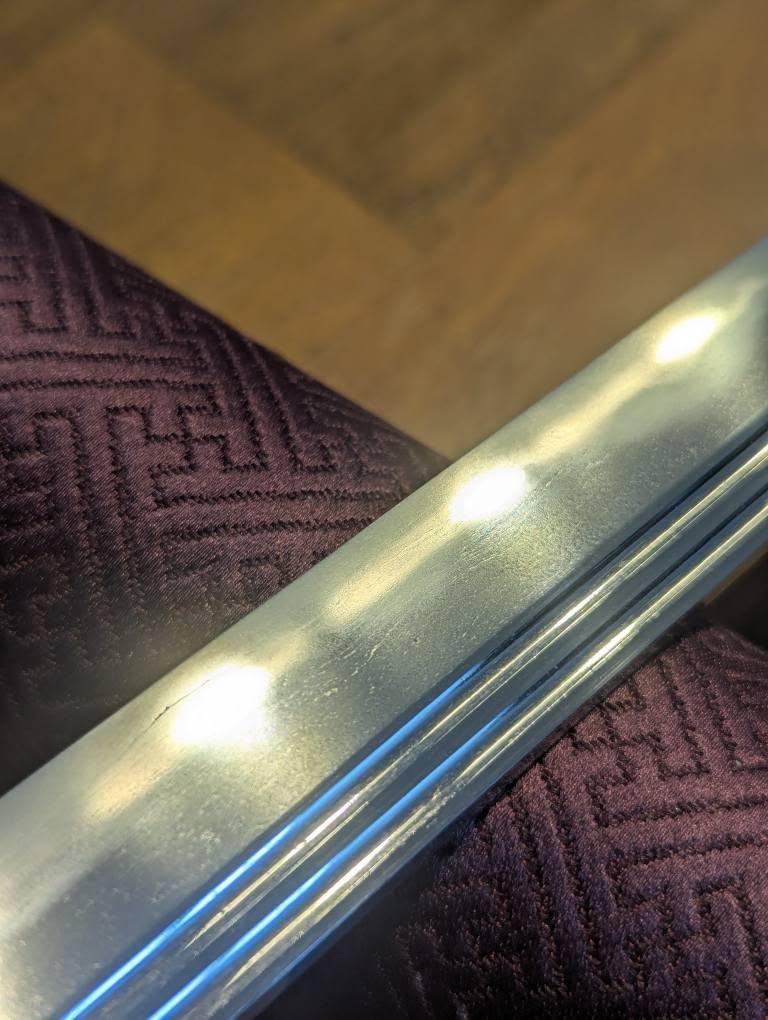
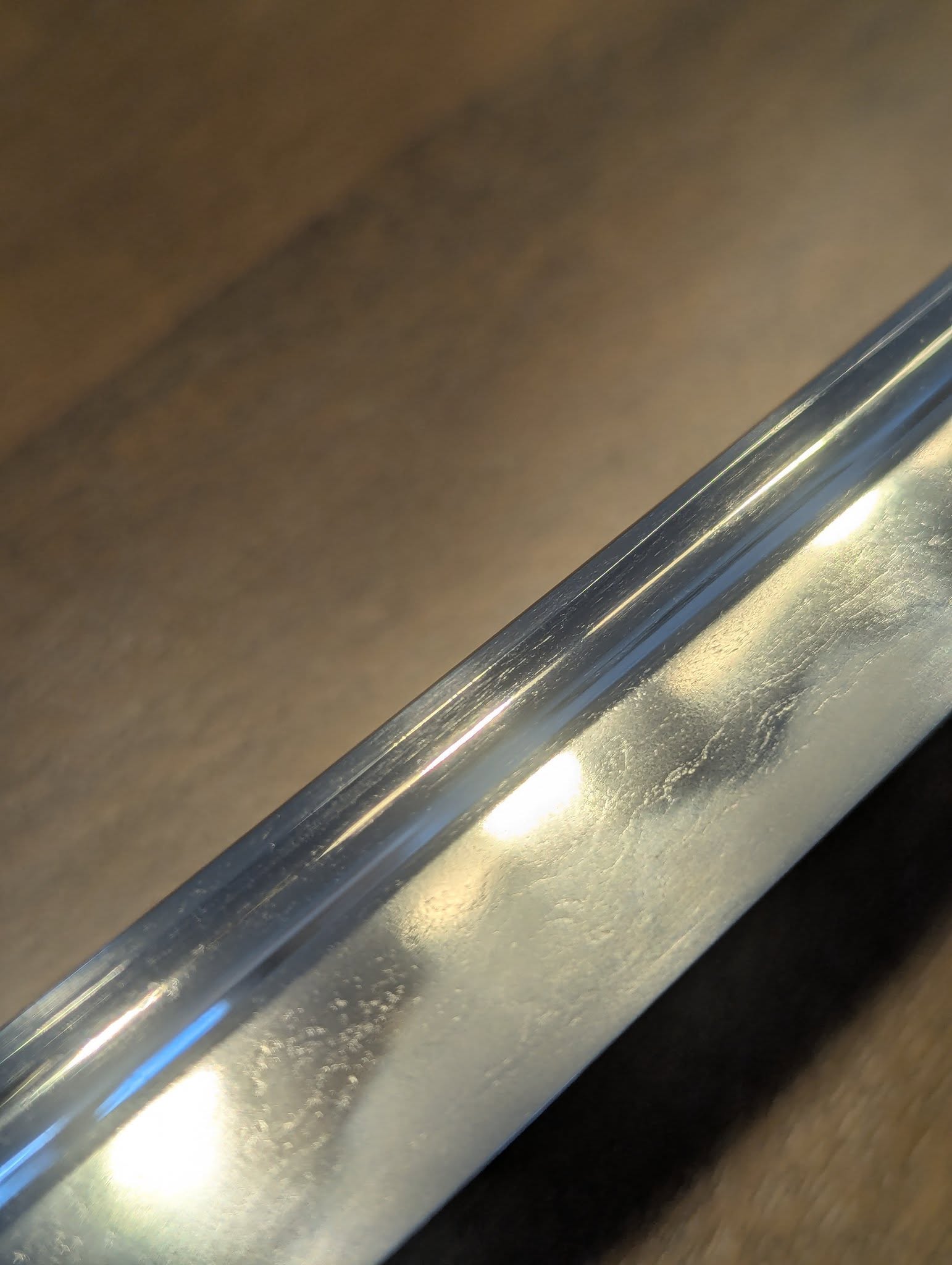
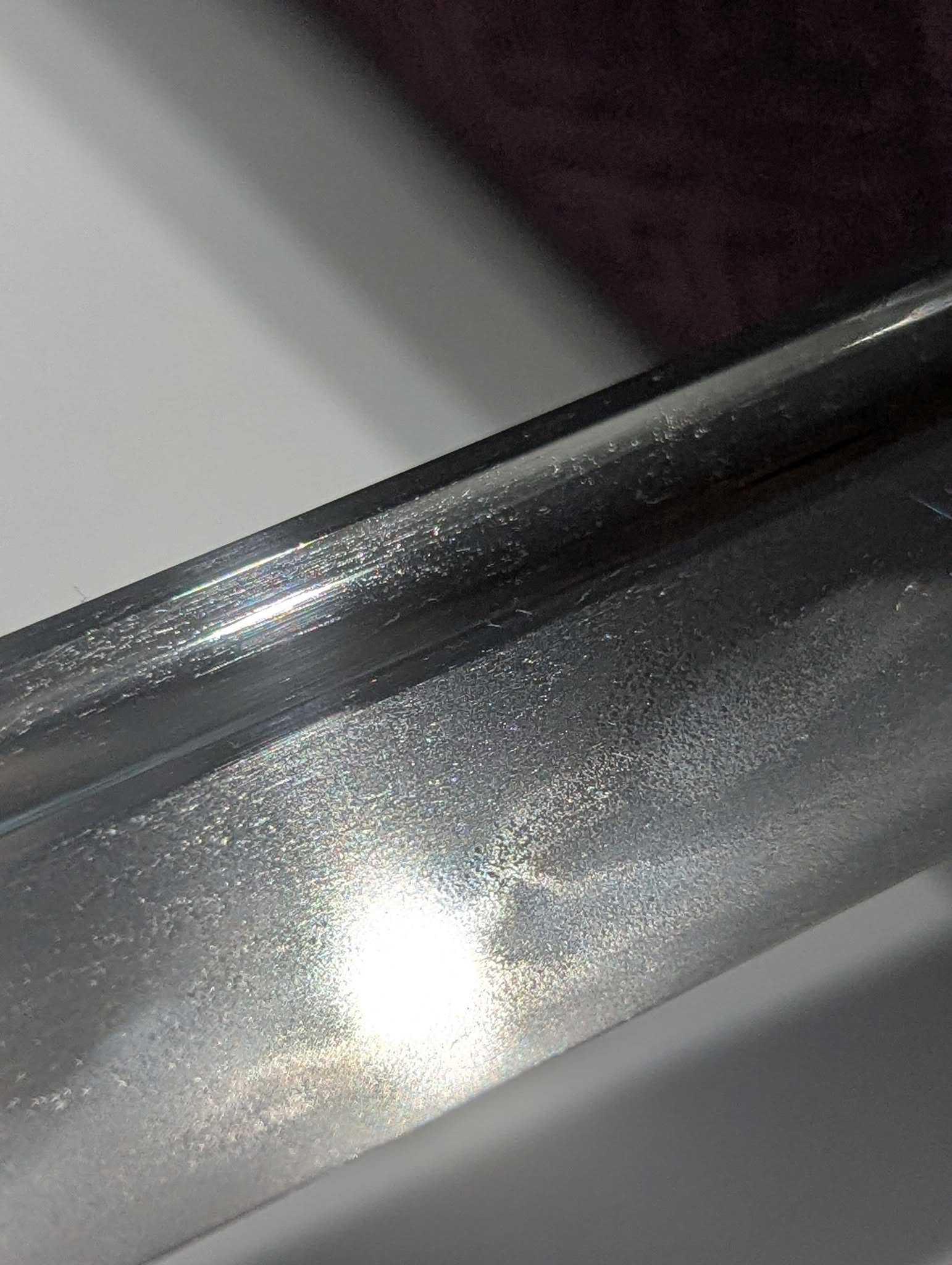
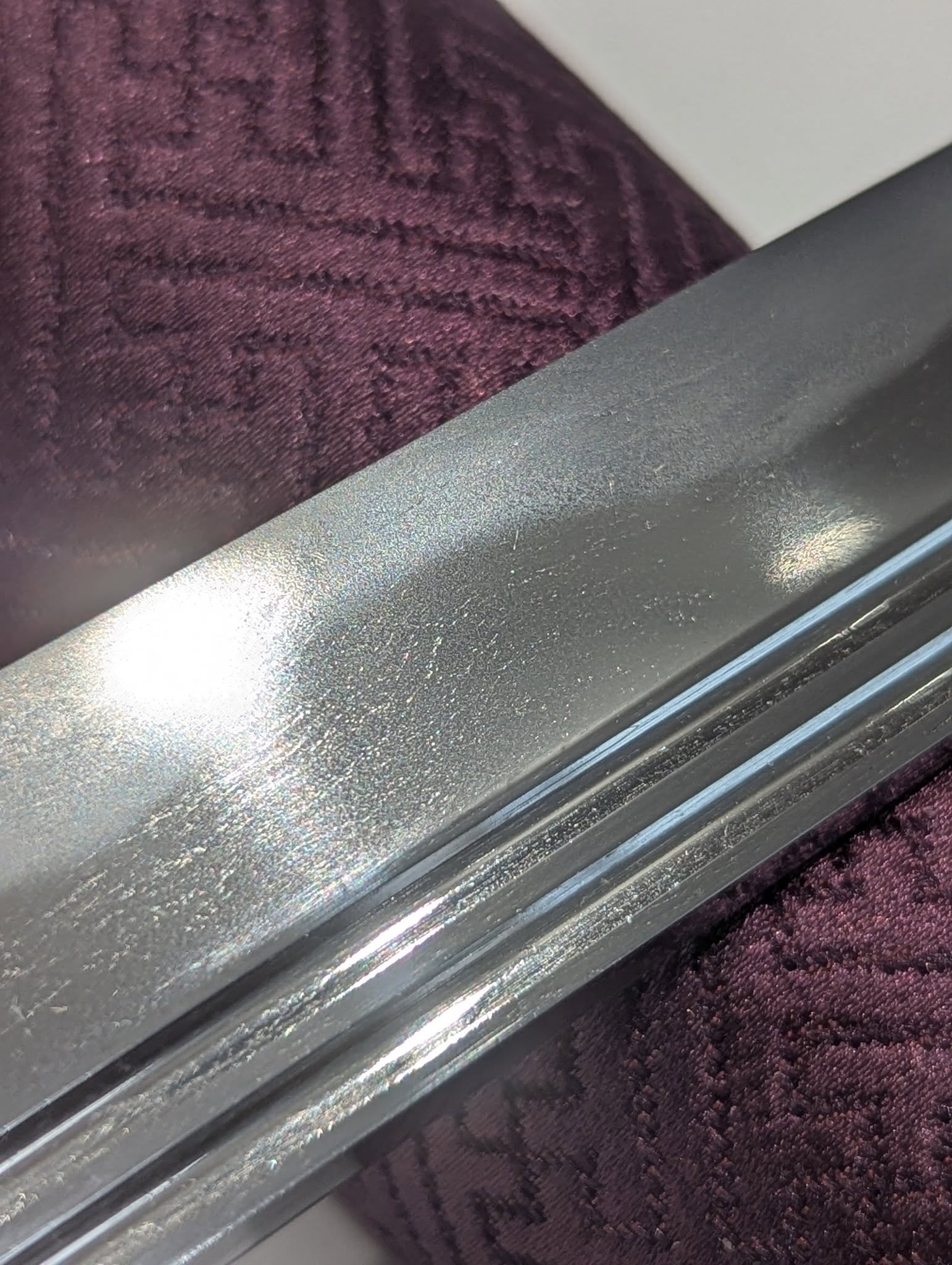
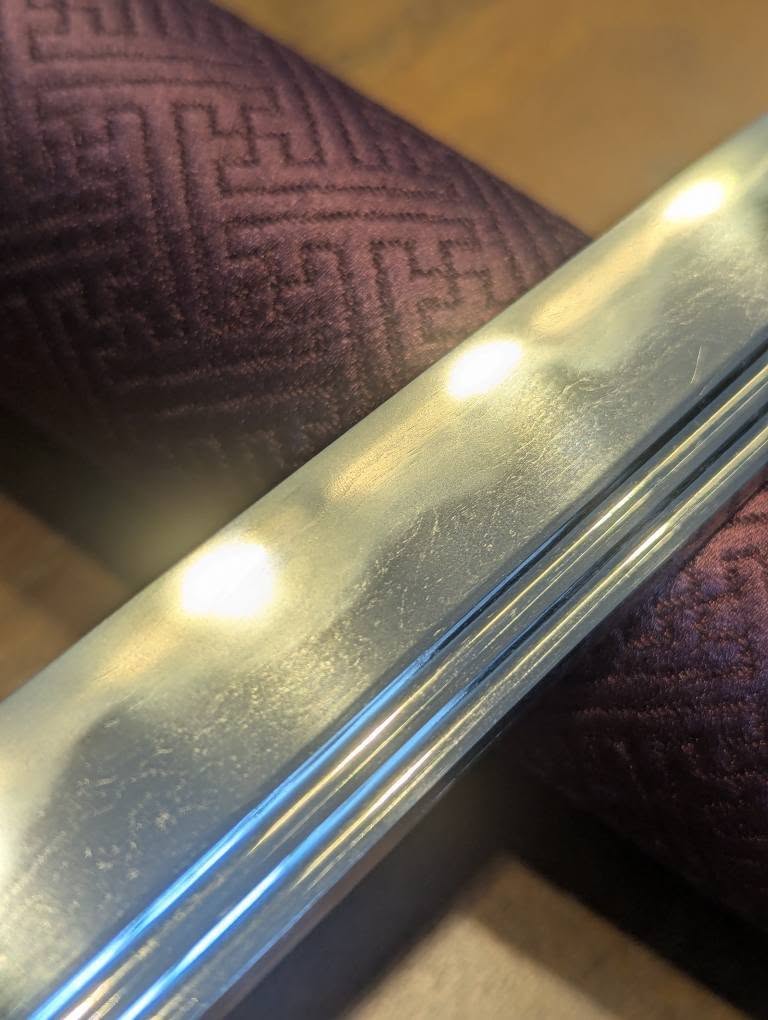
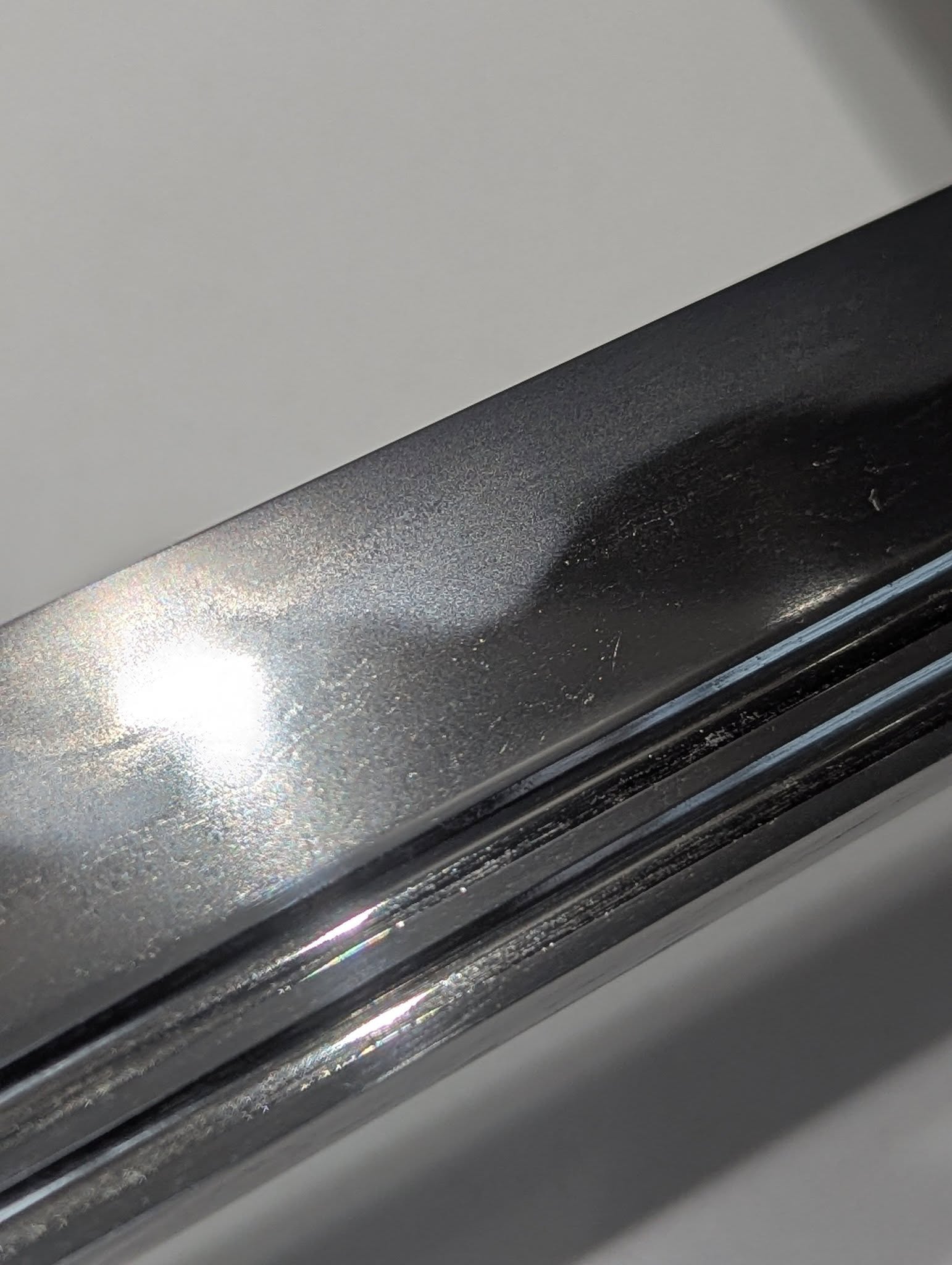
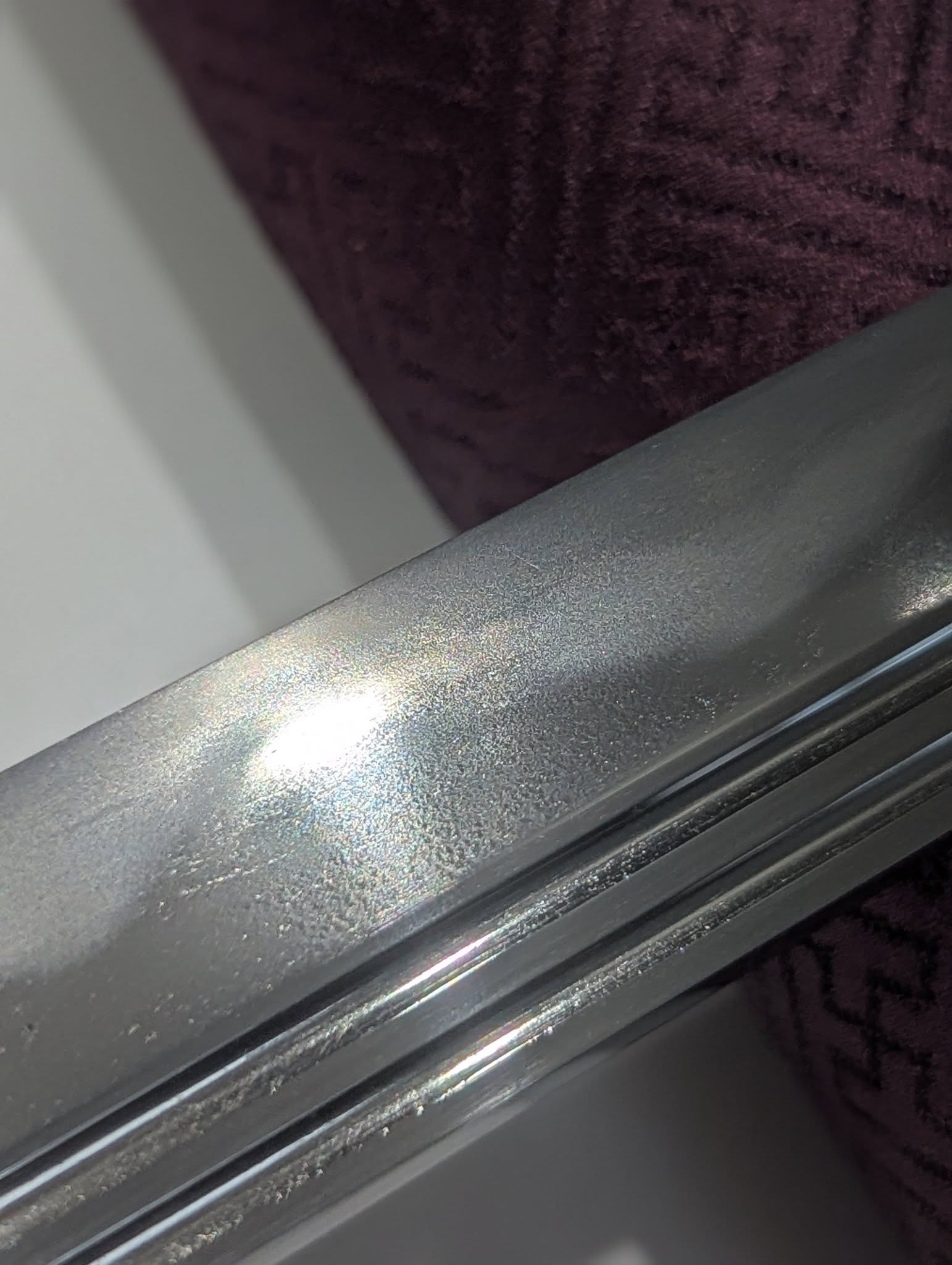
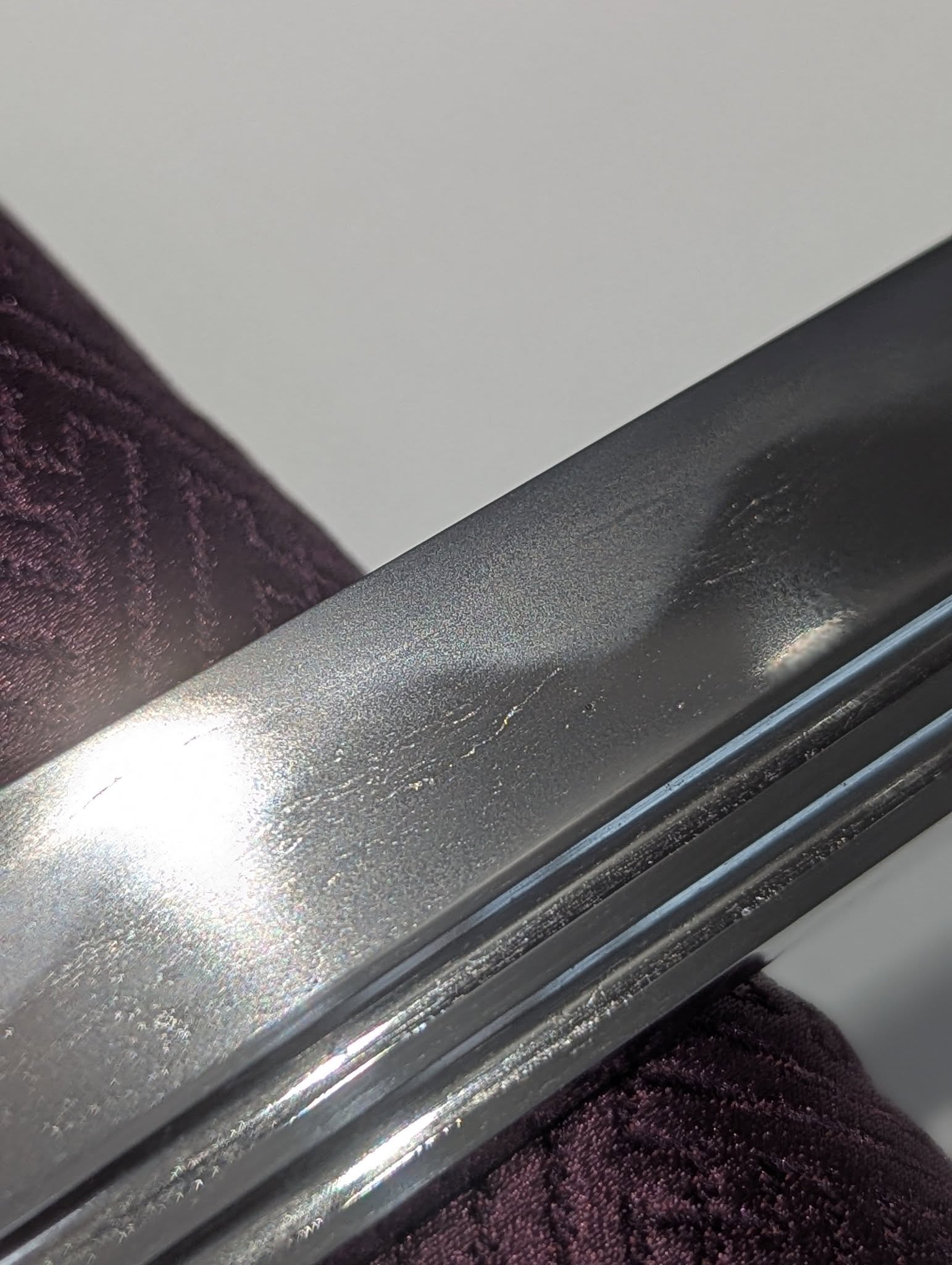
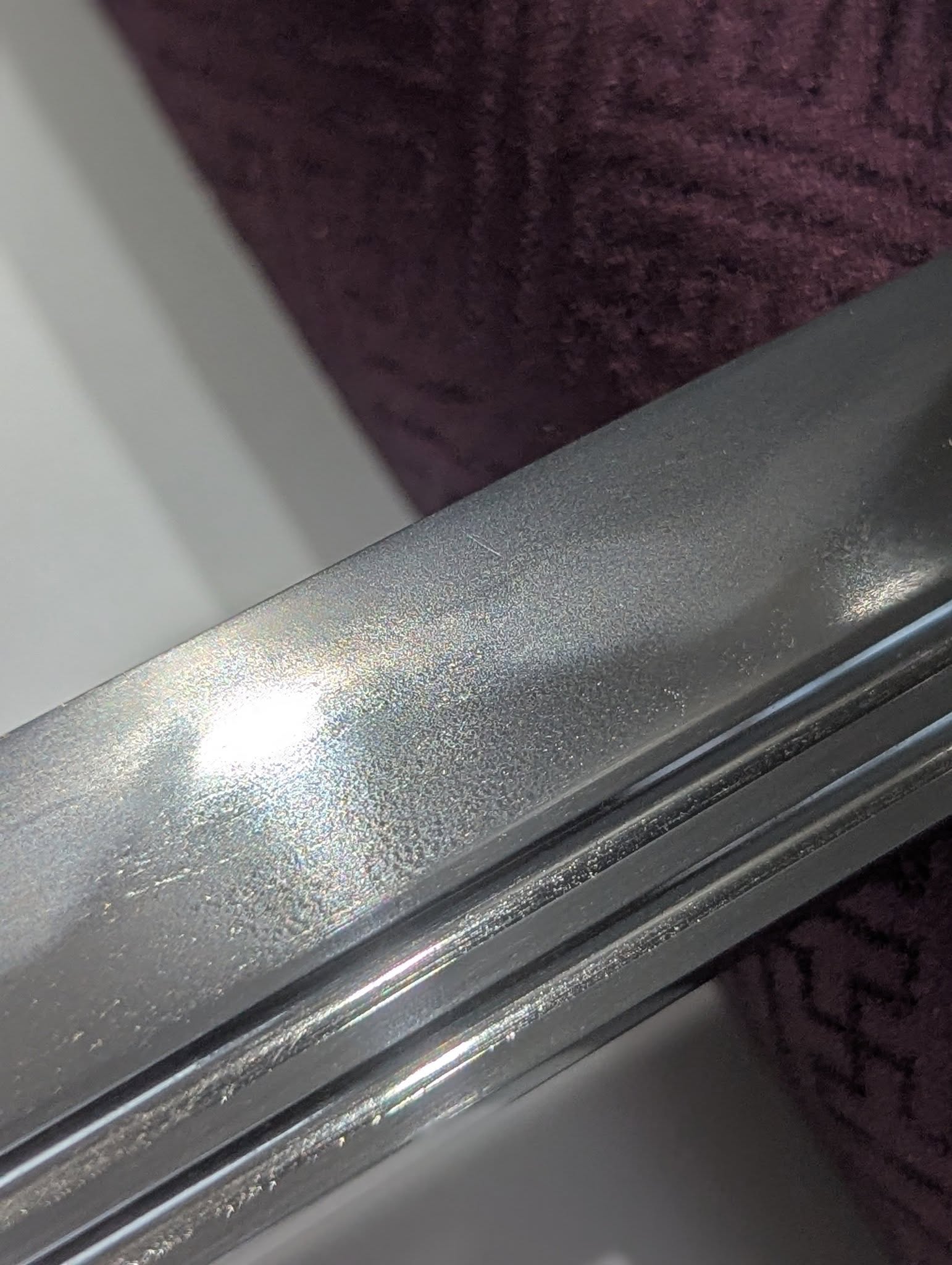
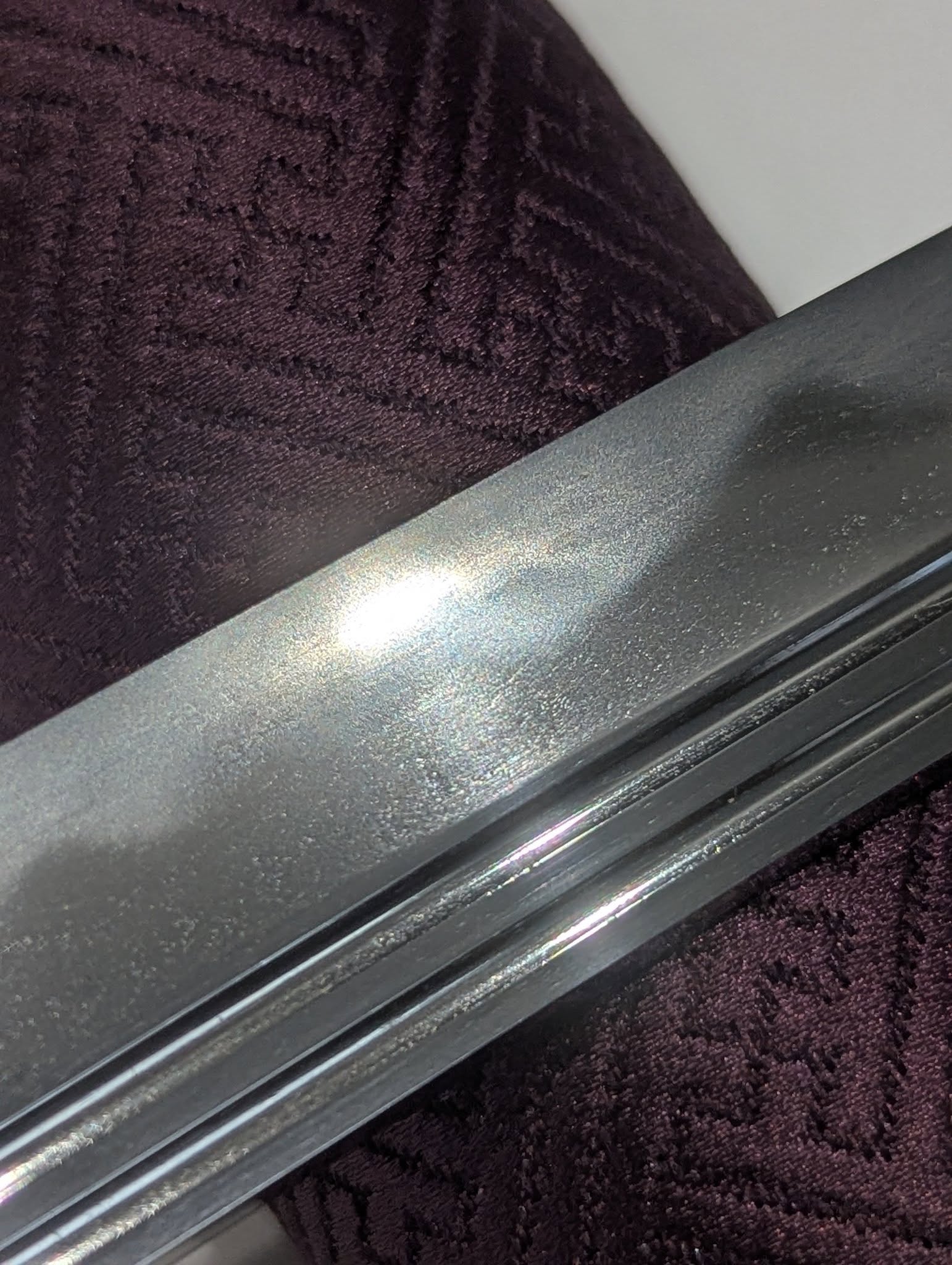
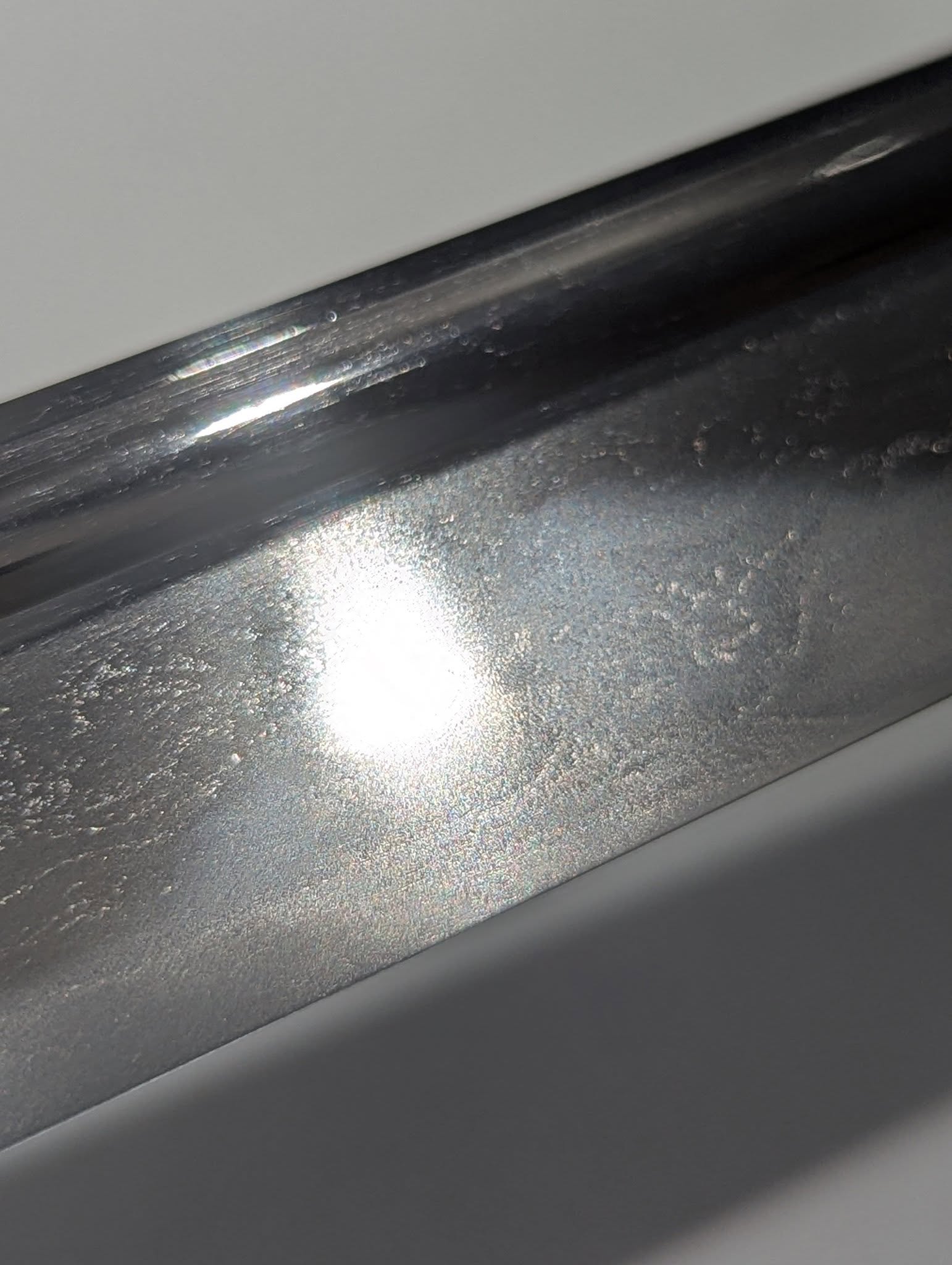
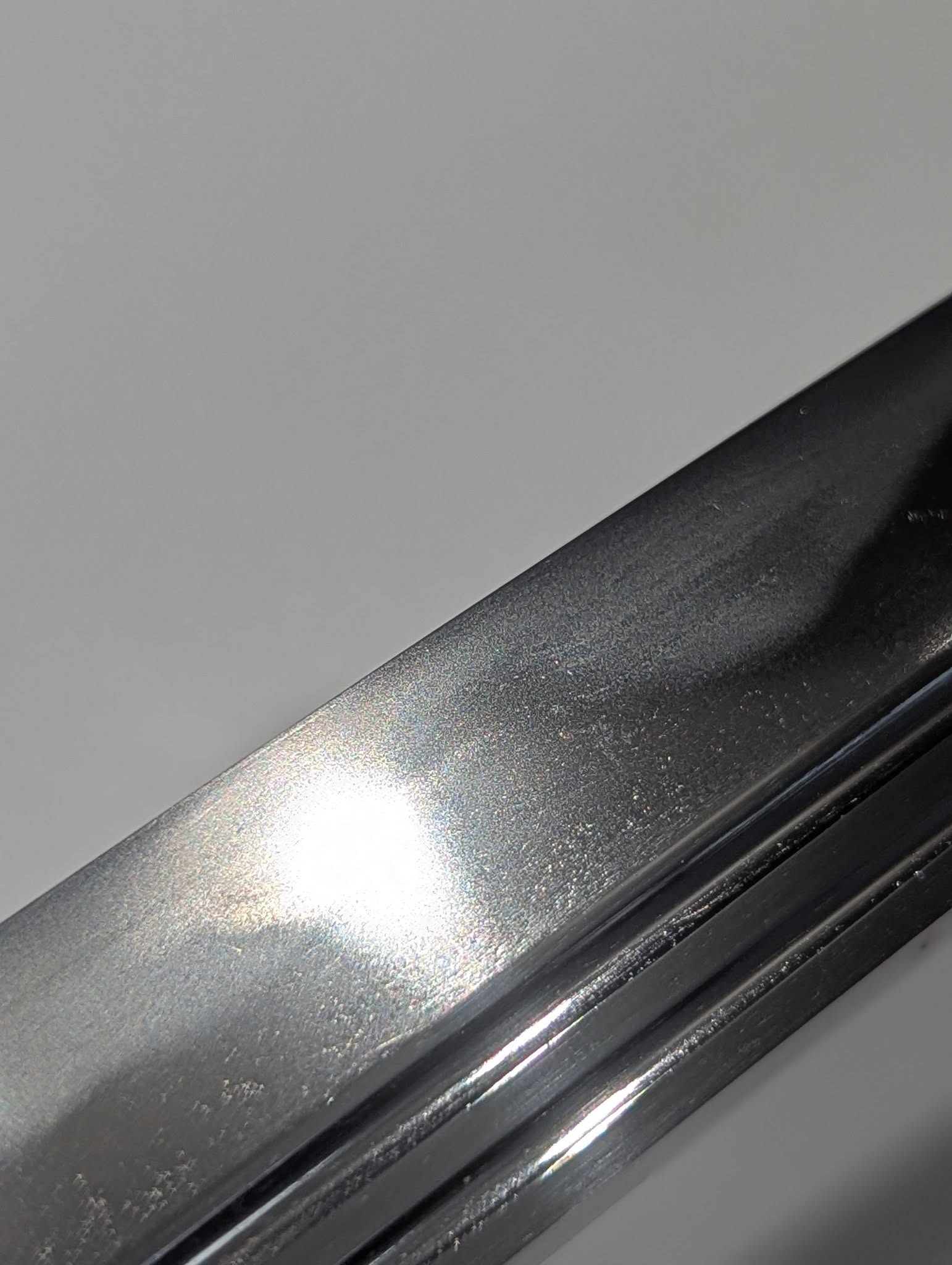
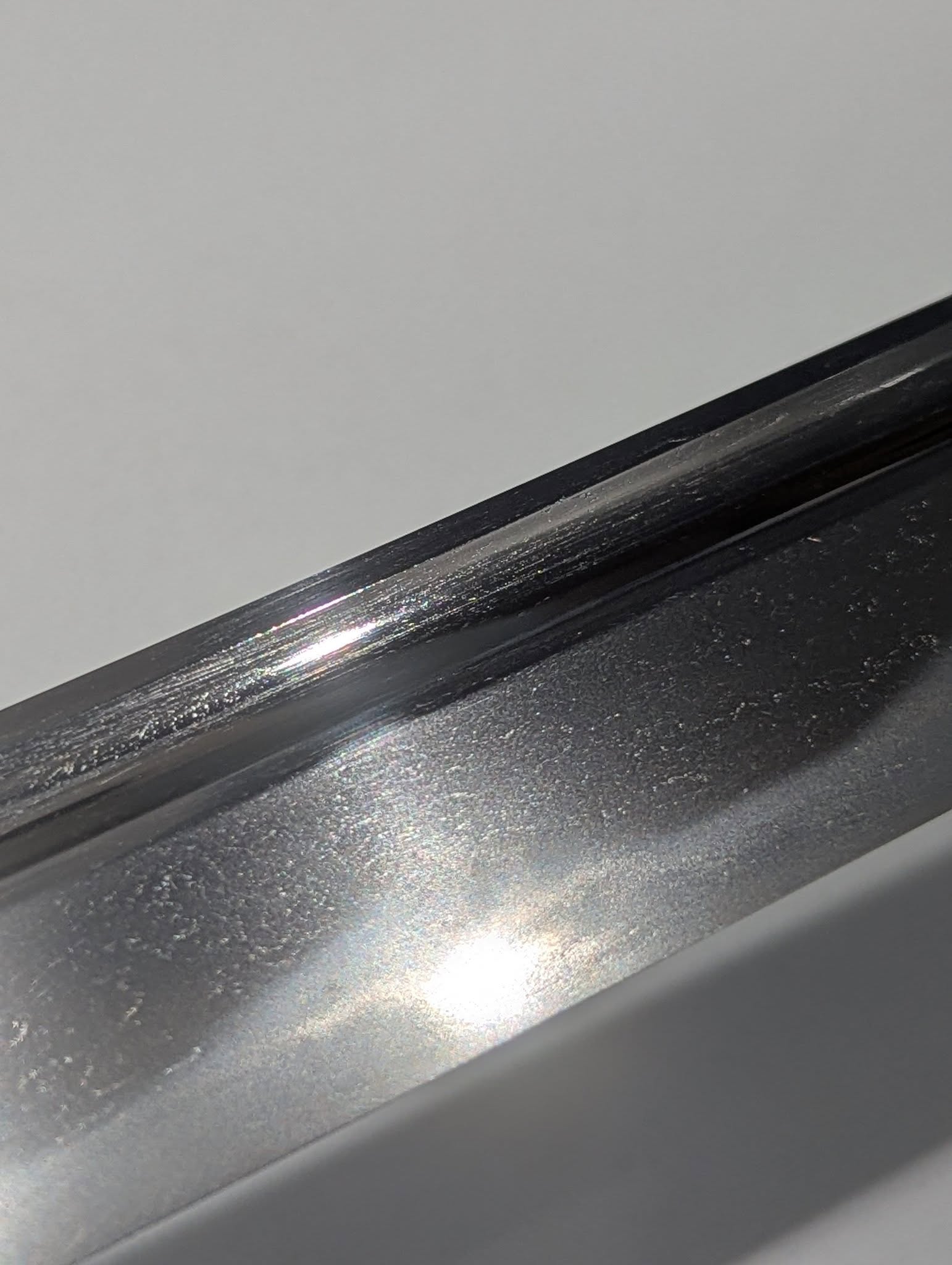
The jihada is typically a very densely forged itame, richly worked and often filled with ji-nie, sometimes appearing boldly standing out from the surface. On rare occasions, Kanewaka produced blades in pure masame, demonstrating both technical range and confidence. The forging is tight, refined, and highly controlled, reflecting a master transitioning from Mino traditions into the fully mature Shintō style.
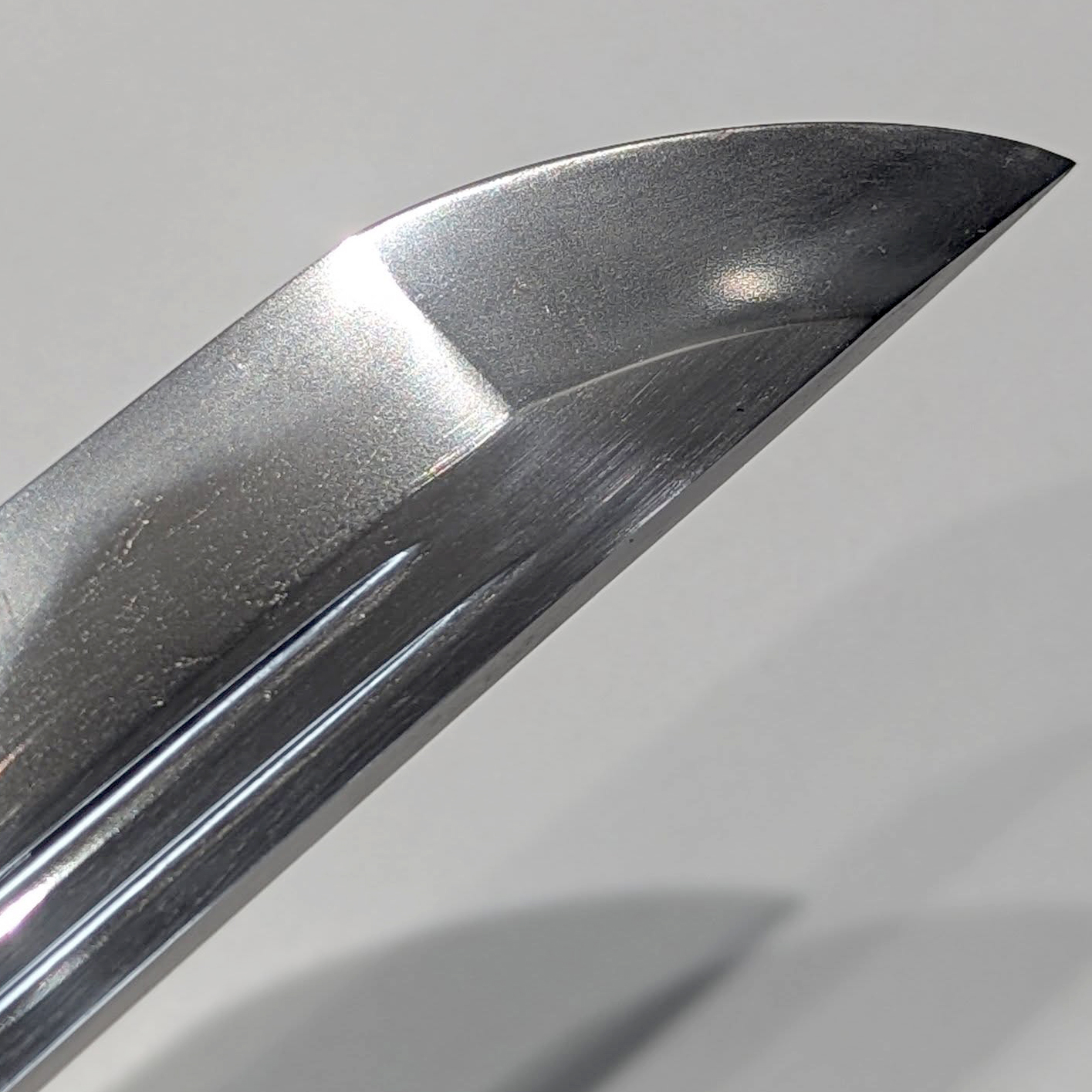
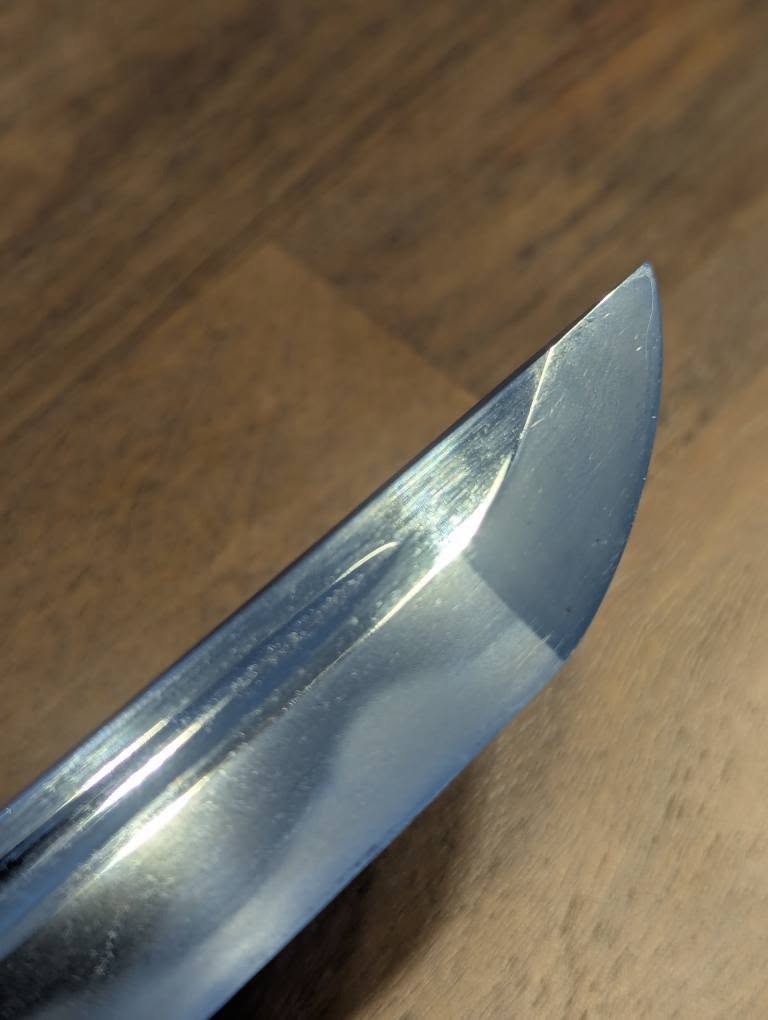
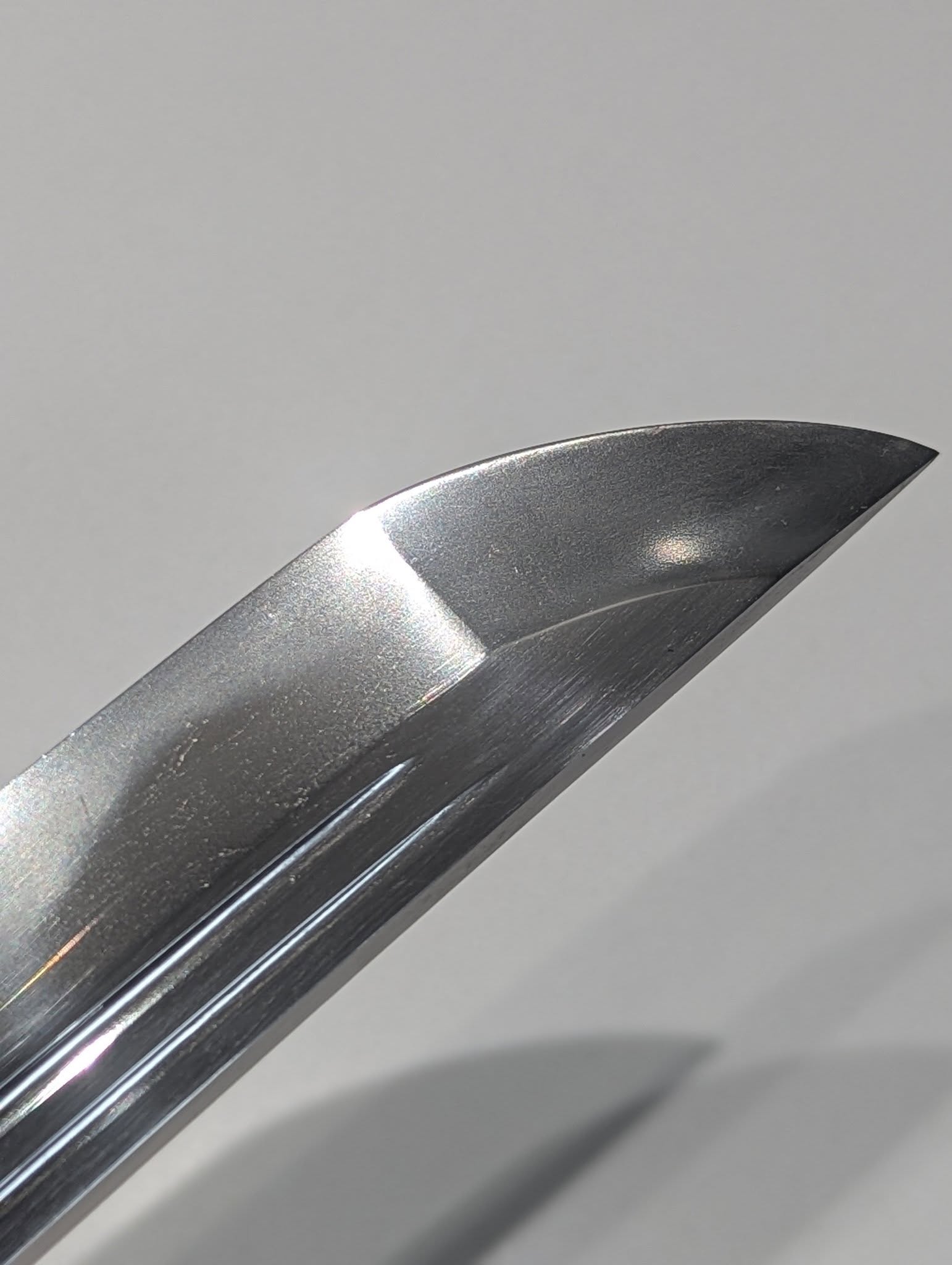
His hamon is among his most celebrated features. Kanewaka favored an angular gunome-midare, frequently evolving into hako-midare, animated with abundant sunagashi and brilliant kinsuji. He also produced notare mixed with gunome and impressive ō-gunome-midare, all executed with vitality and rhythmic balance. The bōshi is typically a slightly undulating notare-komi, ending in a somewhat pointed ko-maru kaeri, often enhanced with hakikake, adding further dynamism to the kissaki.
In his later career, Kanewaka adopted the name Takahira (高平). Blades from this period are especially prized for their skillfully carved horimono, most notably auspicious motifs such as shōchikubai (pine, bamboo, and plum) and kurikara, carved with clarity and confidence that underscore his mature mastery.
Kanewaka was one of the most influential Shintō smiths of Kaga Province, earning the honorific nickname “Kaga-Masamune.” This katana is an excellent example of Kanewaka’s work at the height of his abilities, embodying the strength, refinement, and artistic ambition that define the Keichō Shintō revival. His workmanship is rated jōjō-saku, placing him among the highest-ranked smiths of his generation.
Reviews
There are no reviews yet.