
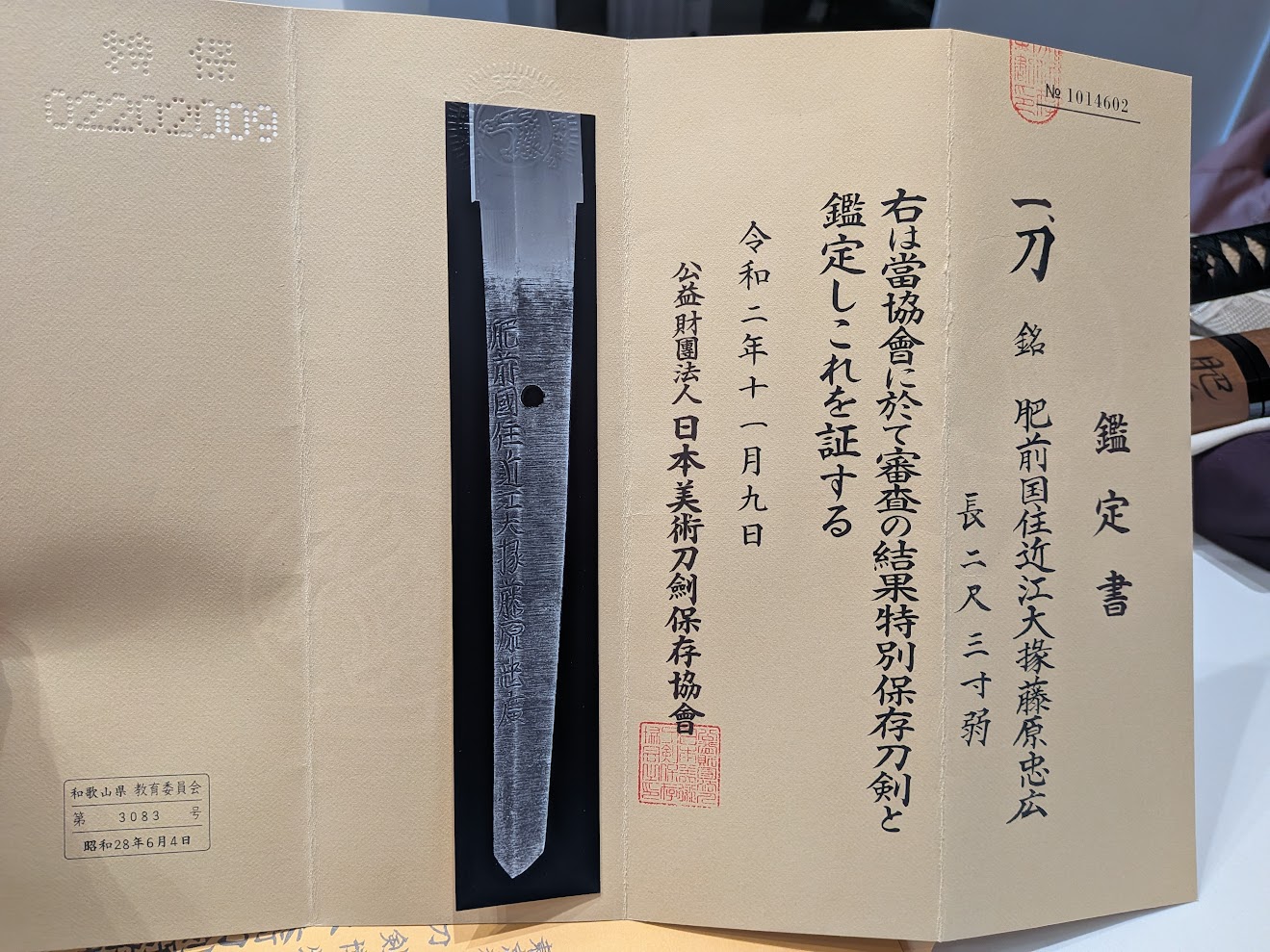
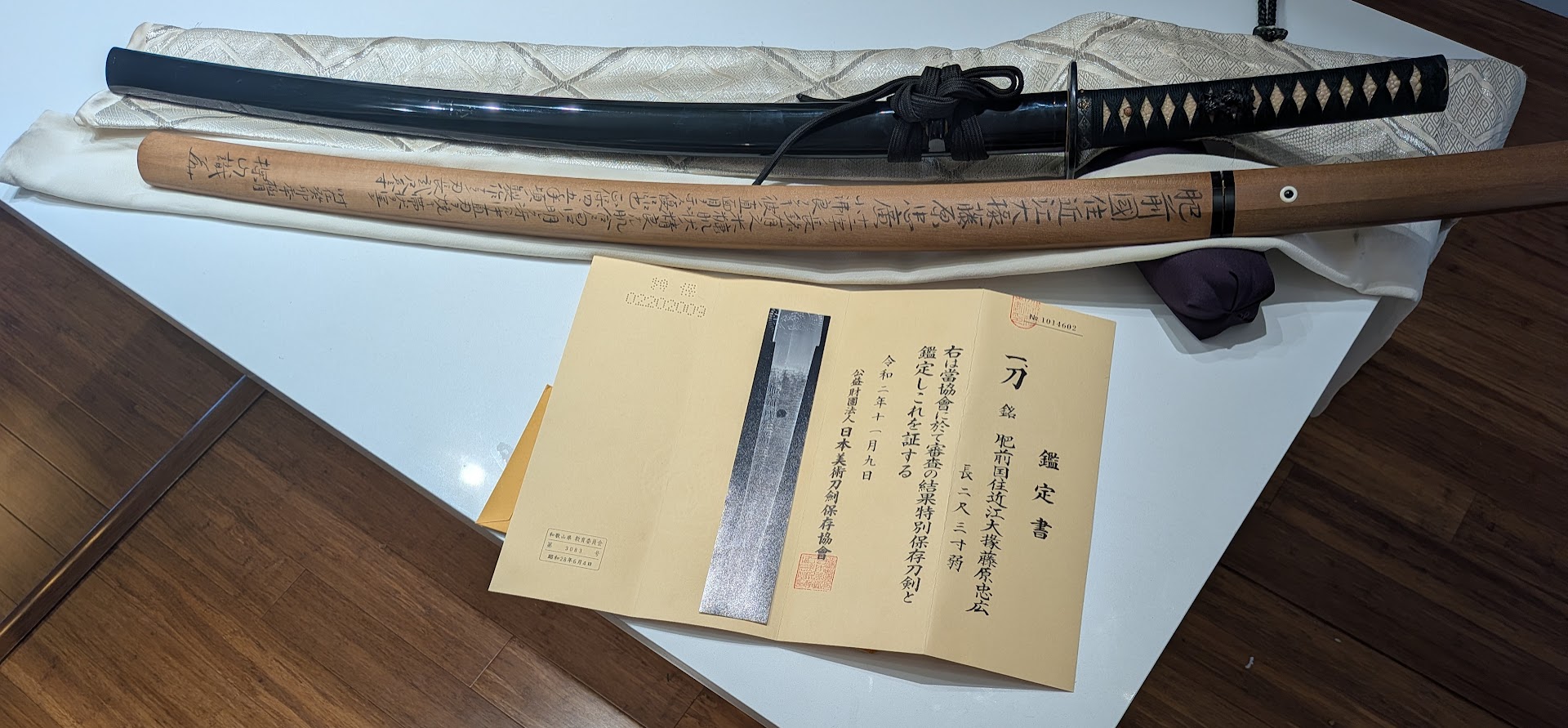
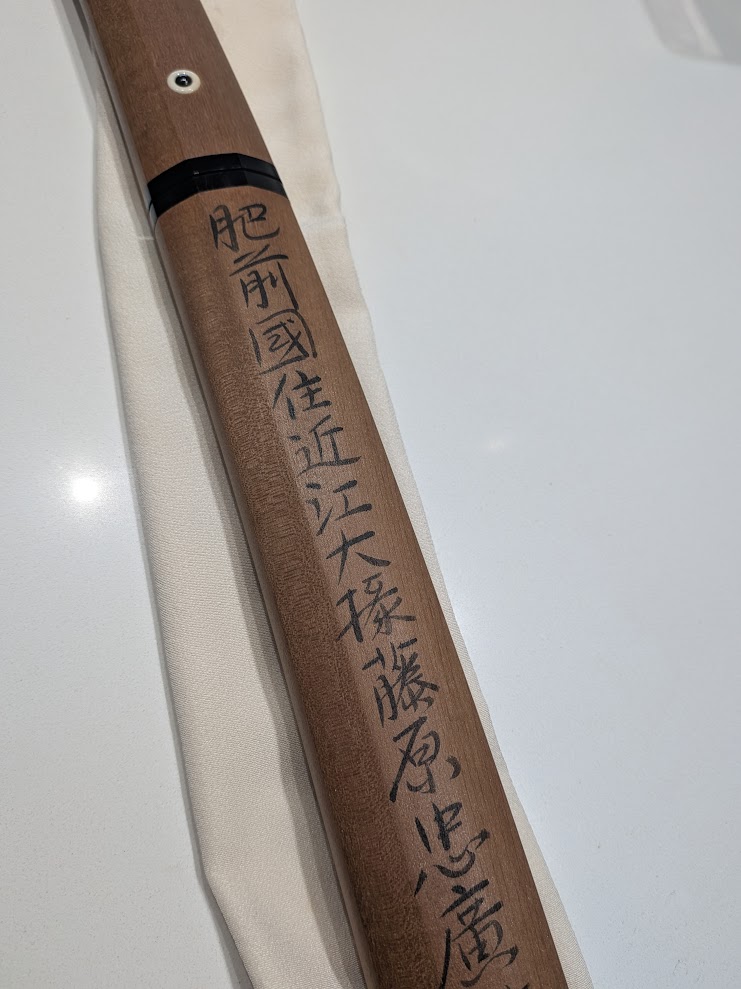
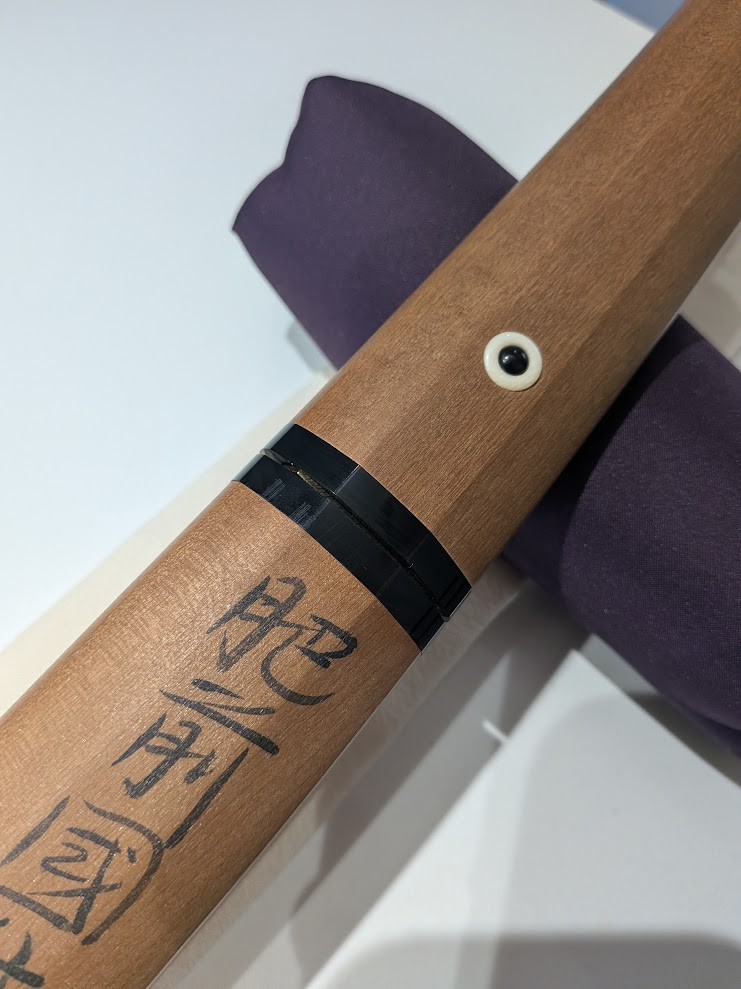
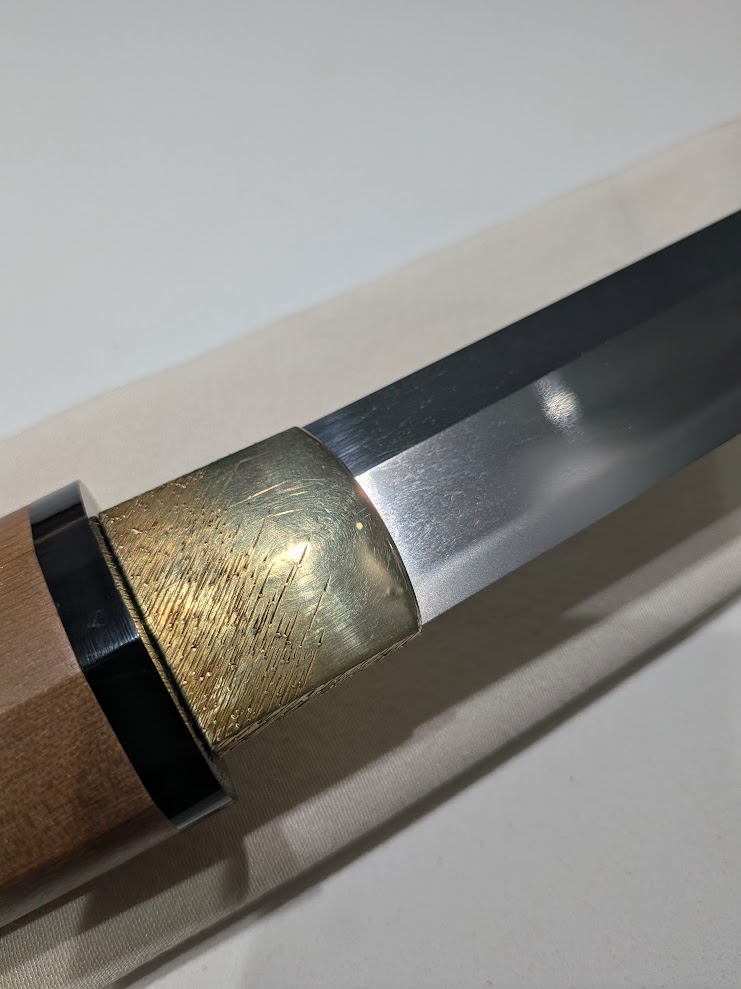
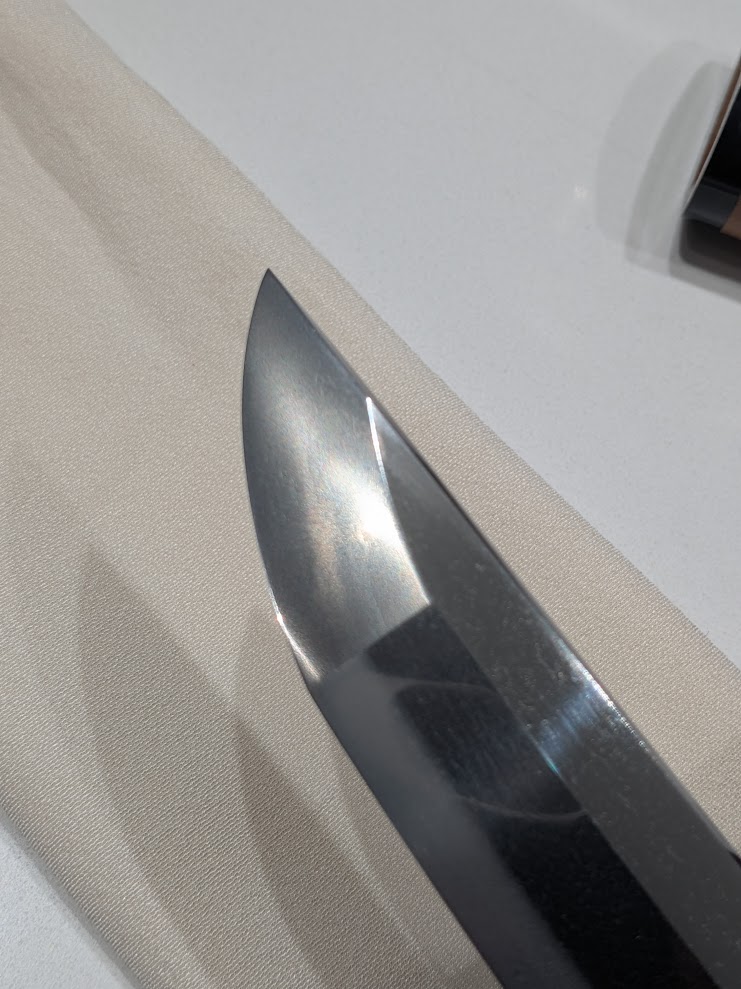
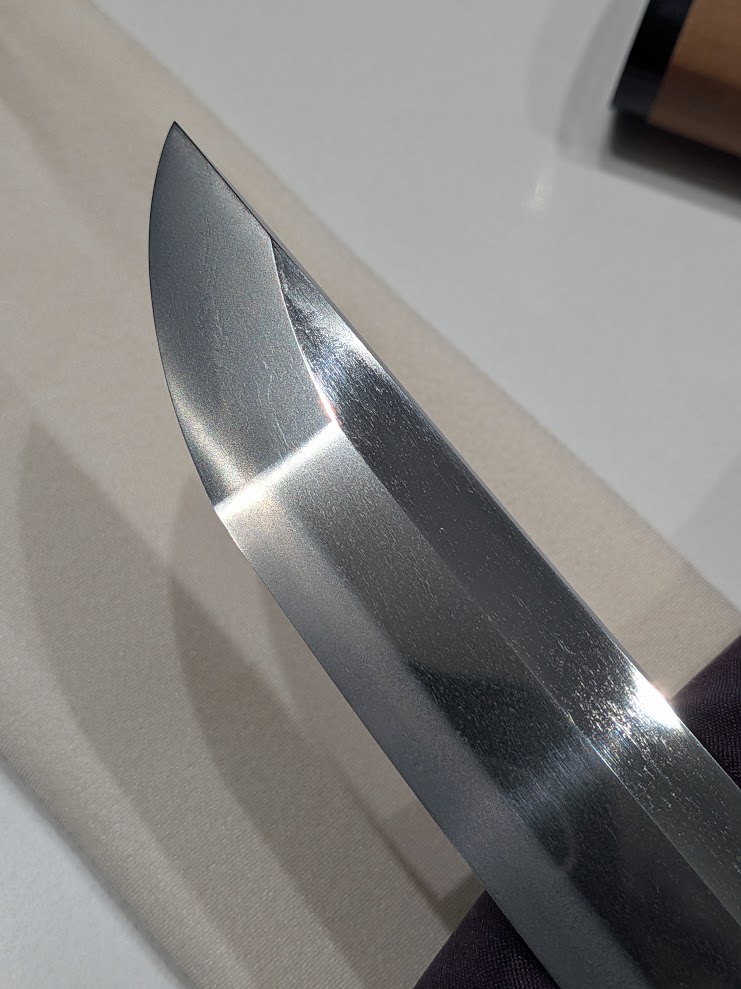
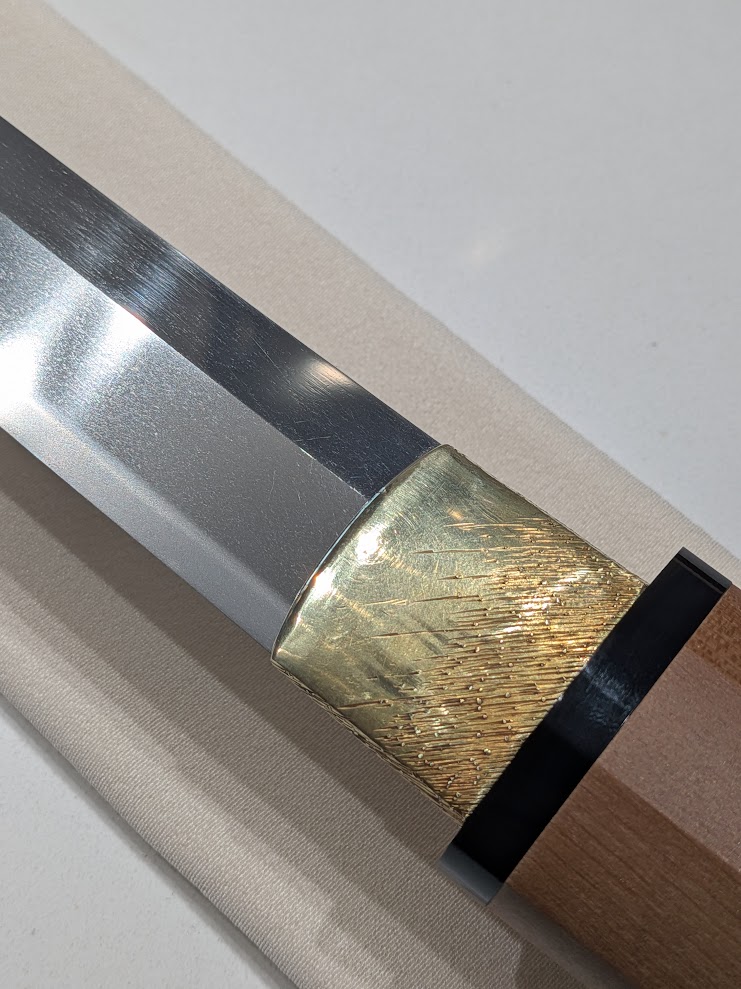
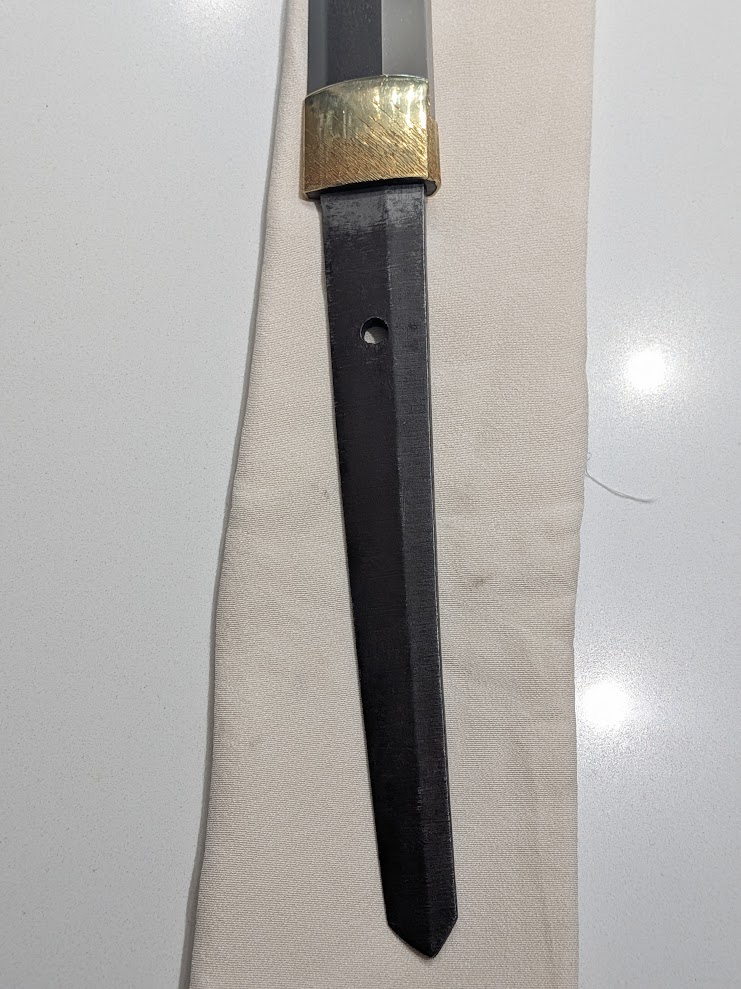
Tanobe-sensei sayagaki.
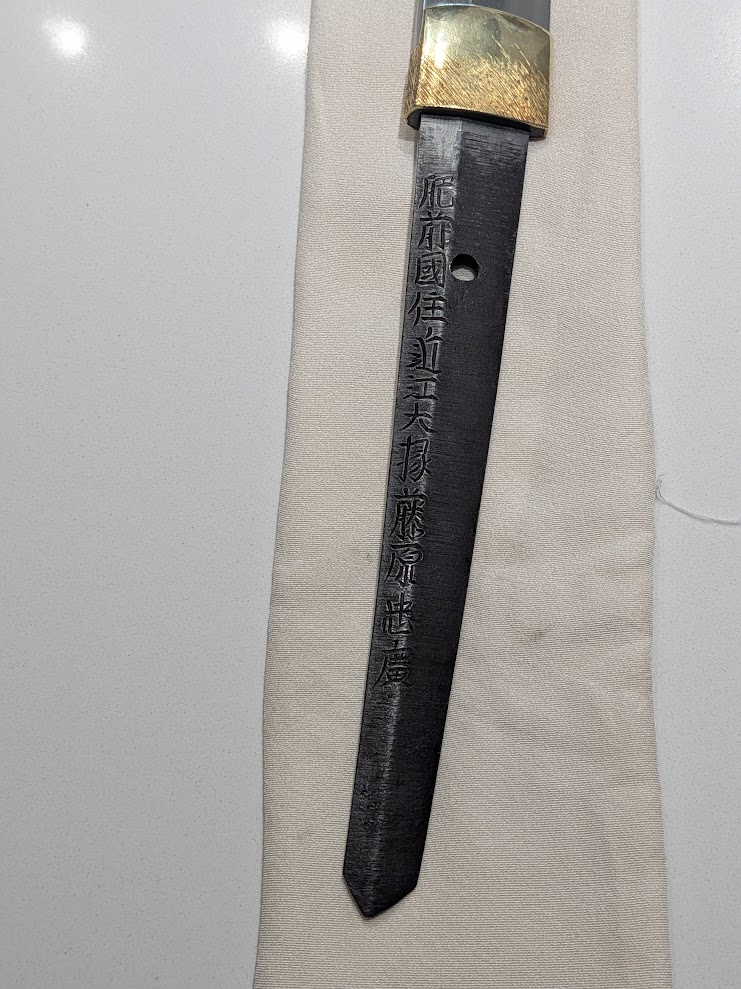
Hizen (no) kuni ju Ōmi Daijō Fujiwara Tadahiro
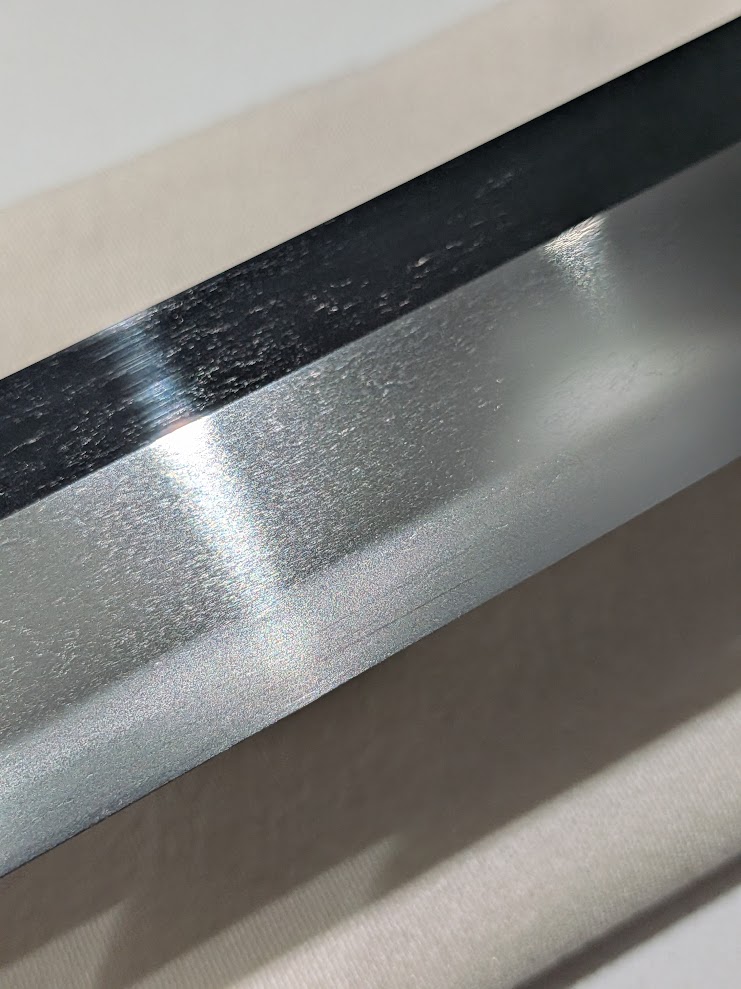
This sword is signed with a 12 character inscription (mei). The jigane is a finely packed ko-mokume, well-forged, with ji-nie. The hamon is suguha-based, formed in ko-nie. It shows the characteristic suguha style of this smith, and this is a masterpiece (yuhin) of his work.
Blade length: approximately 2 shaku 3 sun.
Written by Tanzan (Tanobe Michihiro), with kaō.
This is a beautifully forged katana by Omi Daijō Fujiwara Tadahiro, the second-generation smith of the Hizen Tadayoshi line, one of the most prolific and respected Shintō-period swordsmiths. His works are highly sought after by collectors for their consistency, refined craftsmanship, and elegant aesthetic grounded in the Yamashiro tradition. Tadahiro began forging at an early age under the guidance of his father, Shodai Tadayoshi, and inherited the forge at just 19 after his father’s death in 1632. He later received the honorary court title of Omi no Daijō in 1641, under which most of his well-known works are signed.
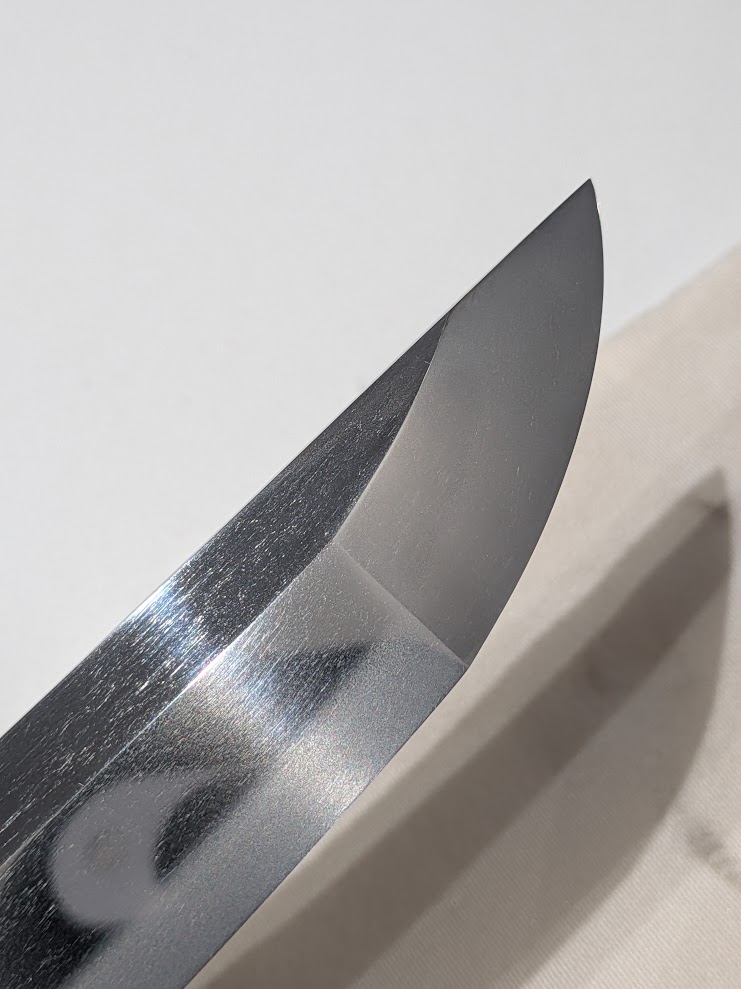
This blade demonstrates the hallmark qualities of Tadahiro’s work: a graceful sugata, refined and textbook konuka-hada, and a meticulously controlled suguha hamon rendered in nie-deki. These traits are deeply rooted in the Yamashiro Rai tradition—particularly the styles of Rai Kunimitsu and Kuniyuki—which shaped the entire aesthetic of the Hizen school. Tadahiro’s ability to harmonize Yamashiro elegance with his own regional character helped solidify the reputation of Hizen swords across Japan. He is ranked jō-jō saku by Fujishiro and is noted for producing o-wazamono blades of exceptional sharpness, a testament to both beauty and battlefield function.
Tadahiro’s long career—spanning more than six decades—led to an enormous output, and his work was in such high demand that senior students like Masahiro and Yoshinobu produced daisaku blades under his name. This piece, however, is a direct example of Tadahiro’s own hand, showcasing the exacting workmanship and restrained dignity that define the best of the Tadayoshi lineage. His influence extended beyond his own workshop, ensuring that the Hizen tradition would flourish for generations. This katana is an exemplary representation of Tadahiro’s mastery and the refined sword culture of early Edo Japan.