
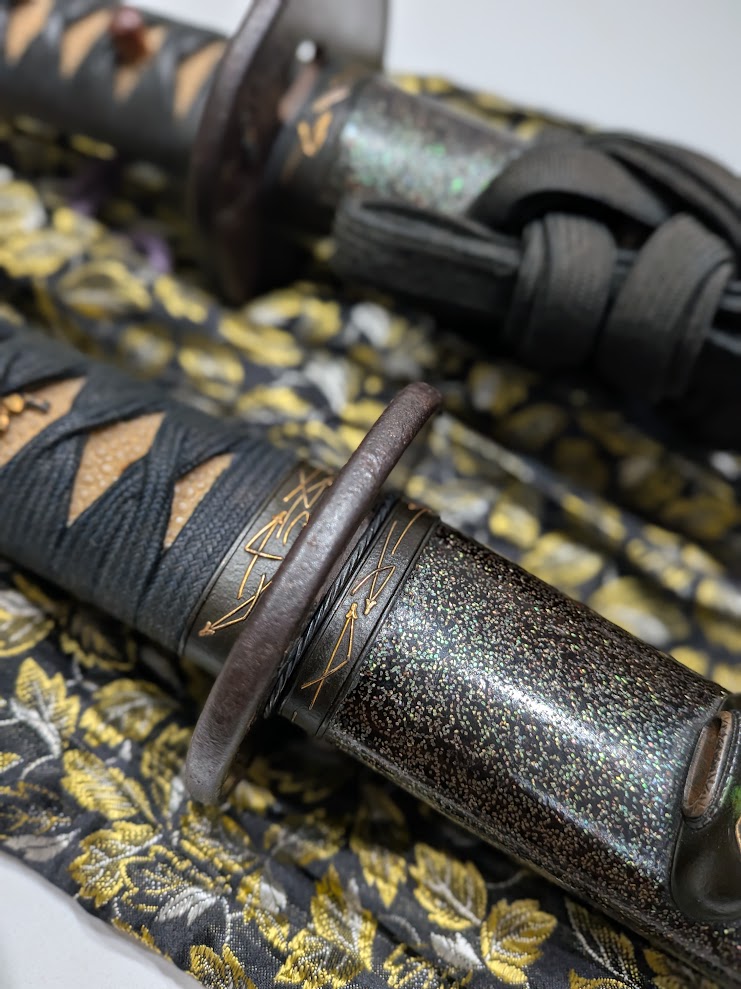
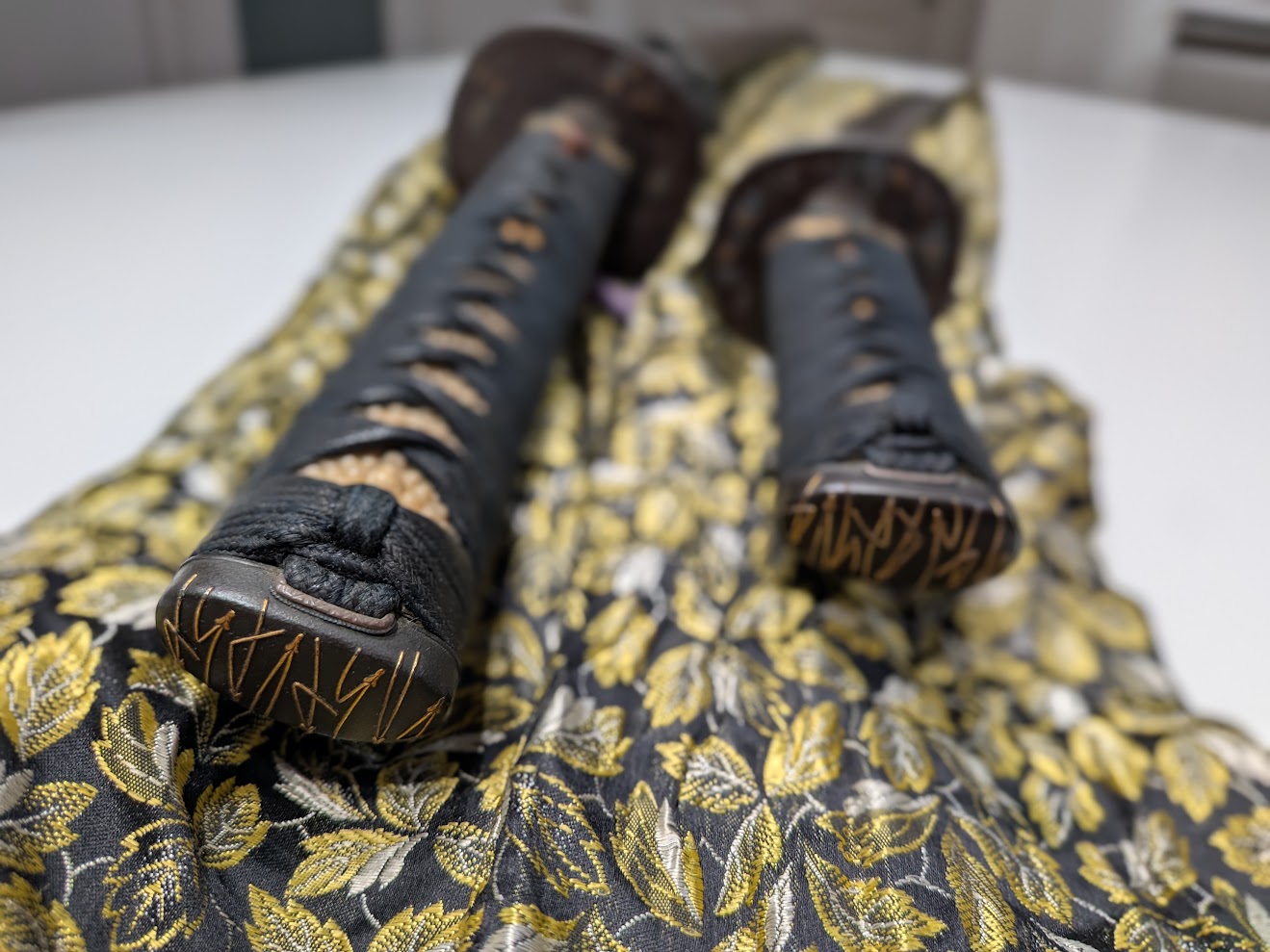
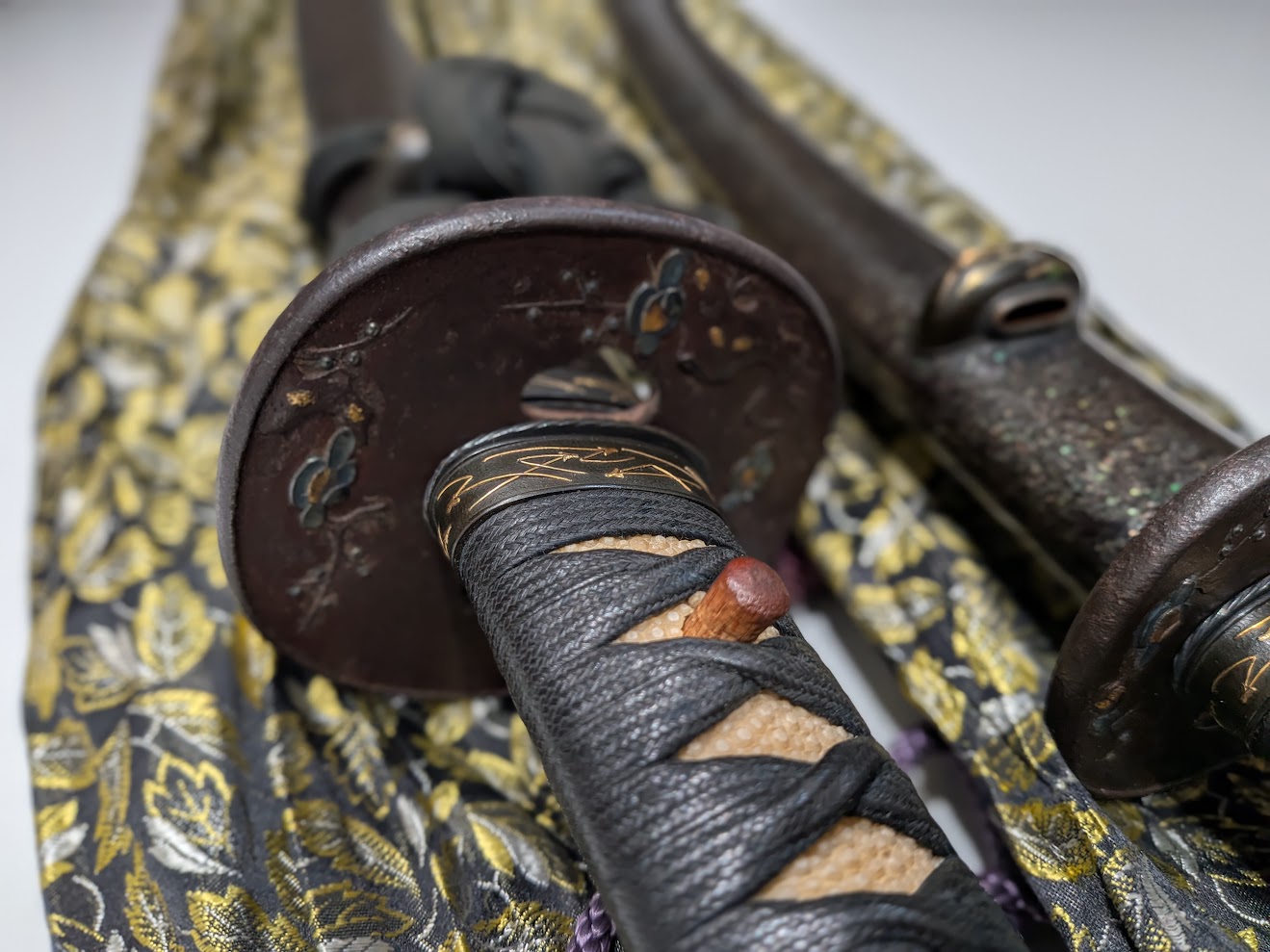
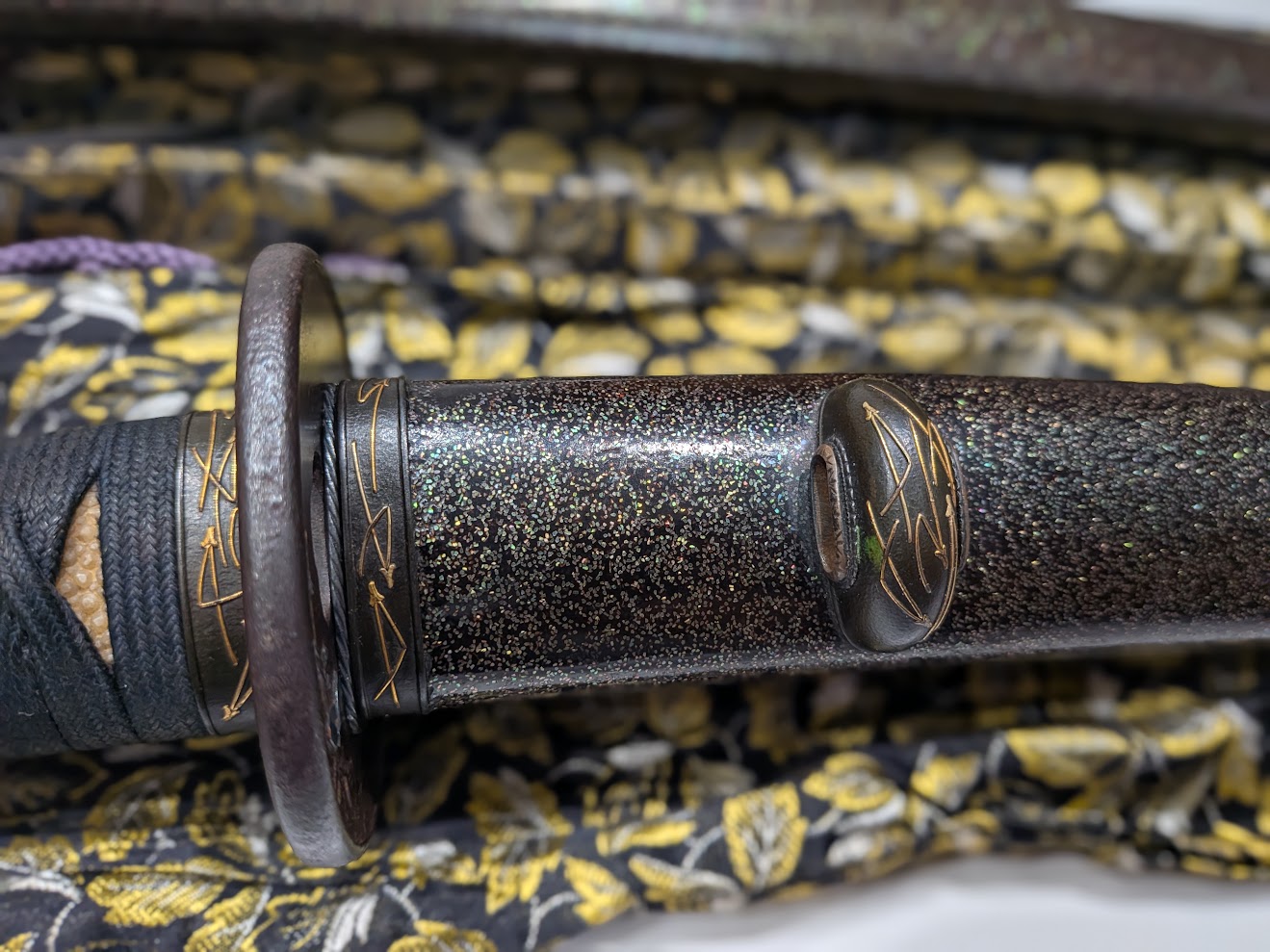
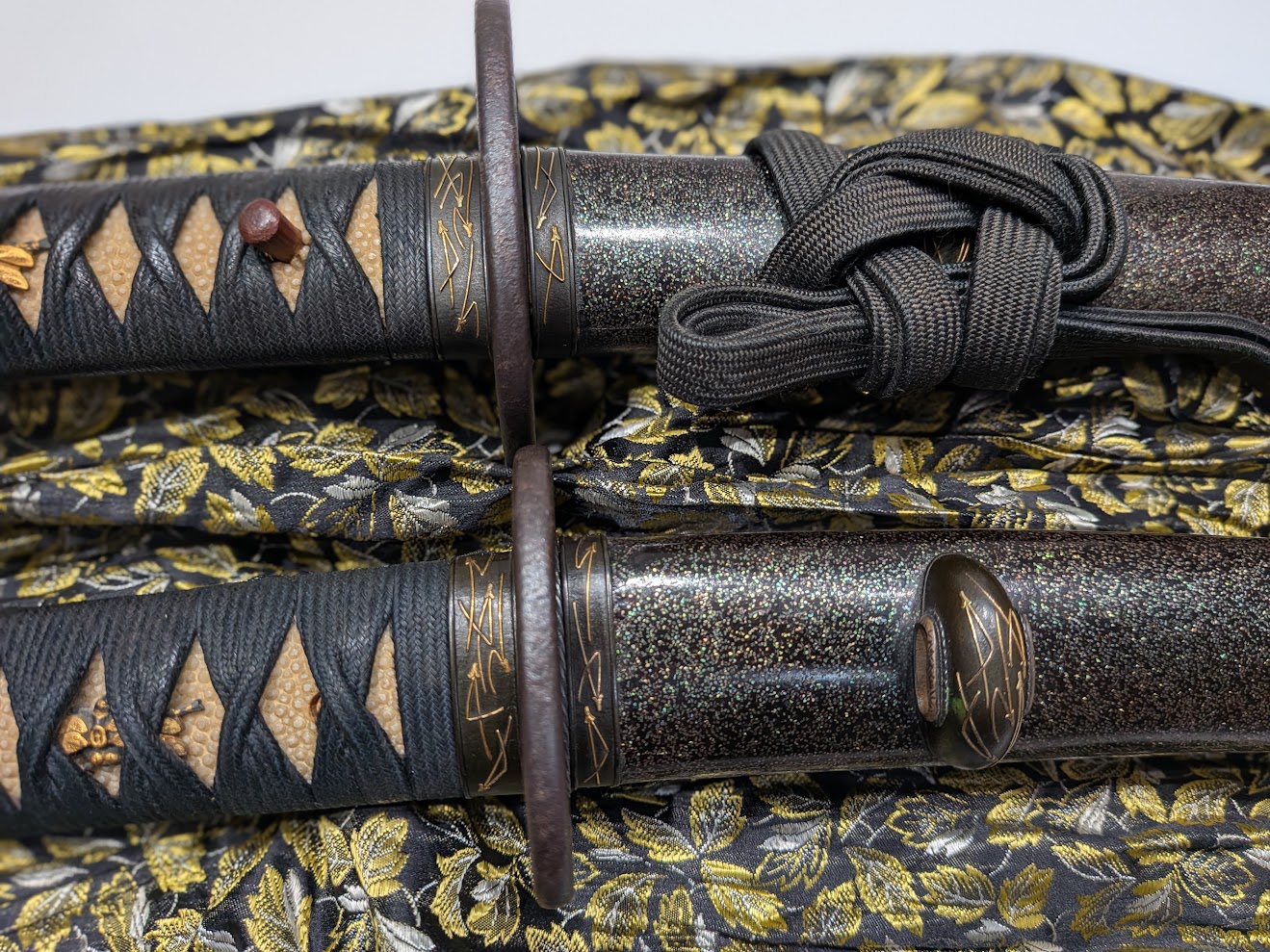
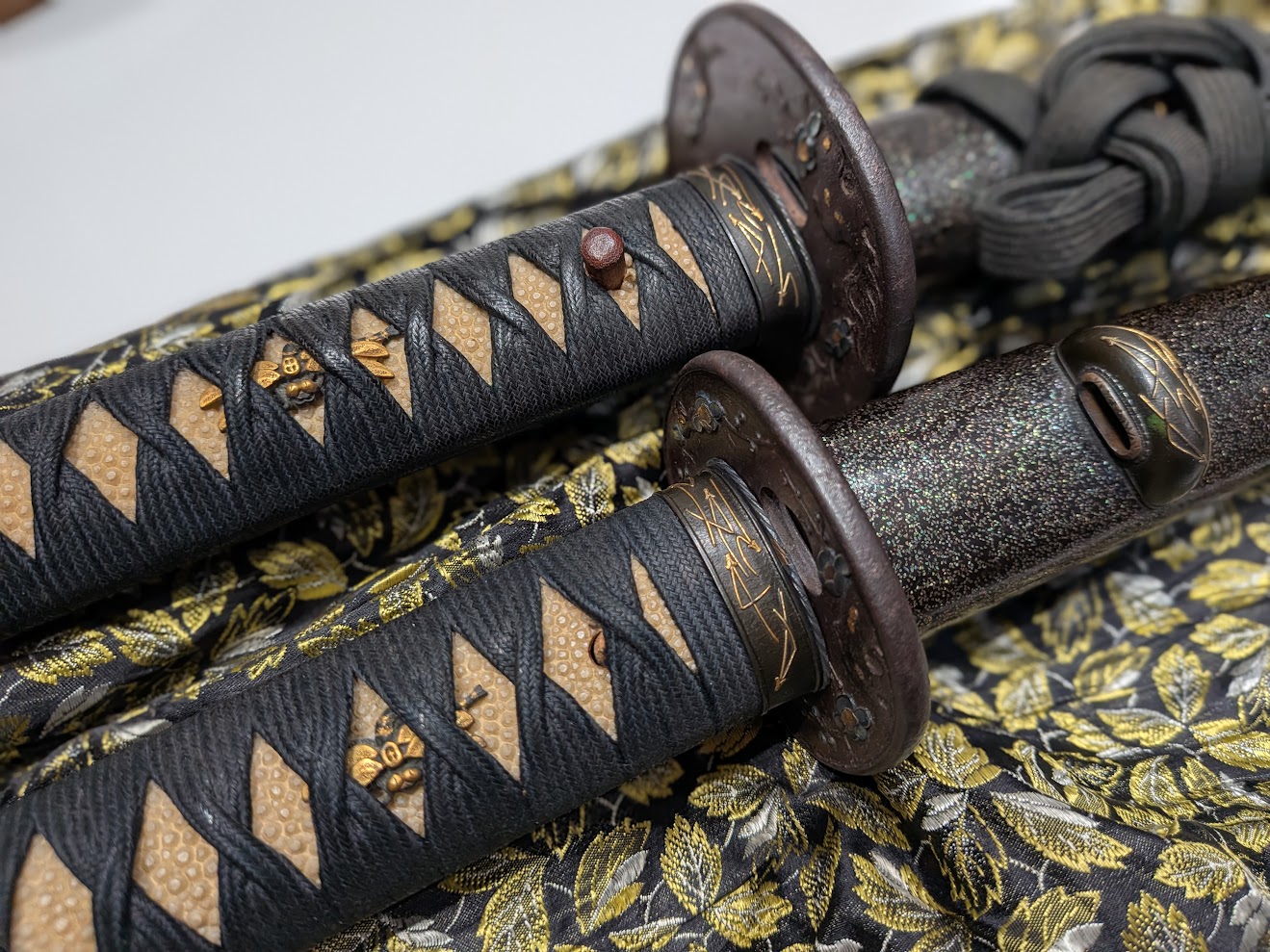
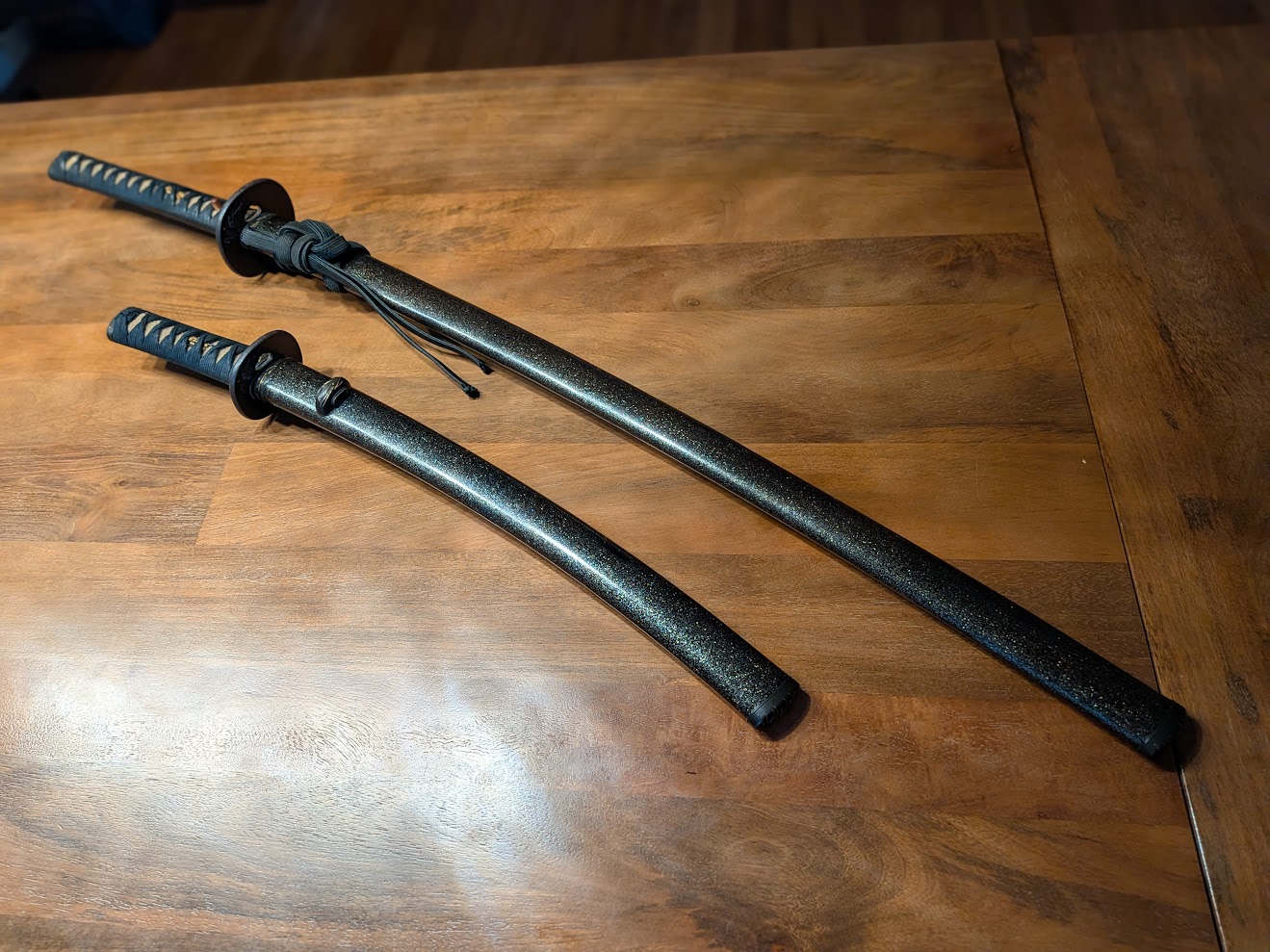
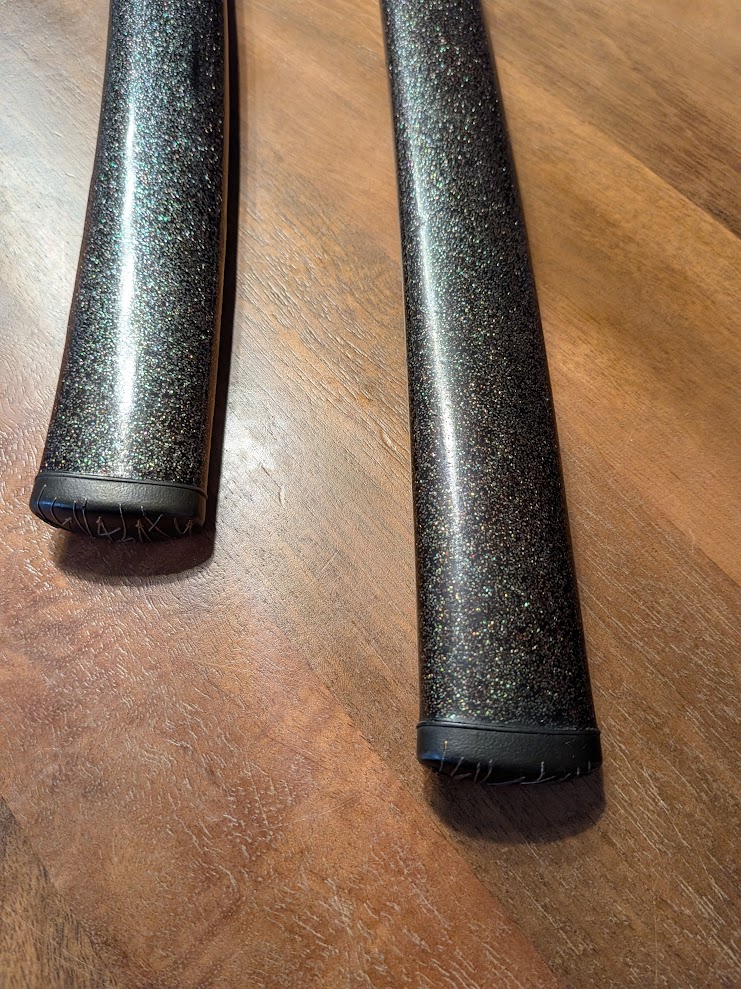
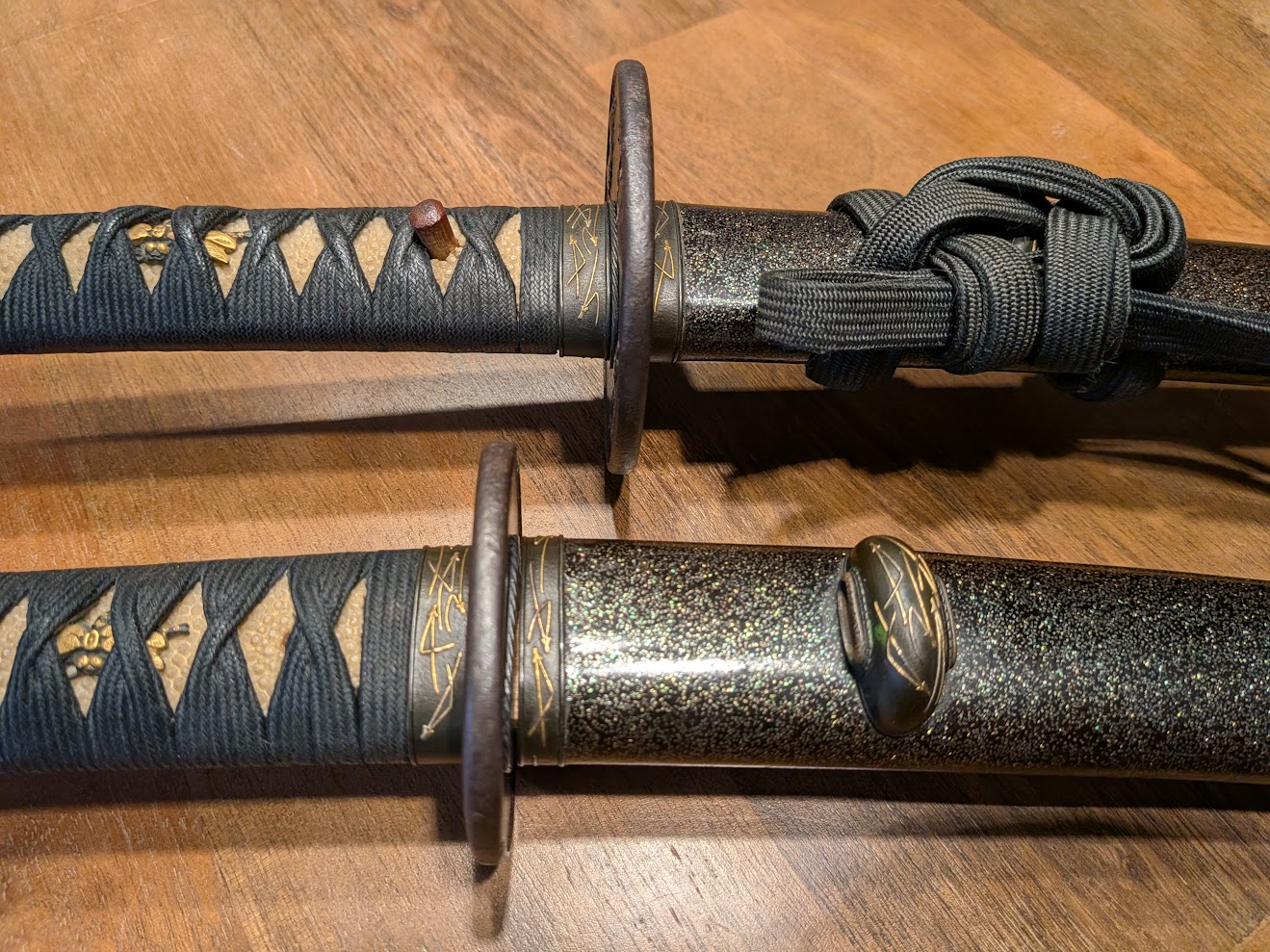
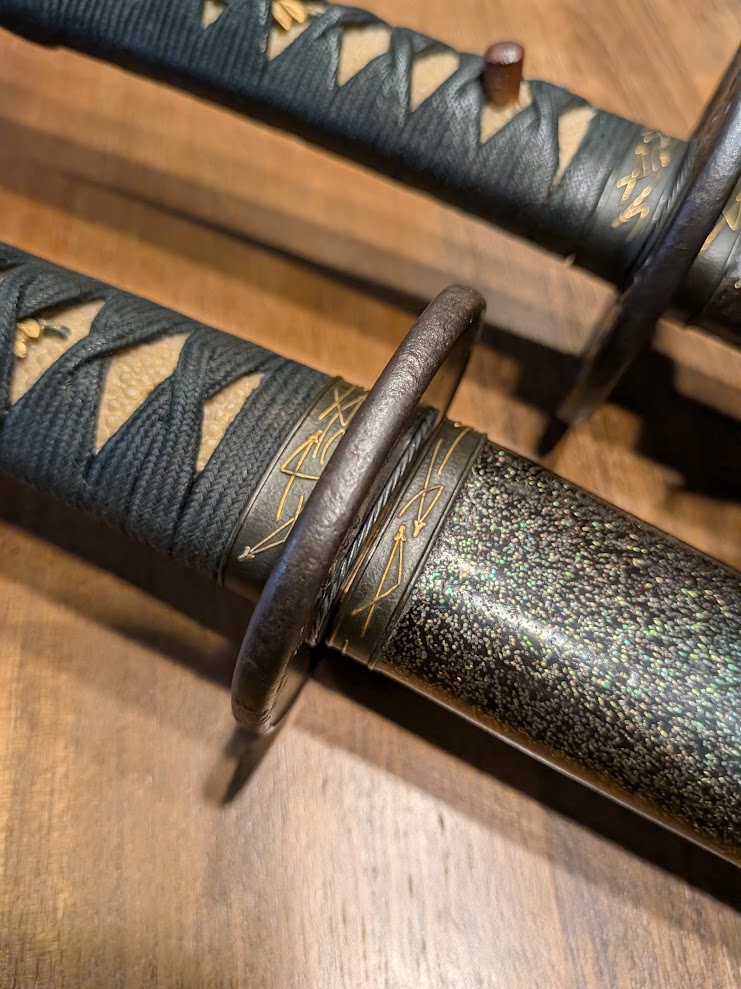
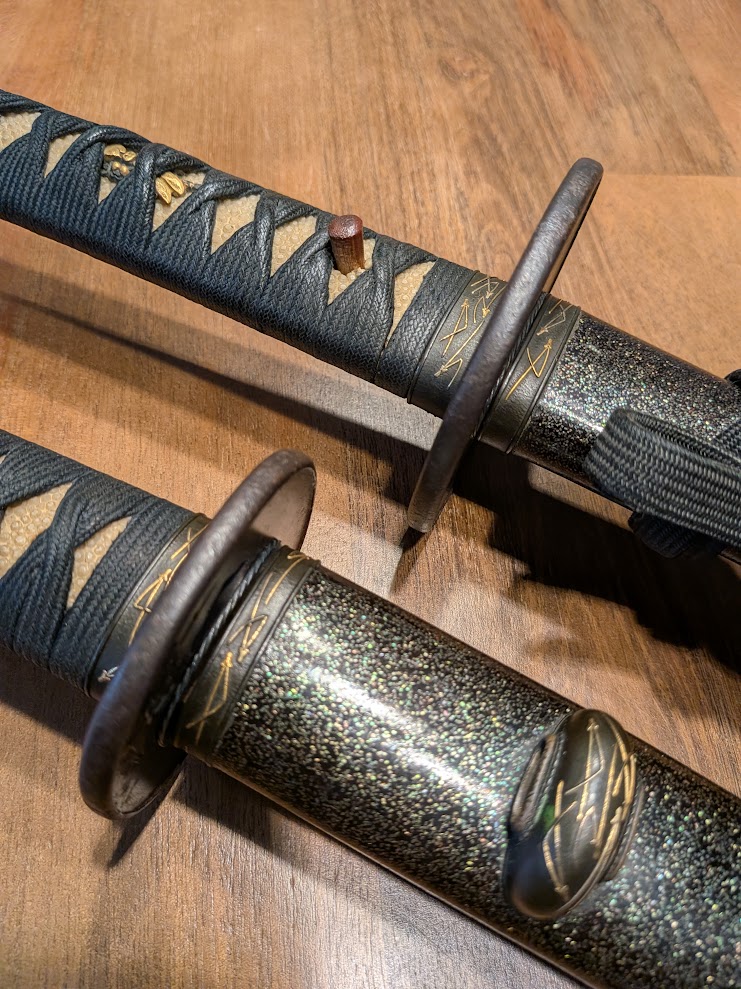
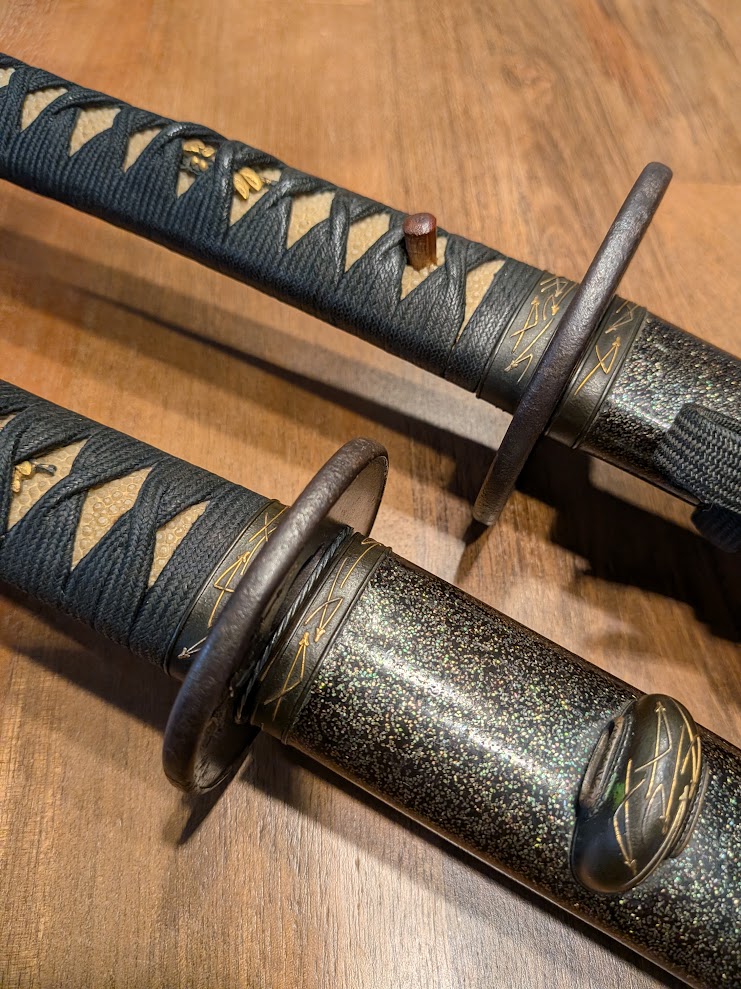
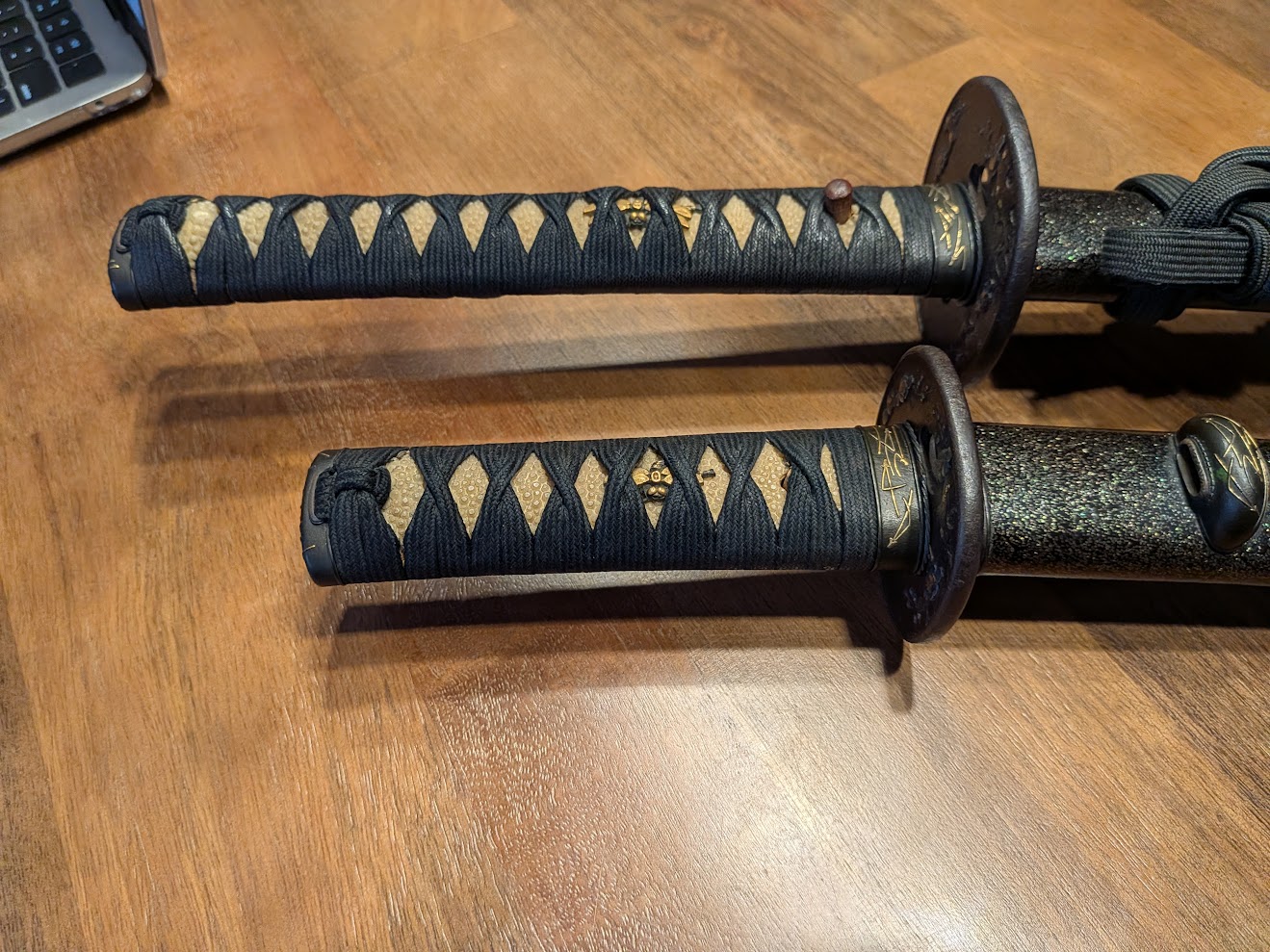
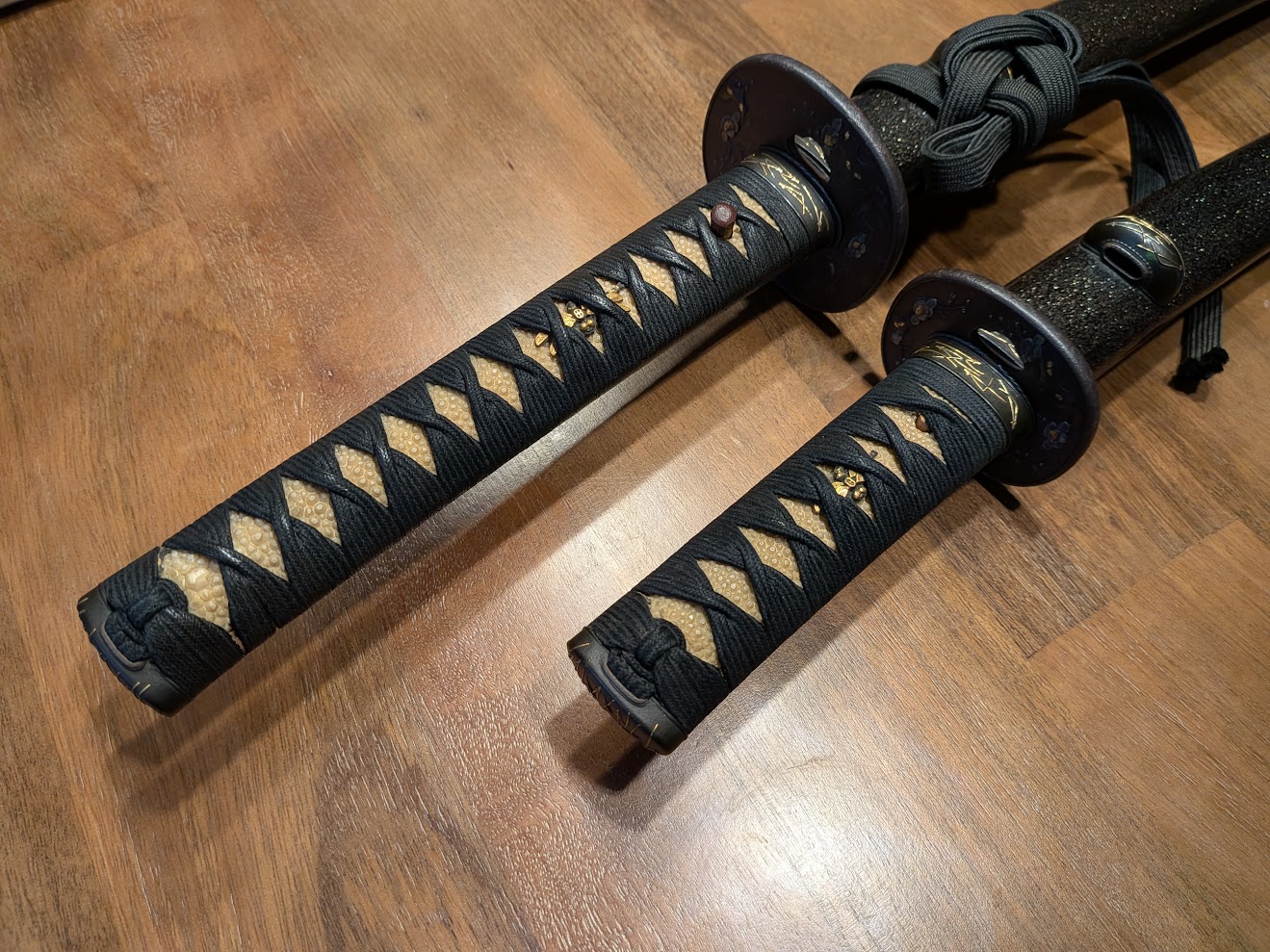
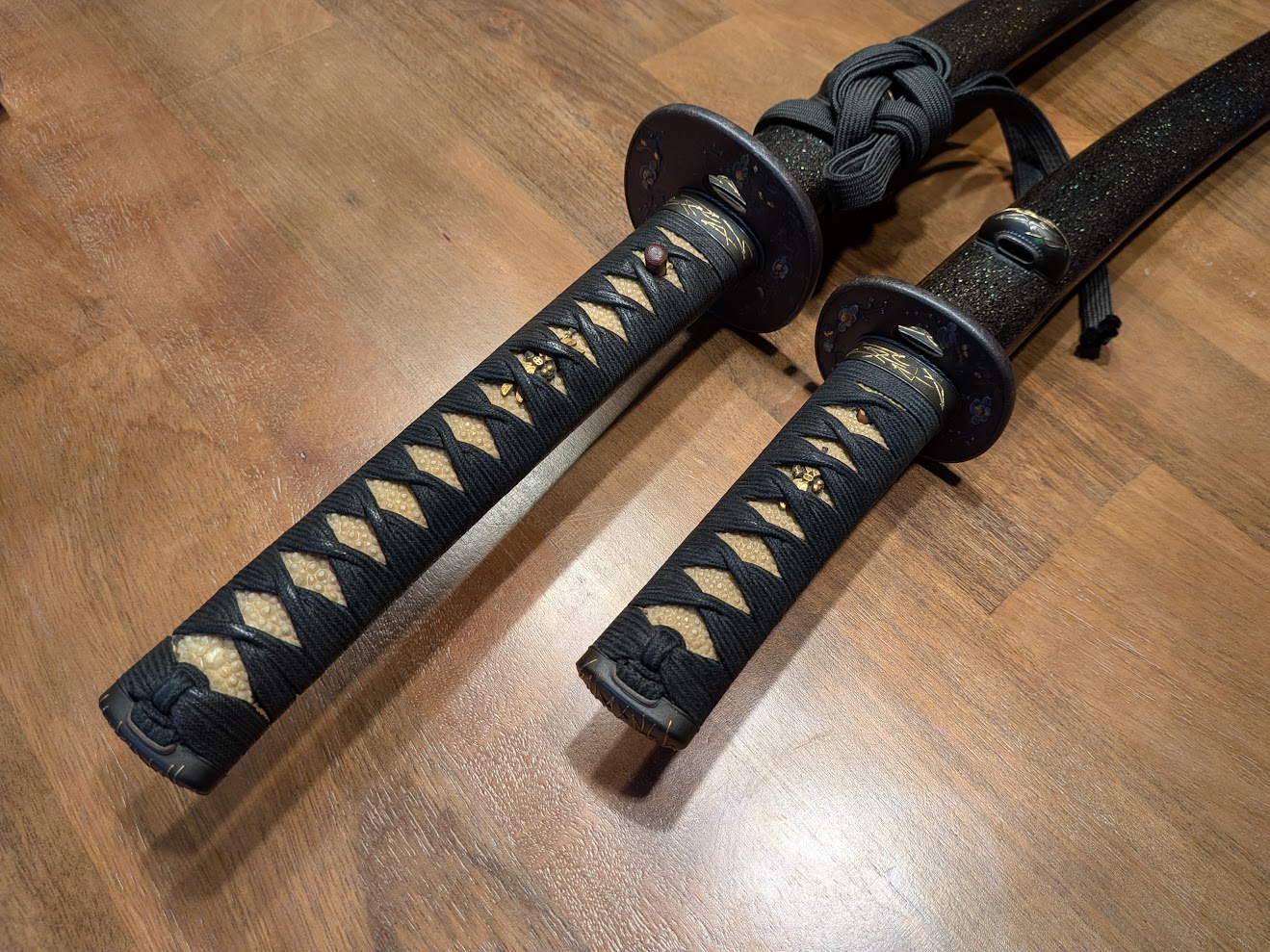
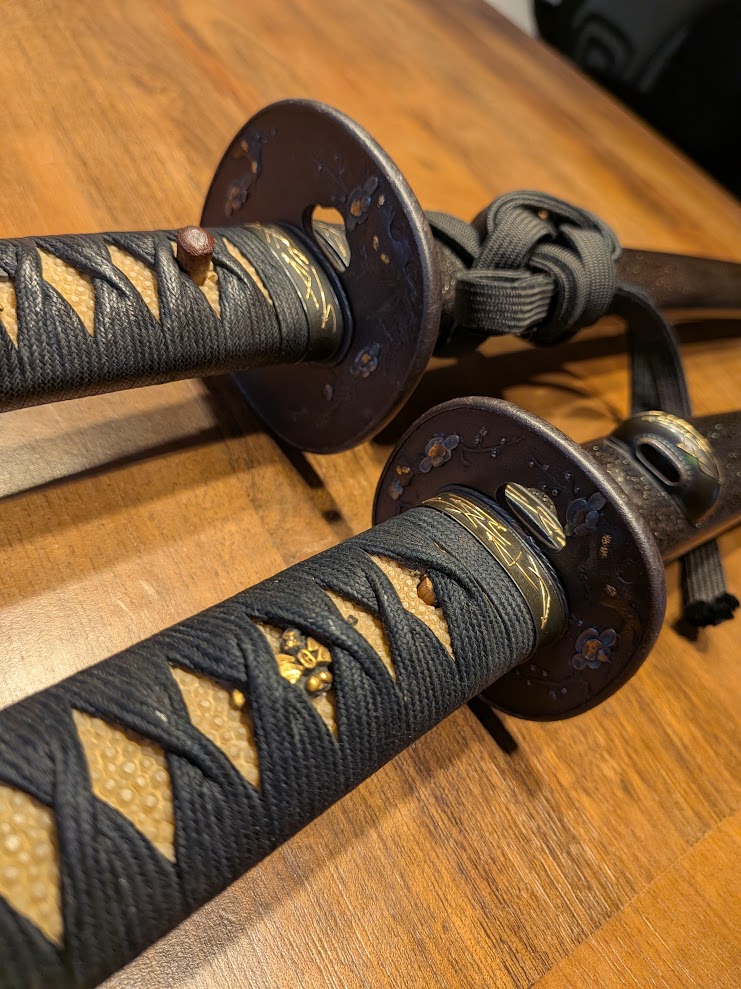
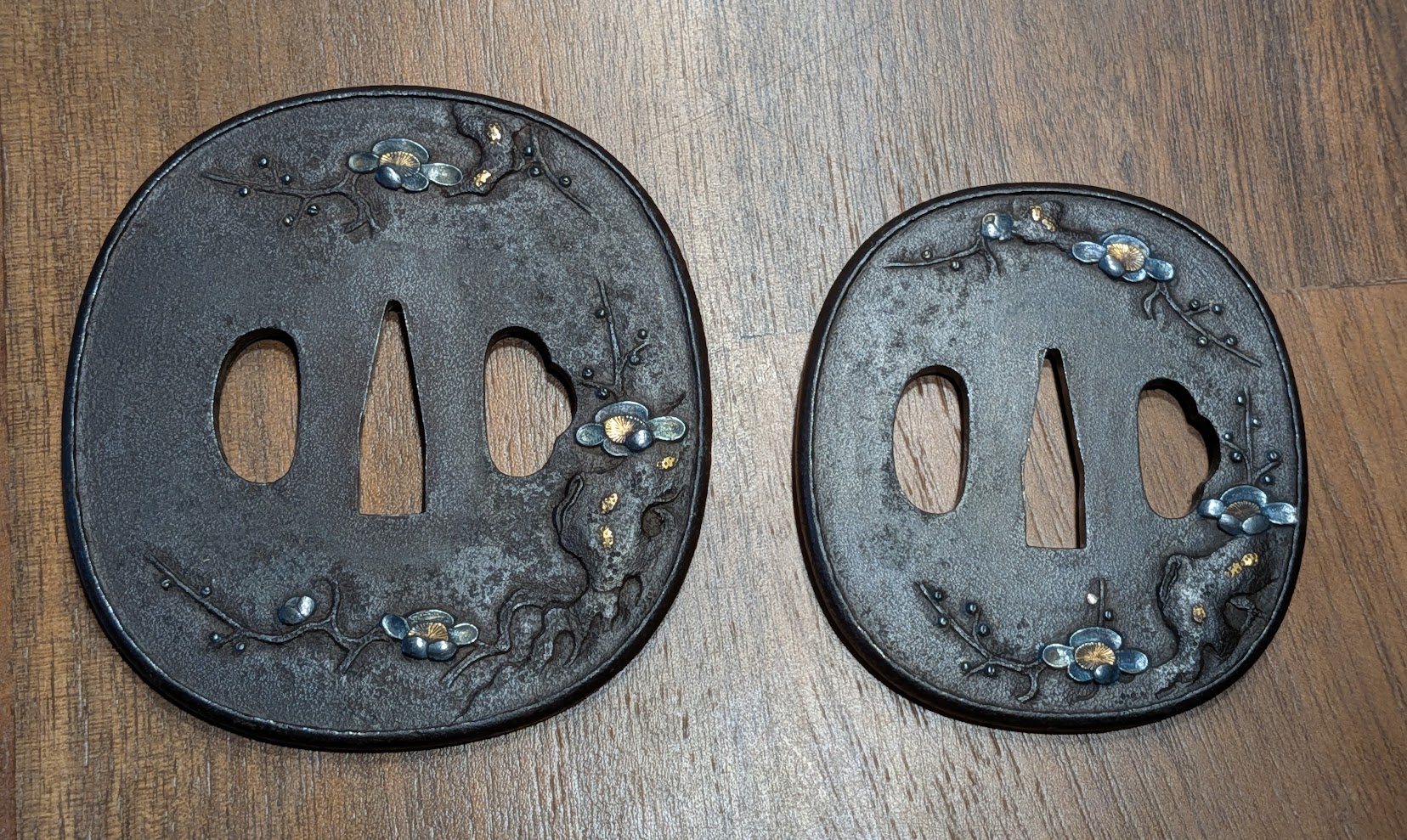
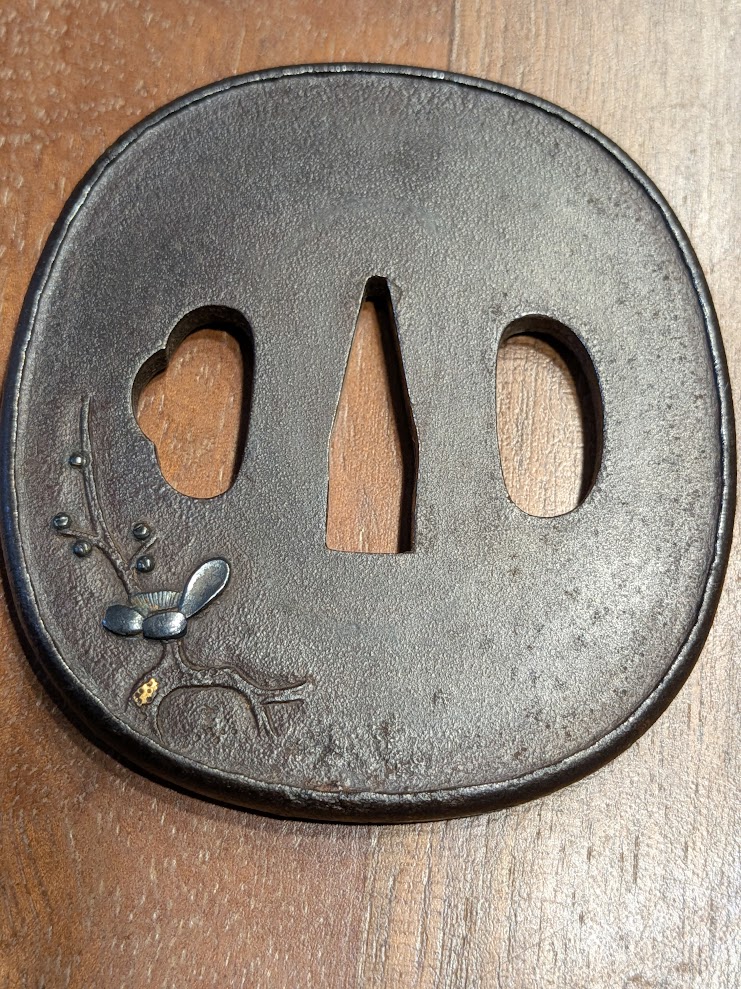
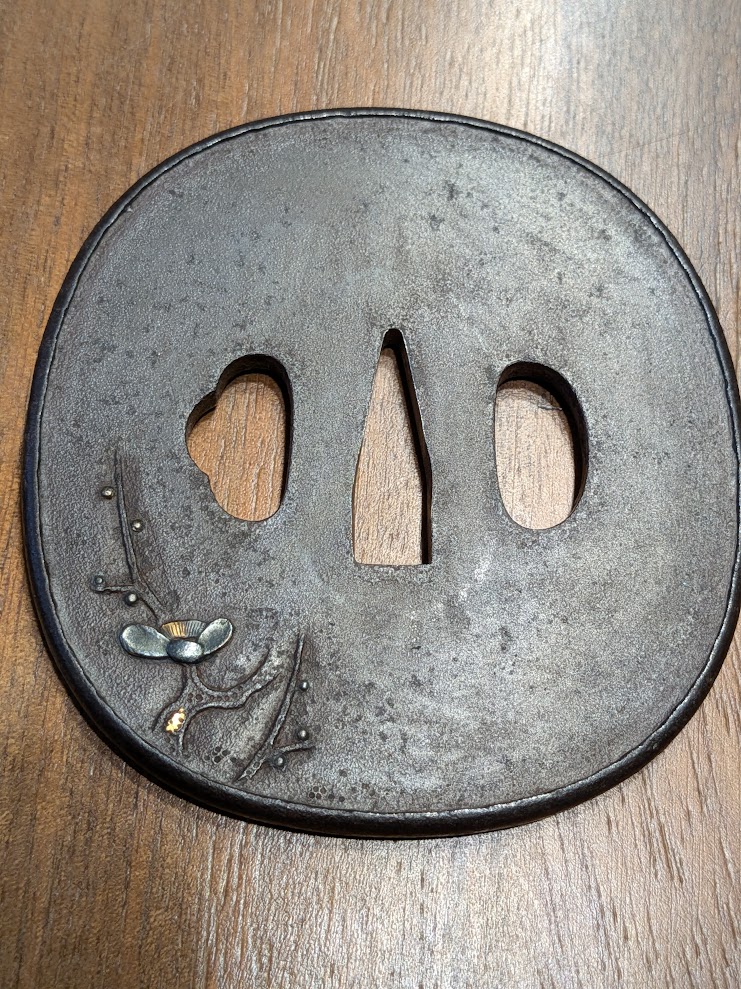
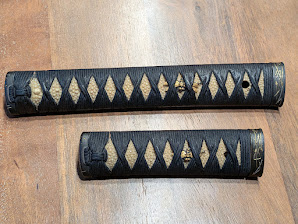
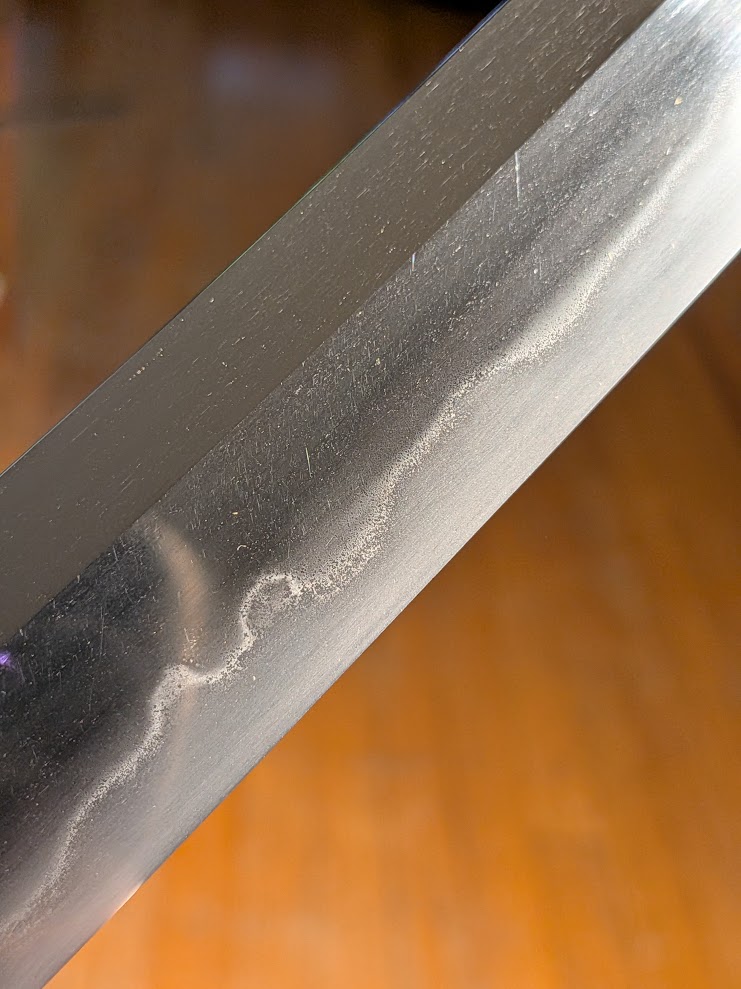
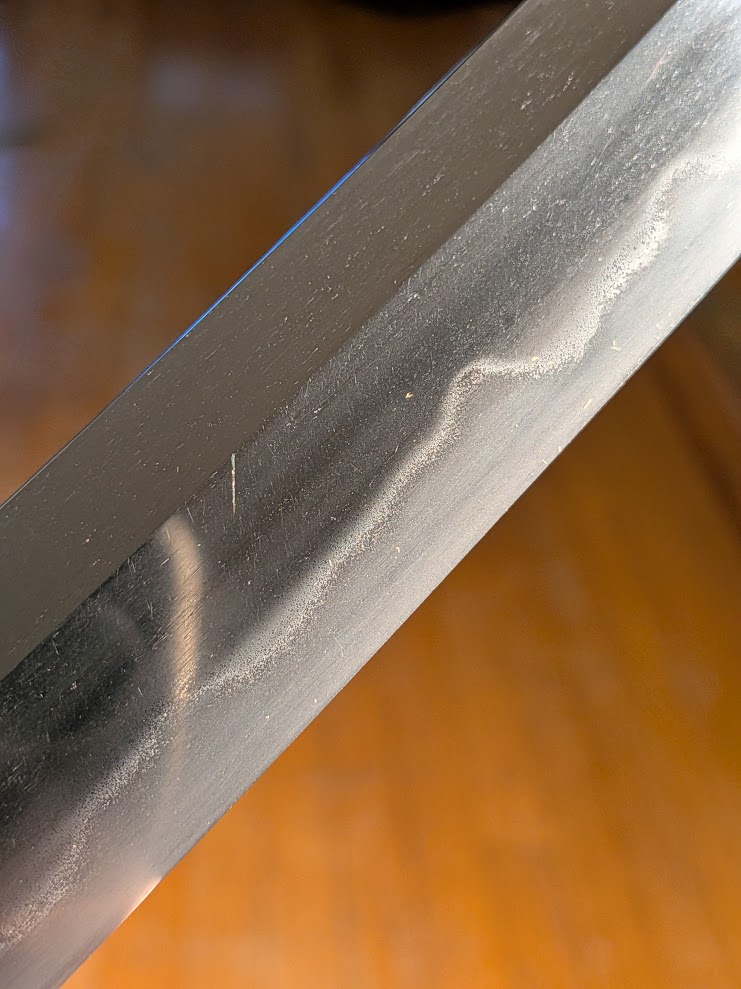
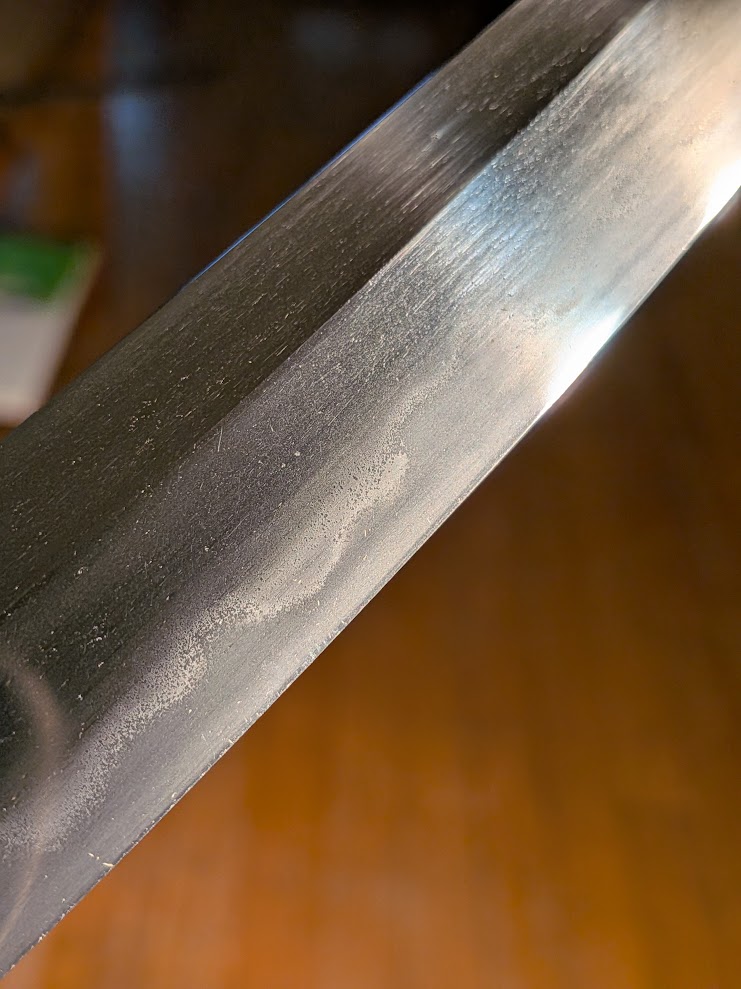
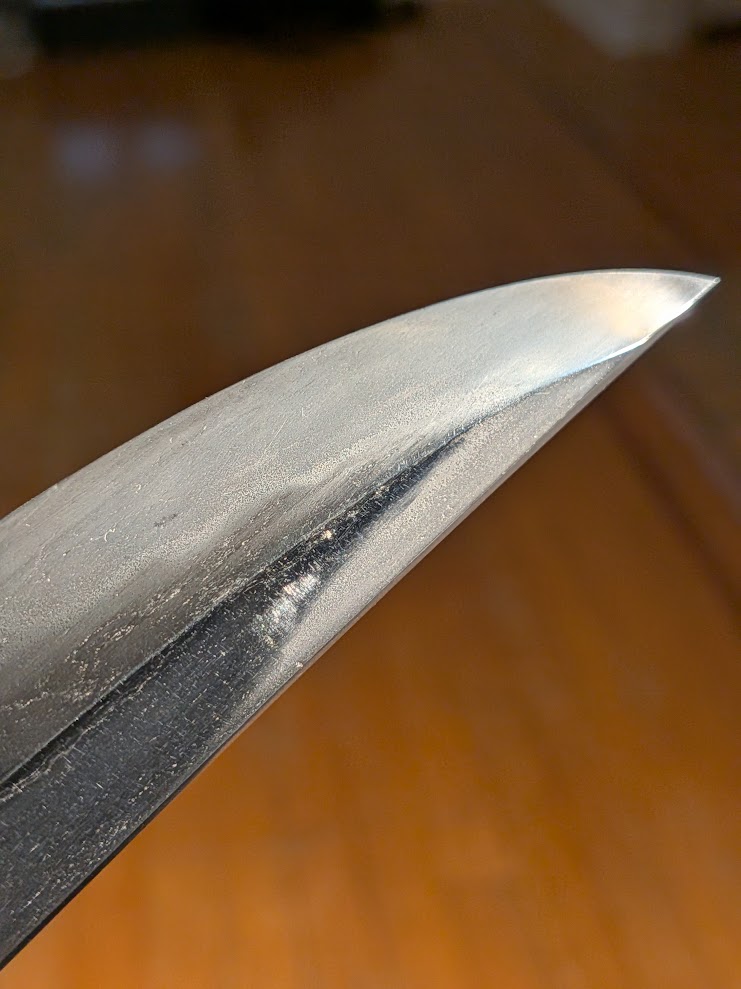
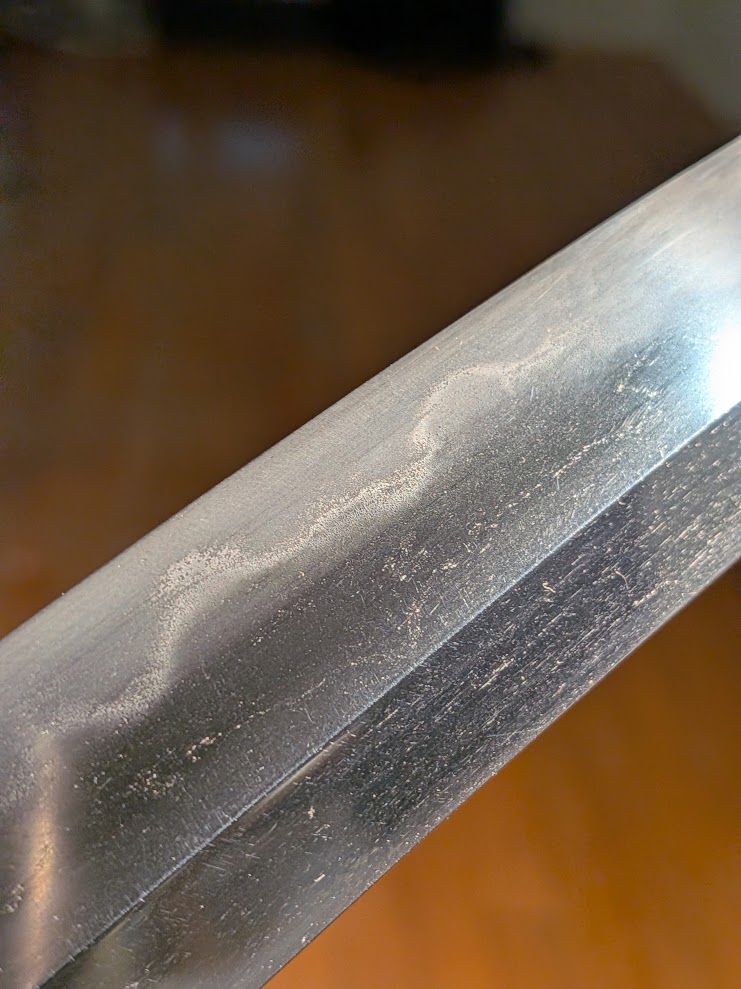
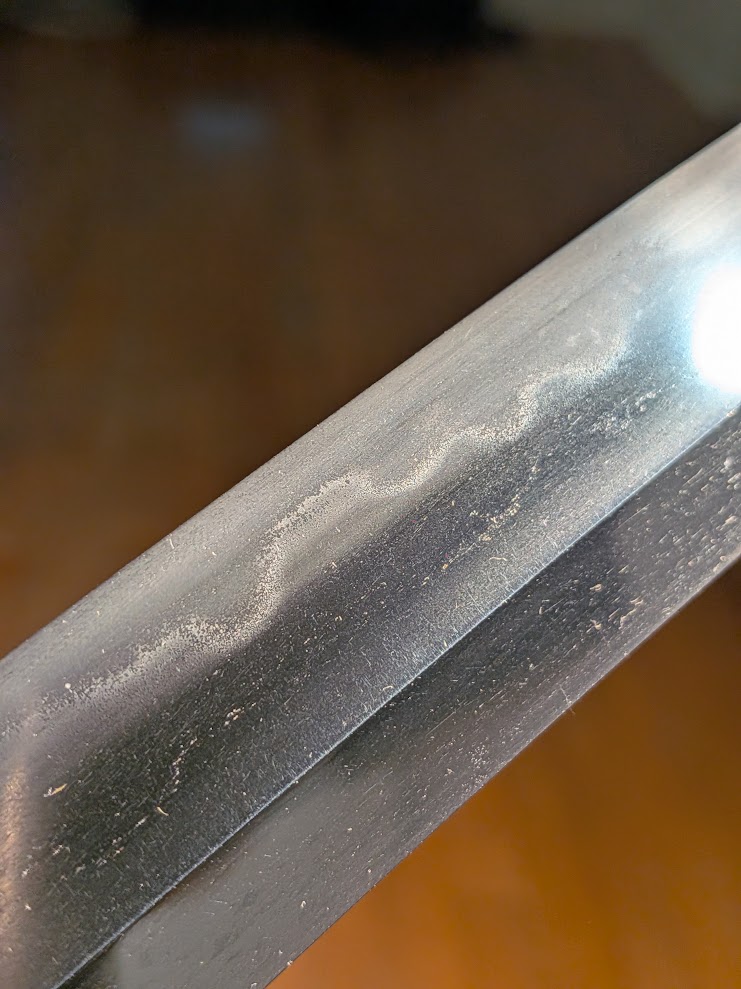
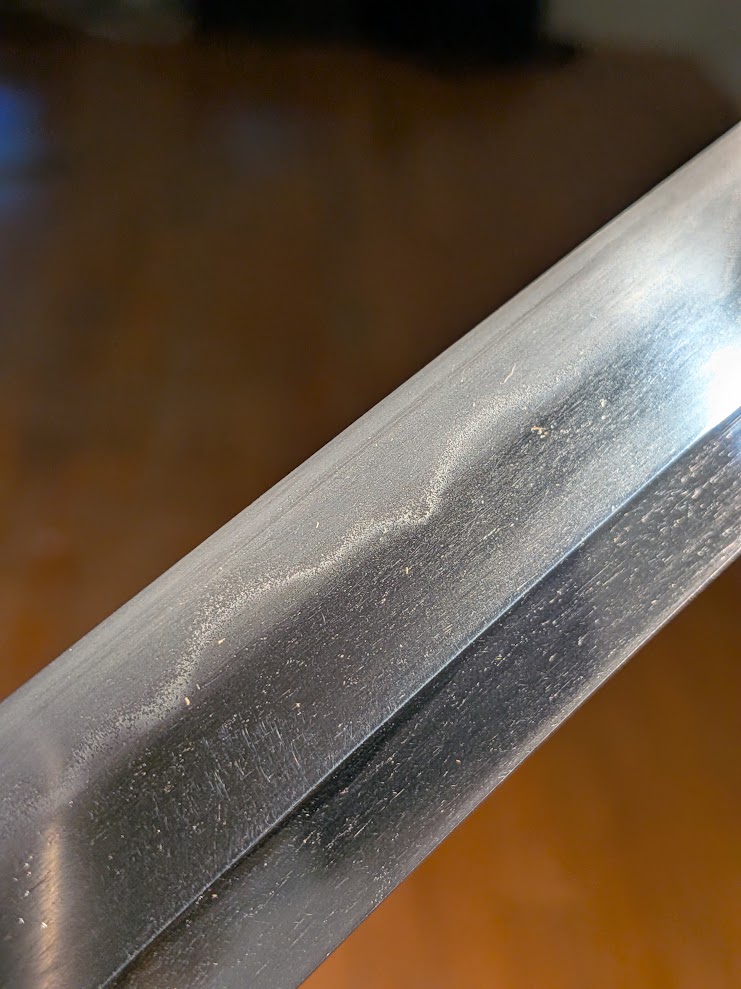
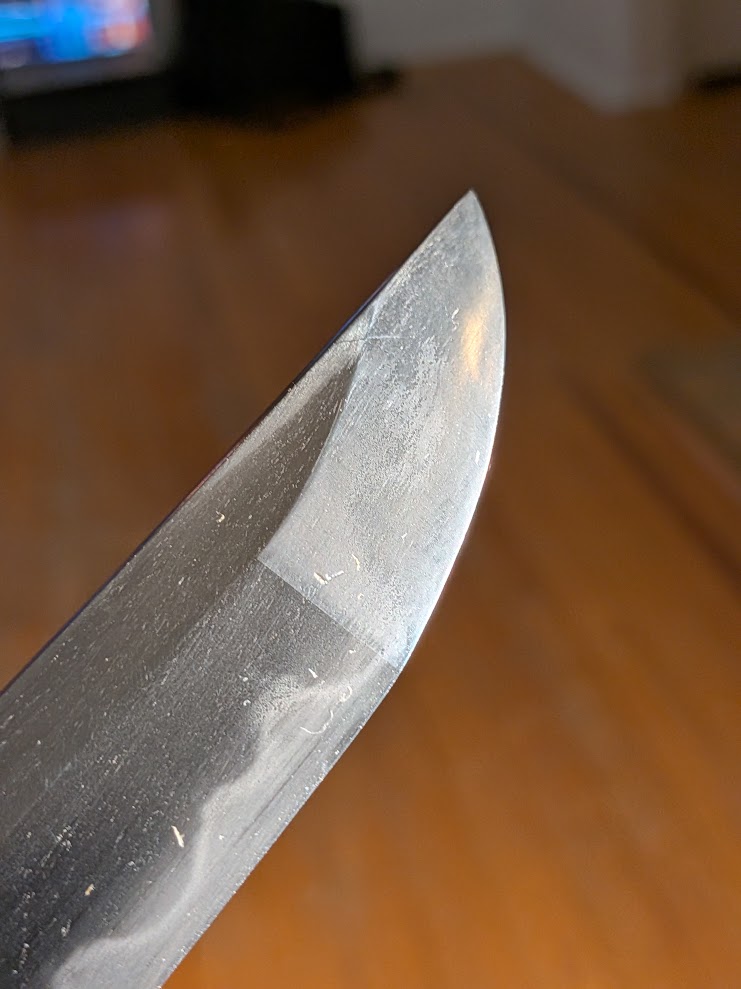
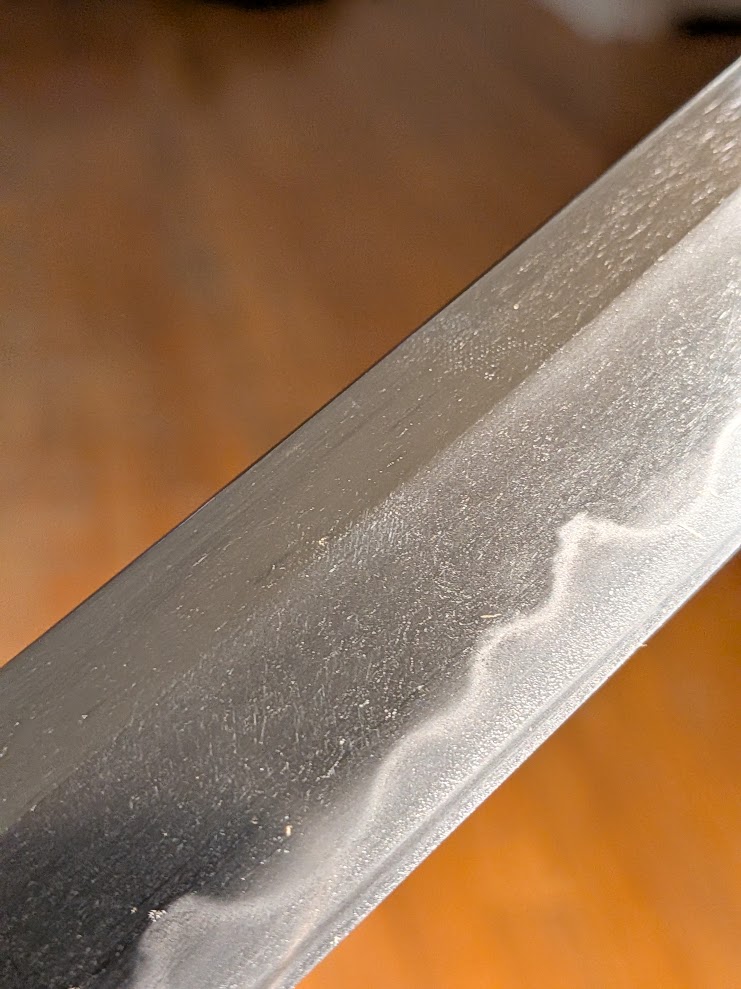
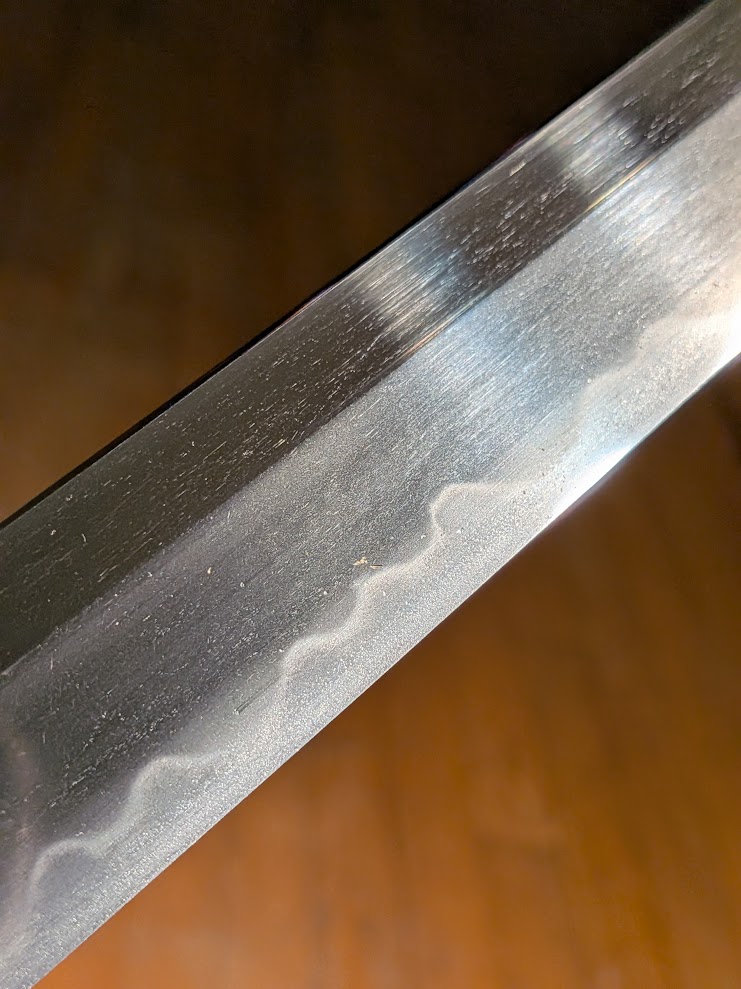
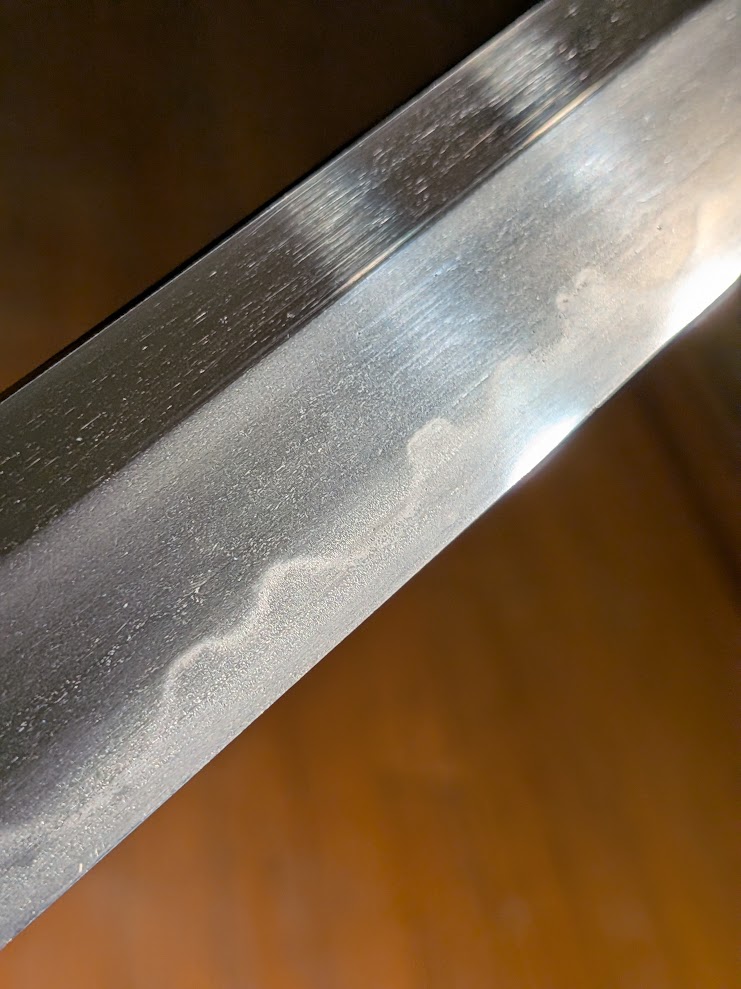
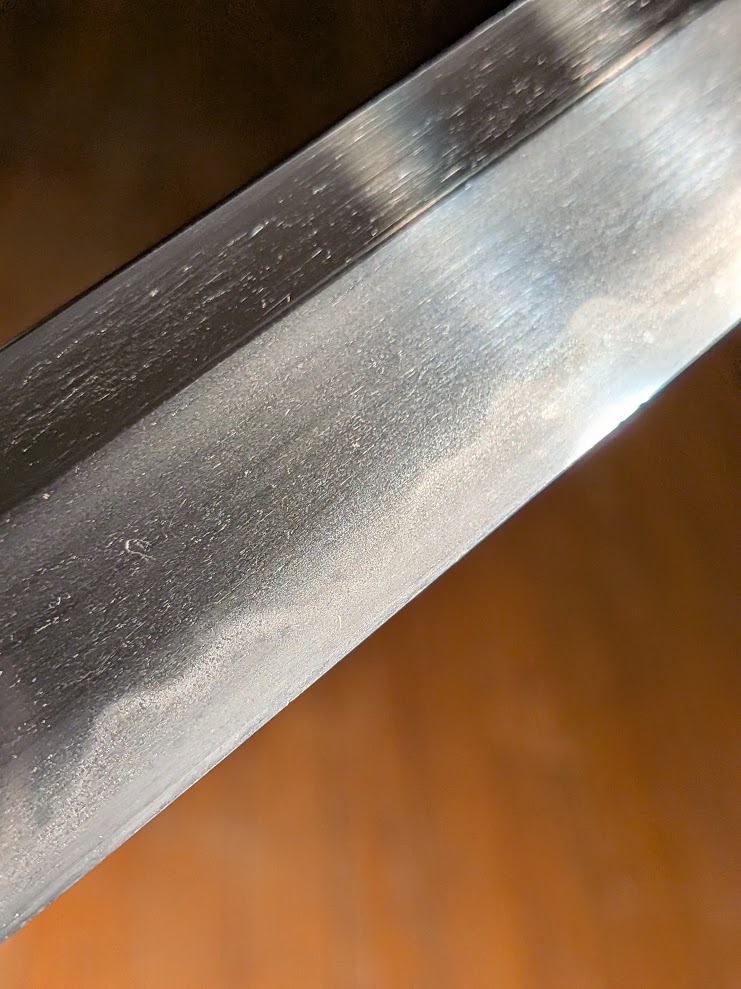
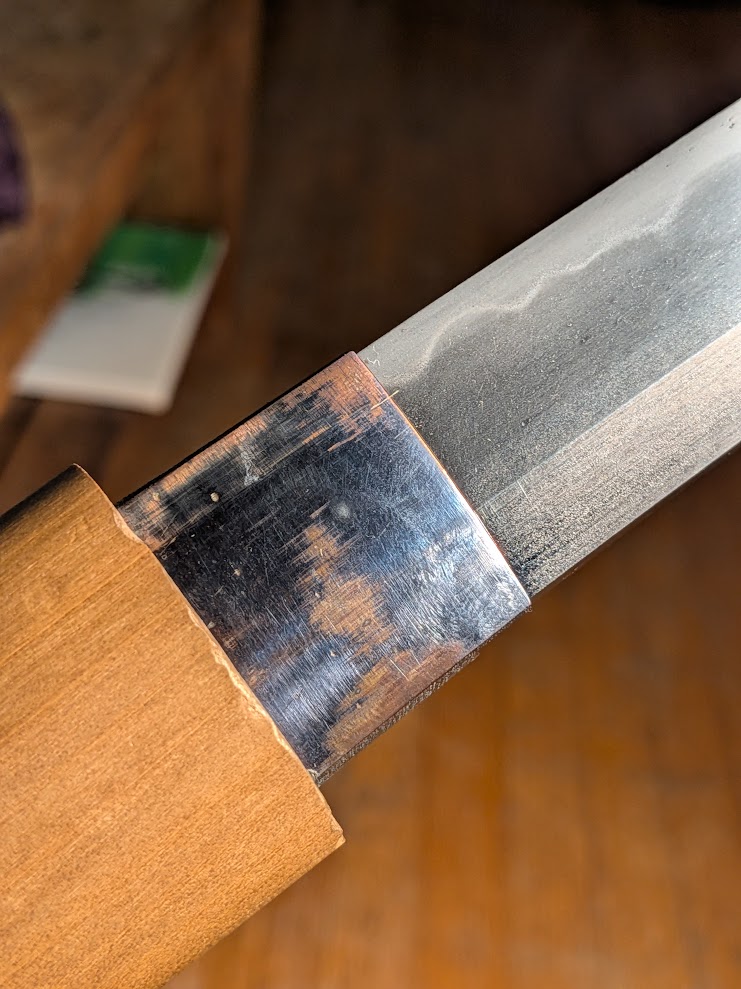
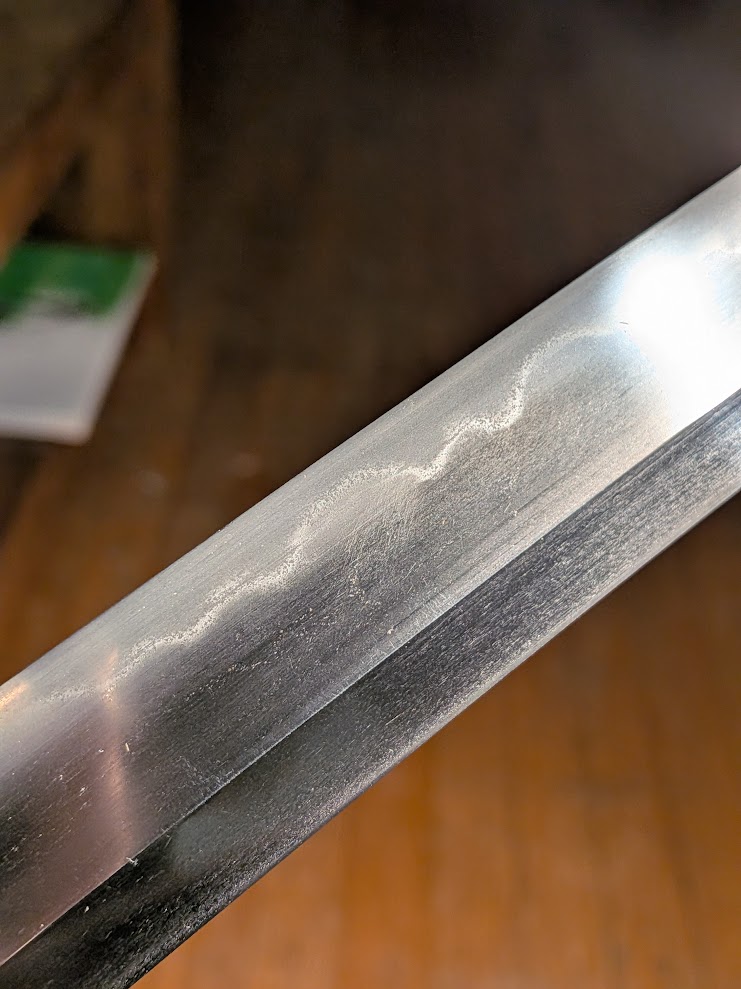
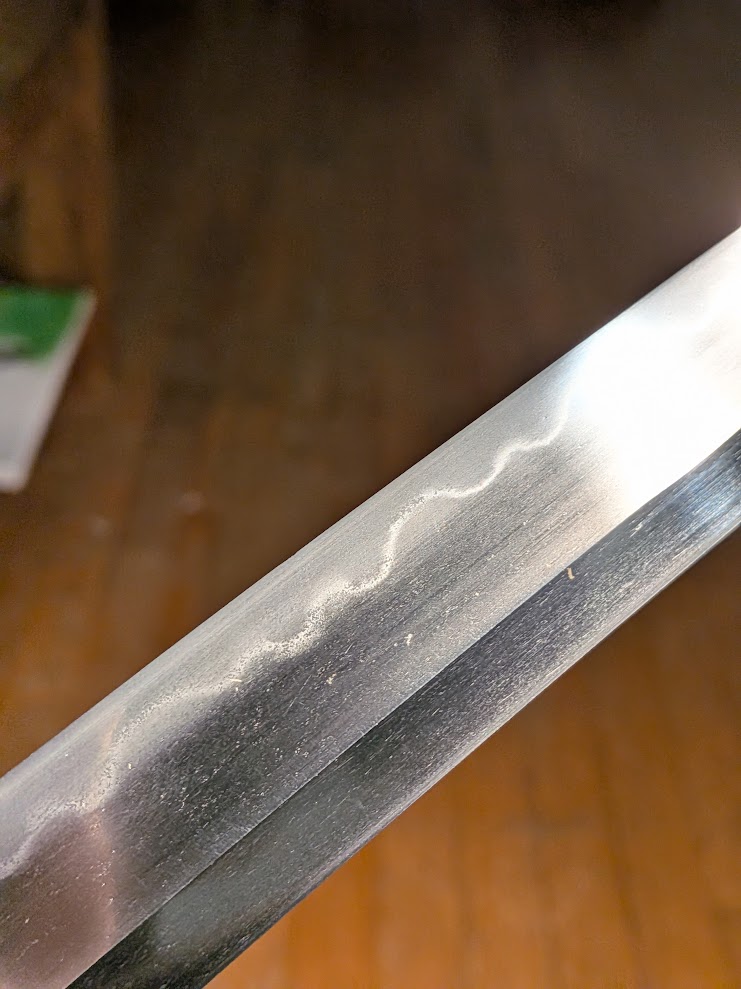
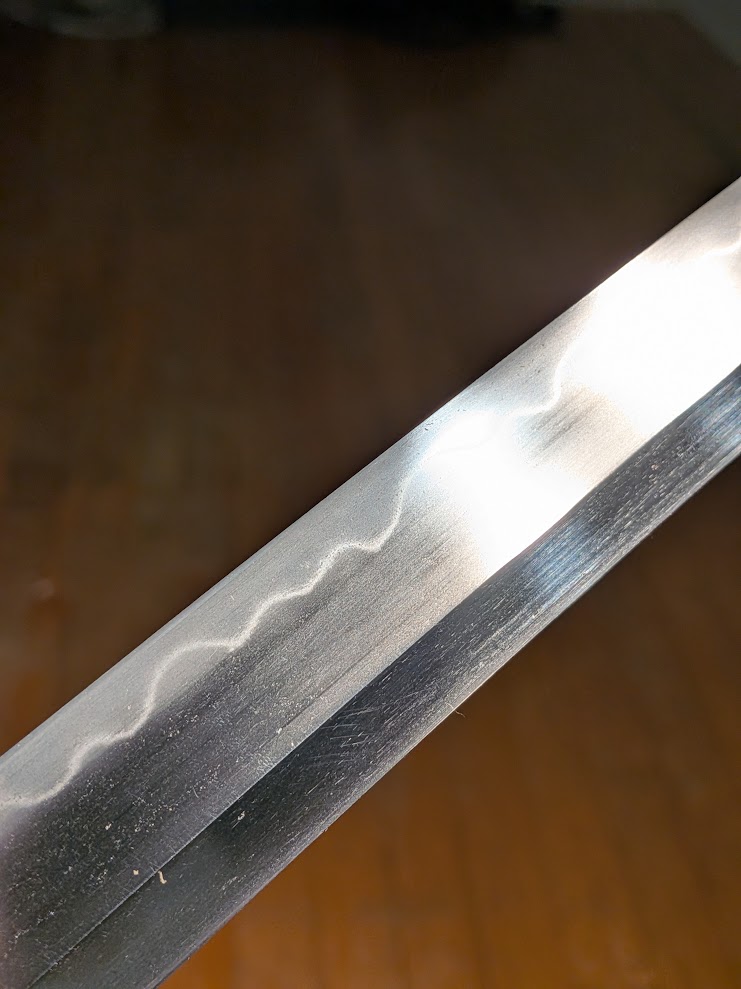
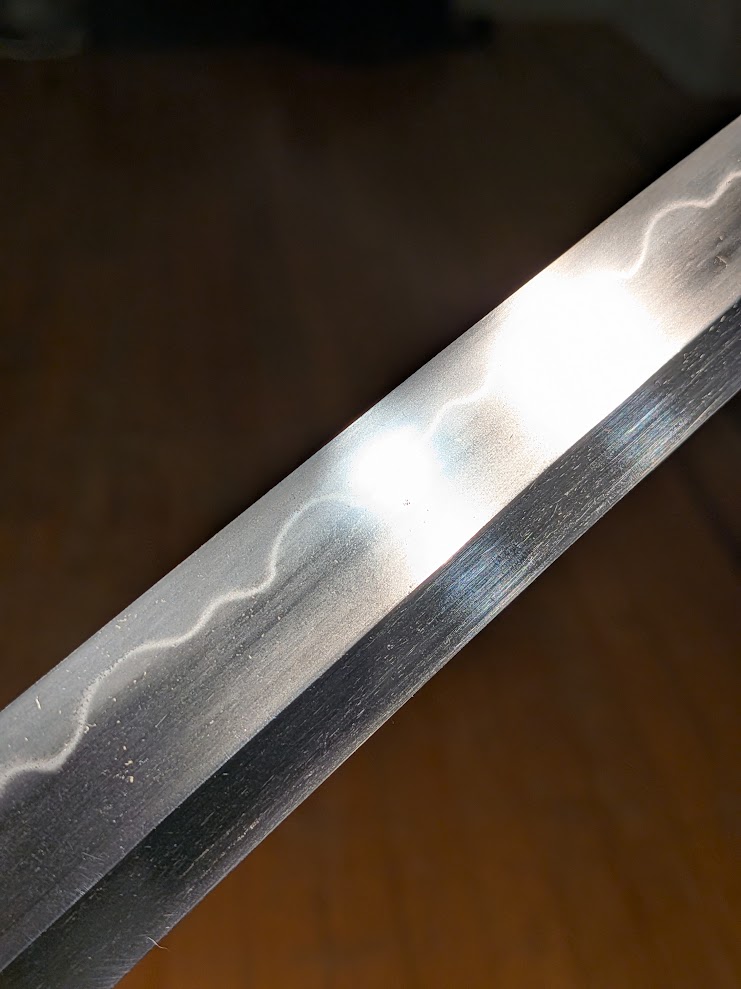
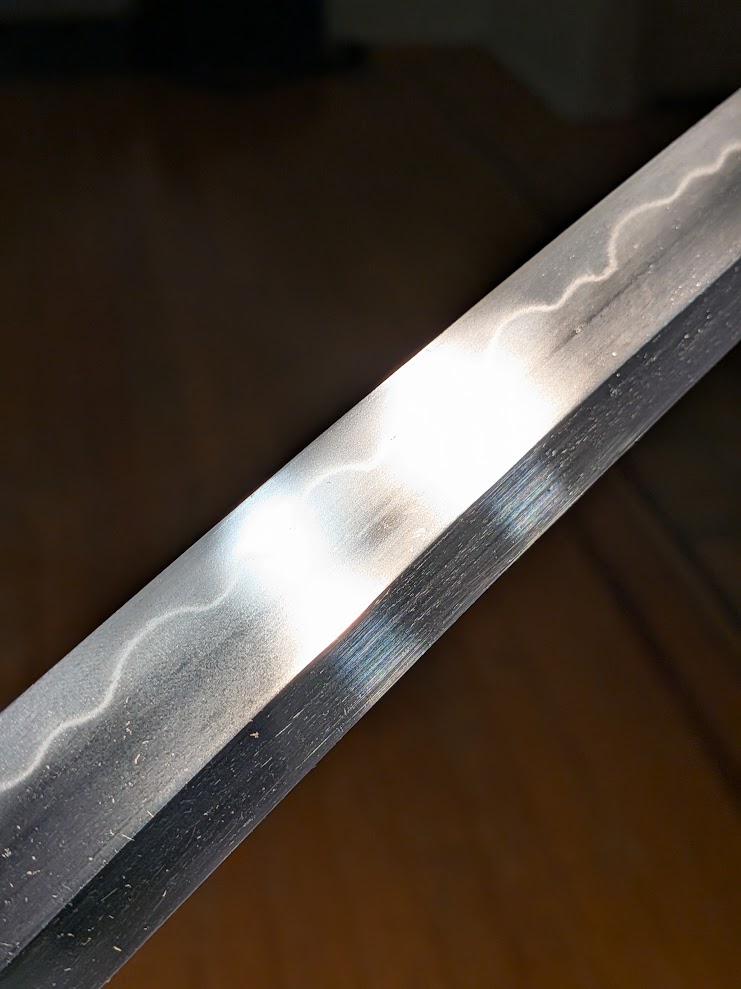
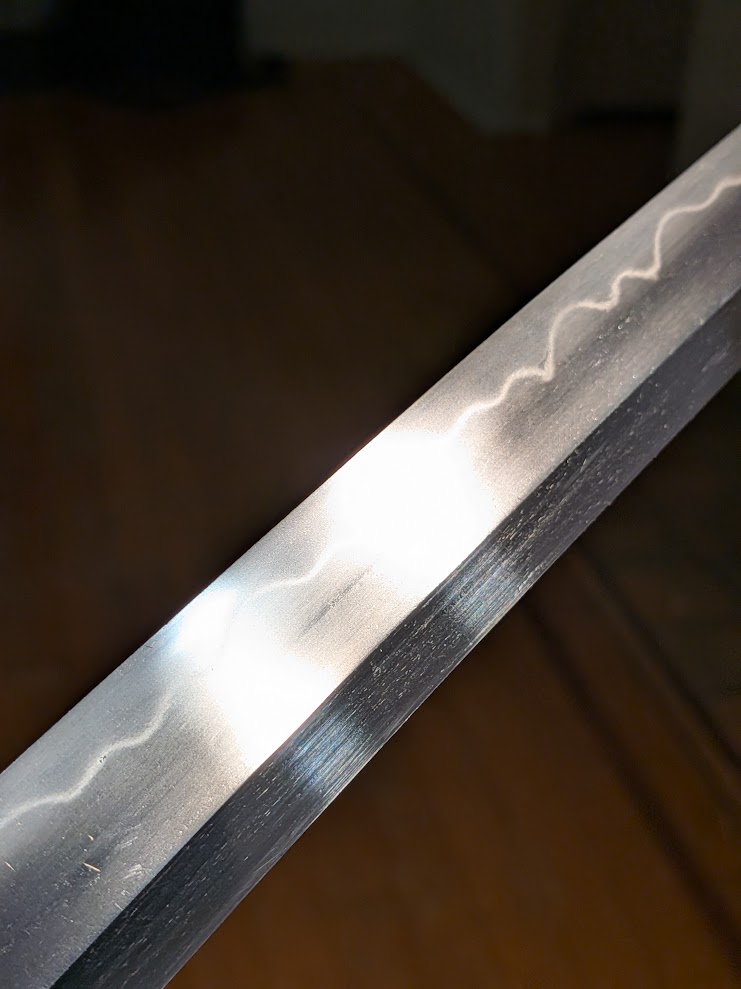
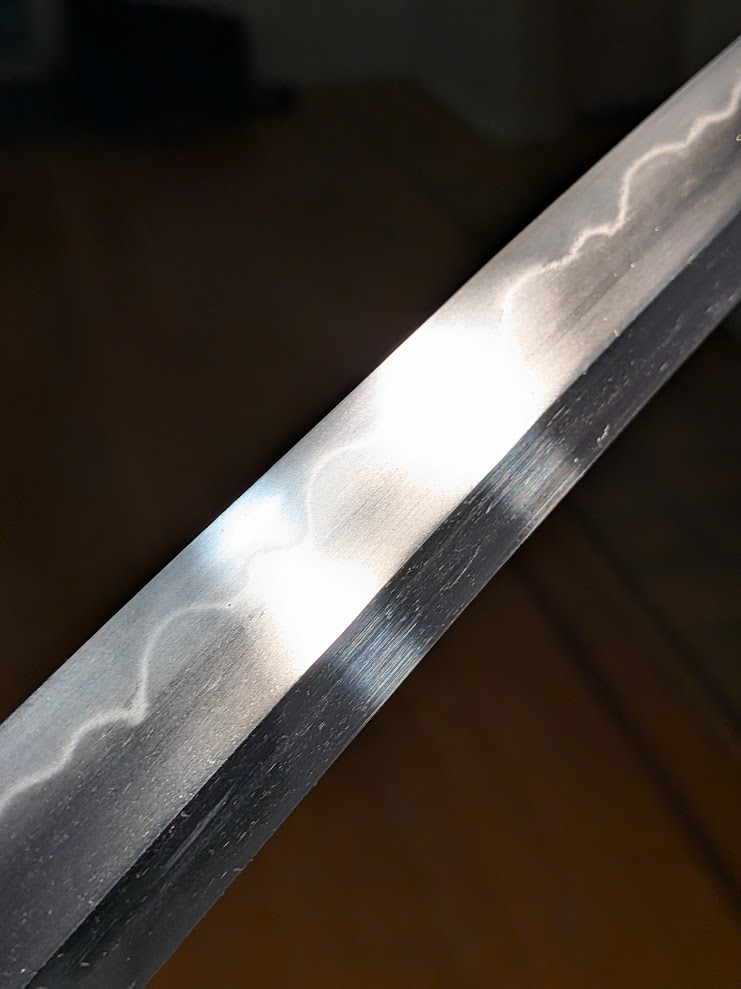
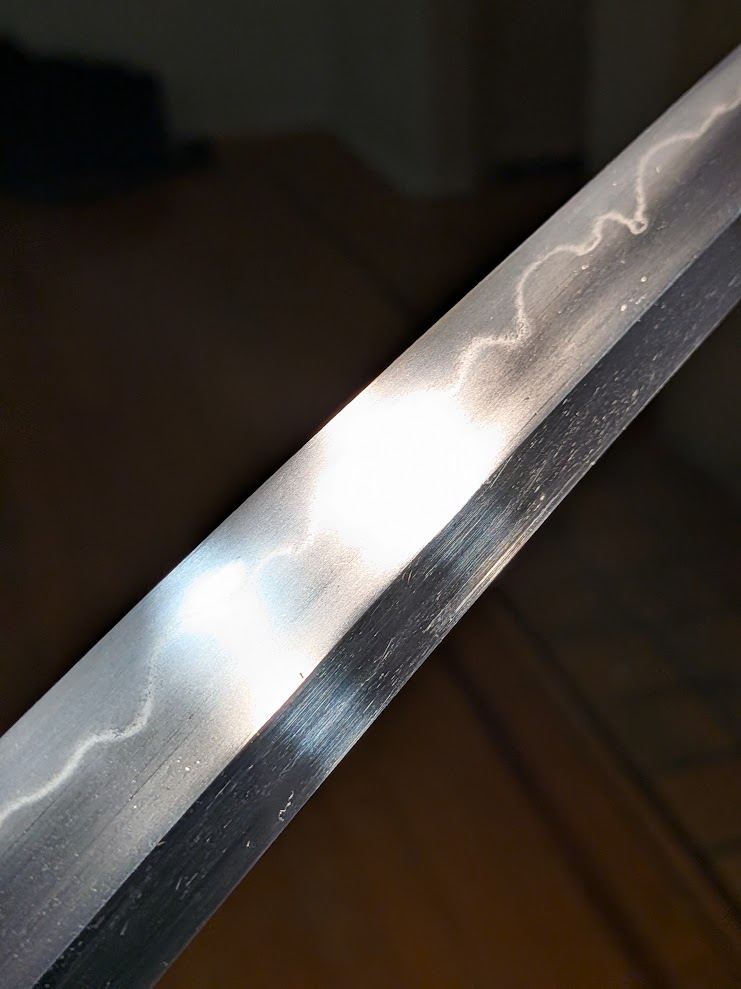
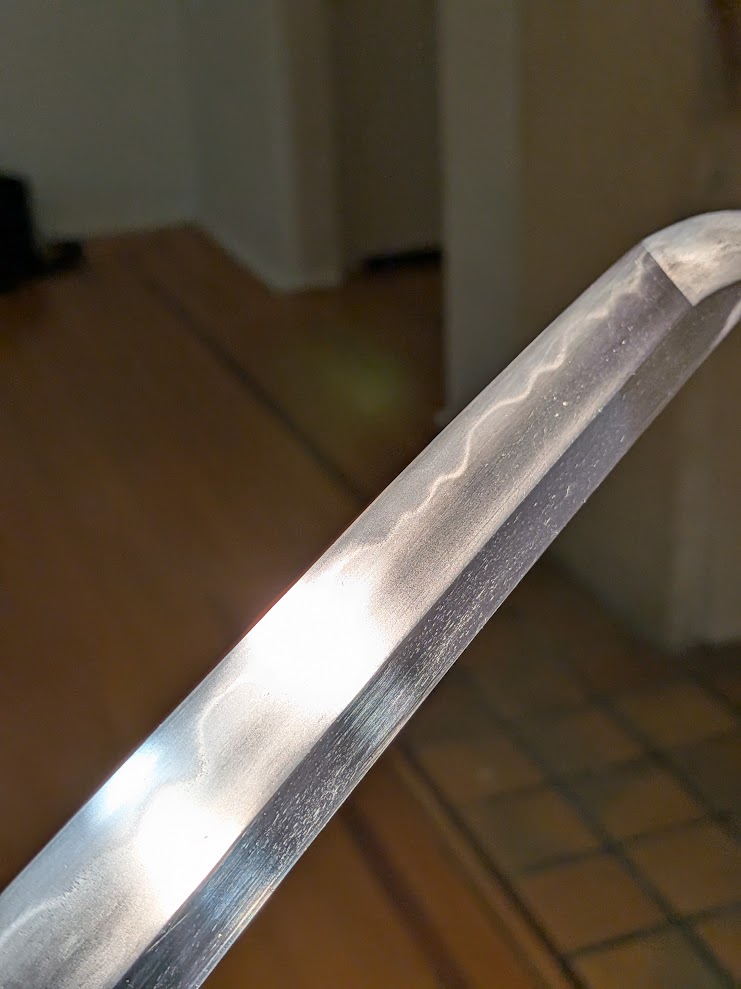
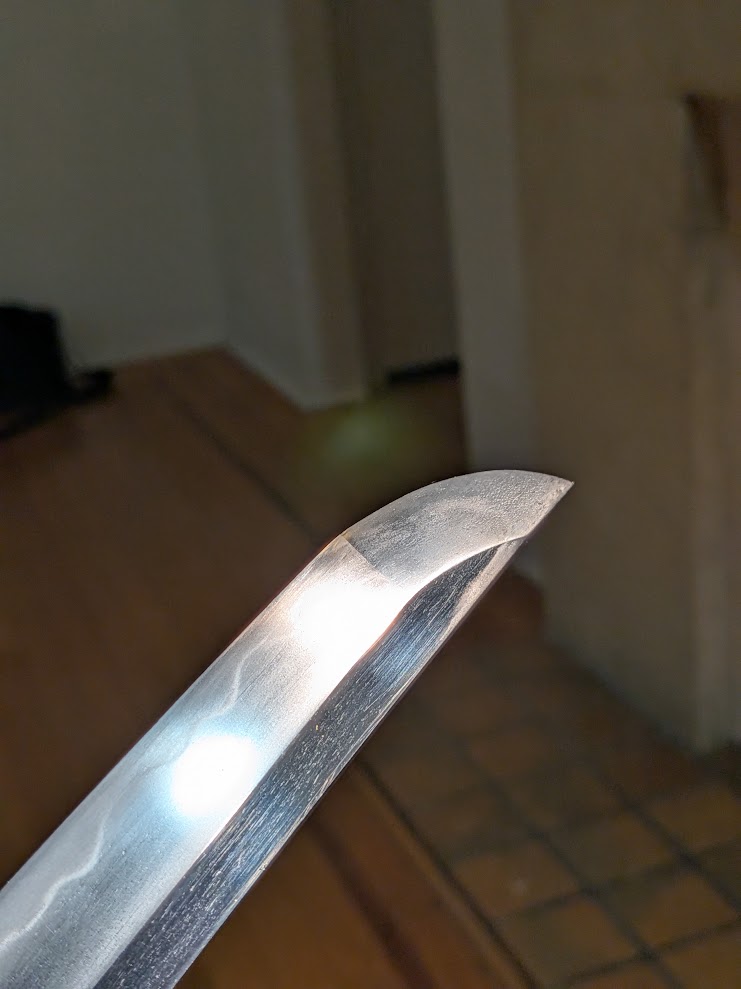
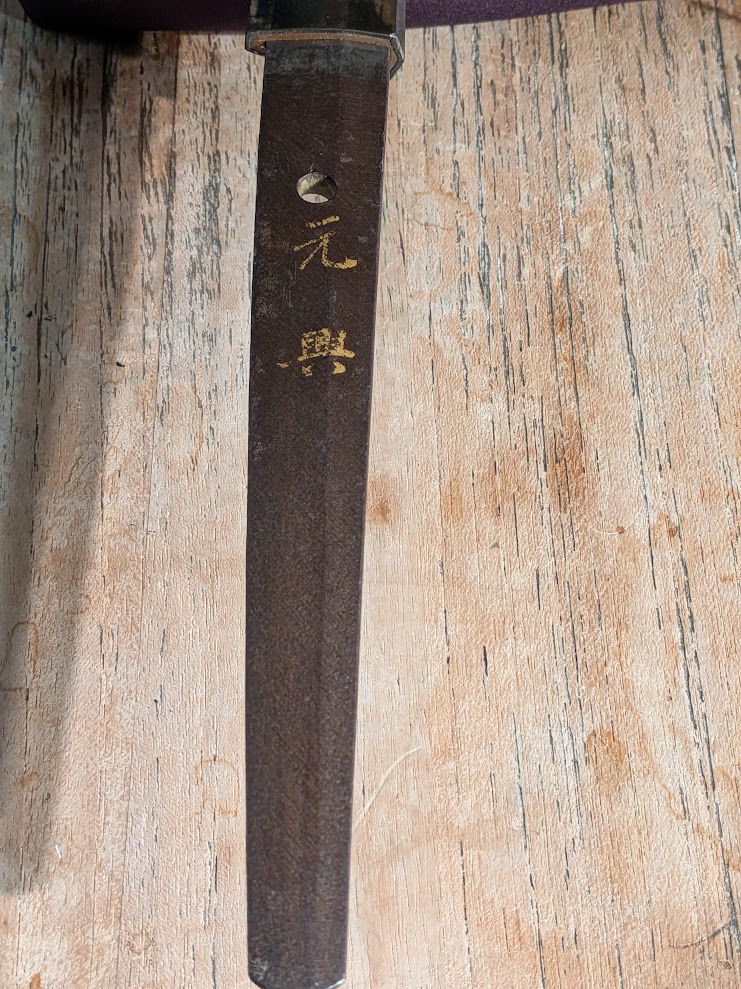
MOTOOKI (元興), 1st gen., Bunka (文化, 1804-1818), Ōshū – “Bandai Mitsuda saku” (万代光定作), “Sumi Hidekuni” (角秀国), “Ōshū Aizu-jū Sumi Motooki” (奥州会津住角元興), “Sumi Daihachi Minamoto Motooki saku Ōshū Aizu-jū” (角大八源元興作奥州会津住), “Katana-kaji-tōryō Sumi Motooki Ōshū Aizu-jūnin” (刀鍛冶棟梁 元興作奥州会津住人), real name Sumi Daihachi (角大八), he was the third son of a certain Sumi Gorōzaemon (角五郎左衛門) and signed first with Mitsusada (光定), he married into the Aizu´s Furukawa family (古川) – to which also Aizu-Kanesada belonged – and changed his name thereupon to Furukawa Daihachi Hidekuni (古川大八秀国), after his divorce in the first year of Kansei (寛政, 1789) he returned to his old family name Sumi, he went later to Edo to study under Suishinshi Masahide (水心子正秀) and was employed because of his great skill by the Aizu fief, in Edo he also learned the techniques of the Sōshū tradition from Mitsunaga (光長) who worked for the Satsuma fief, in Kansei four (1792) he was invited by the lord of the Satsuma fief to Satsuma to study there under the local master Yamato no Kami Motohira (大和守元平), this master-student relationship earned him his name Motooki, he returned to Aizu one year later and died there on the 28th day of the third month Bunsei seven (文政, 1824) at the age of 72, like the 7th gen. Nagamichi (長道), he also bore the local honorary title “katana-kaji-tōryō” (刀鍛冶棟梁) that is also abbreviated as tōryō (棟梁) and means “head of the local swordsmiths,” his early works show a sugata similar to that of Suishinshi Masahide, after his studies in Satsuma his blades become larger and more magnificent, i.e. the nagasa becomes longer, the sori is more shallow and the wide mihaba does not taper noticeably, also the kissaki is relative large, the jigane looks soft and the jihada is hardly discernible, the hamon is a gunome-midare, notare-midare or hiro-suguha in nie-deki, chūjō-saku.
Reviews
There are no reviews yet.